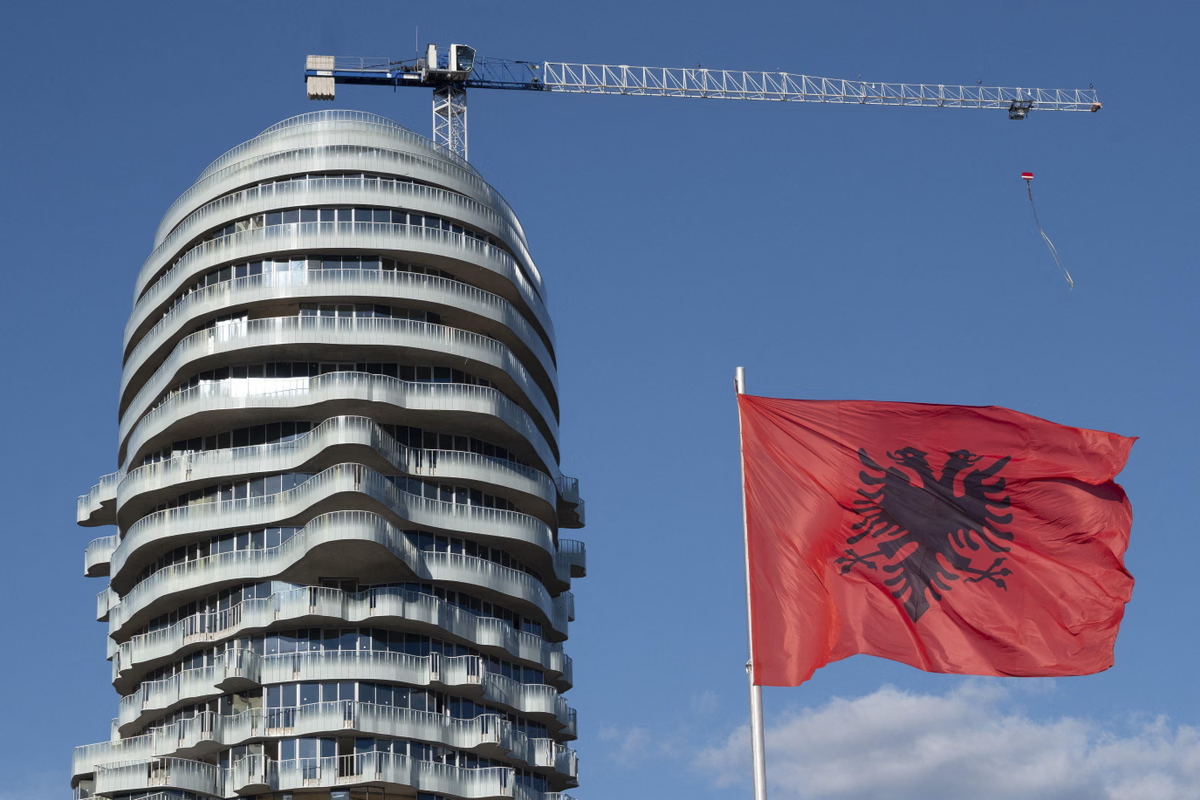
A private WhatsApp group, ironically dubbed the Albanian ArchArmy, has become the epicenter of a massive urban transformation in Albania. This digital forum, which includes many of the world’s most renowned architects, serves as a hub where new developments are celebrated and the country’s Prime Minister, Edi Rama, receives acclaim for his support of these ambitious designs. Since taking office in 2013, Rama—a former painter who once gained international notice by painting Tirana’s drab Soviet-era blocks in vibrant colors—has spearheaded a rapid, nation-wide shift toward high-profile, modern construction.
This transformation is now documented in a massive 800-page, 2.2kg volume titledThe Albanian Files. The publication showcases over 500 proposed projects from 60 top international firms, none of which are Albanian practices. Prime Minister Rama, in the book’s foreword, characterizes the collection as a “precious behind-the-scenes record” of a movement intended to elevate the nation’s status. However, critics view the book differently, with some opposition members labeling it a “smoking gun” that provides evidence of non-transparent governance, potential environmental degradation, and the displacement of local residents. The Albanian Architecture Army chat is blowing up again,” they said. “It looks like Edi has some new projects for us.”, they finally checked the messages and chuckled. “Oh. In ways that are both intended and not, it is a remarkable document. In which 60 international practices (and not a single Albanian one) lay out their plans for over 500 projects up and down the country, it is an eye-opening directory of dreams.
Public backlash has been significant, characterized by a protest movement now in its 120th day. Demonstrators, who refer to the situation as the “flamingo revolution” to highlight the risk to fragile natural habitats, have been calling for the Prime Minister’s resignation. In June, protestors gathered outside a high-priced architecture festival titledLandscapes of Abundancewhere tickets cost up to €200, a significant sum in a country where the median monthly wage is €700—to chant, “Starchitects go home!” and demand greater public involvement in urban planning.
Lorin Kadiu, director of the investigative platform Citizens.al, which has monitored construction in the country since 2018, described the atmosphere as that of an “autocratic kingdom.” Kadiu pointed to a pervasive lack of transparency in how these developments are authorized. This sentiment is echoed by an open letter distributed at recent protests, which criticized the “art-washing of bulldozer politics.” Some architects who were once part of the ArchArmy have since distanced themselves, citing concerns over democratic processes in project competitions and the ambiguity surrounding land ownership.
The architects’ own contributions toThe Albanian Filesoffer candid insights into the appeal of working in the country. In his foreword, Rama explicitly notes that these designers are drawn to Albania by “freedom from ‘no’ in all its forms.” Contributors describe being approached directly by the Prime Minister, such as Austrian architect Chris Precht, who reports having 29 projects in the country after being messaged on Instagram. Other designers, like Florentine yacht creator Luca Dini and Swiss architect Valerio Olgiati, have proposed distinctive, often imposing structures, including concrete towers near sensitive coastal areas. Along with prize-winning public spaces, striking coastal resorts, and many more dazzling visions on the way – all now brought together in a hefty new book, The Albanian Files, there are twisting towers in Tirana. Look hard enough and you might even see the Albanian double-headed eagle projected into the night sky.
Internal dynamics suggest a specific model for these collaborations. One architect noted that while Rama does not formally appoint the designers, he facilitates introductions to developers, with the expectation that the specific architect will be chosen. Some firms have defended their work; for instance, architect Ivan Chermayeff stated he approaches Albanian clients with the same standard questions he uses globally. Meanwhile, Reinier de Graaf of OMA penned a satirical open letter to Rama, jokingly describing the nation as an “enlightened architectural patron” and suggesting the profession would suffer if the country ever stopped building. L ast autumn, I was sitting with a prominent architect in New York, when their phone wouldn’t stop buzzing. The New York architect describes the situation in the manner of a superhero movie: Rama sends out the signal and the world’s starchitects rally to the rescue with their daring designs.
The opposition campaign, led by groups like Arkitektët Shqiparë, has worked to map these projects, noting that their database is published in Albanian, contrasting with the book’s international focus. Despite these mounting criticisms and allegations of corruption, Prime Minister Rama remains defiant. In a June interview with CNN, he dismissed the corruption claims as “fake news” and suggested that the protests were being agitated by foreign interests. The Prime Minister’s office did not provide a comment when contacted regarding the current situation.