

Water companies across England and Wales have been granted provisional approval to increase customer bills by an additional £3.4bn in the coming years. This funding is intended to address mounting pressures on aging infrastructure and environmental standards, though the decision has sparked significant public and political backlash. Nearly one-third of the extra funding is specifically earmarked for ensuring that existing water services are properly maintained.
The remaining portion of the approved investment will be used to meet rising demand from new housebuilding and data centres, as well as to address pollutants known as “forever chemicals.” Ofwat stated that while water companies collectively requested £4.3bn in additional funding, some of these proposals were rejected during the review process. The regulator emphasized that the extra spending would enable firms to support growth and achieve better environmental outcomes, ensuring critical upgrades are not delayed.
This decision to allow increased charges comes on top of already-agreed bill rises that were negotiated with the water companies in 2024. The current process allows firms to apply for additional funds for specific projects that were not identified during the last five-year budget review. As part of the outlined increase, Ofwat has approved funding for schemes including provision for new data centres in Manchester, additional wastewater capacity in Newquay, and to bring forward work by Wessex Water to tackle PFAS pollutants, which was originally planned for 2030-35.
The financial impact on consumers will vary by provider. Customers of five specific firms—Severn Trent Water, Southern Water, Thames Water, Wessex Water, and South East Water—are facing additional bill rises over the next two years. For example, Southern Water is set to charge £43 extra next year, while South East Water will charge £1 more in 2029. The remaining eight firms—Anglian Water, Dwr Cymru Welsh Water, Hafren Dyfrdwy, Northumbrian Water, South West Water, United Utilities, Yorkshire Water, and SES Water—would recover their additional spending through customer bills after 2030.
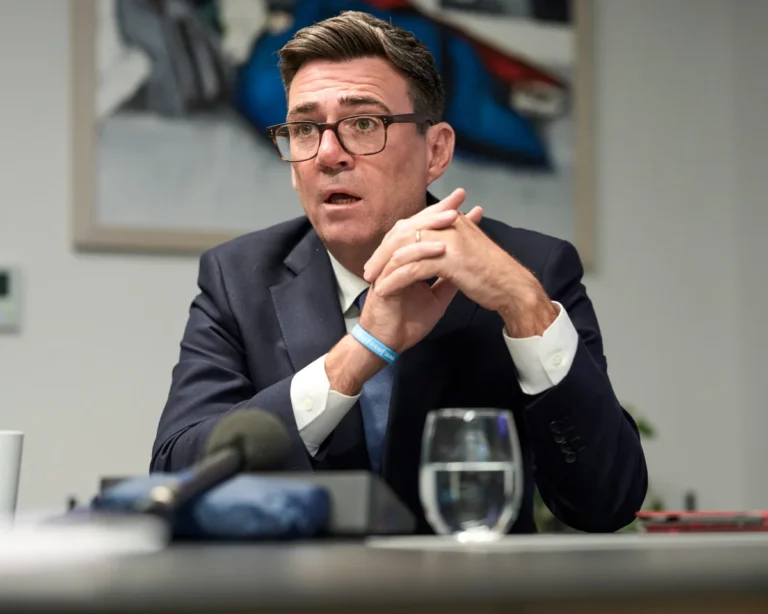
Many consumers have expressed anger at being asked to pay more against a backdrop of supply interruptions that sometimes last for days, alongside rivers, lakes, and beaches that remain too polluted to use safely. Prime Minister Andy Burnham criticized the proposal, describing it as “real money out of family budgets at a time when they are struggling with the cost of living.” He noted that he understood the public frustration, given that customers have been asked to pay more for years while pollution incidents and leaks have continued, adding that where companies seek to pass on unnecessary costs, they will be challenged.
Environmental groups have been particularly vocal in their opposition. Amy Fairman, from the campaign group River Action, labeled the decision “an insult,” arguing that water companies have failed to make sufficient investments over the last 30 years, leaving customers with “leaks, pollution and soaring bills.” She called for greater public control of the industry, stating there should be “no more blank cheques for failure.”
Kierra Box, a water campaigner at Friends of the Earth, echoed these sentiments, noting that rivers and seas remain filled with sewage and chemicals despite previous bill hikes. “Now ordinary people are being asked to foot the bill once again to pay for decades of water company inaction on upgrading our crumbling water infrastructure. It’s daylight robbery,” she said.
Water companies argue that these systemic problems can only be resolved by boosting spending to replace pipes, build treatment plants, and establish new reservoirs. They point to climate change as a major factor, which has increased pressure on infrastructure by making heavy rains and heatwaves more frequent. Helen Campbell, executive director for delivery at Ofwat, stated that the regulator would track performance to ensure companies deliver the expected improvements, warning that if they fail to do so, the expenditure can be clawed back.
The decision remains provisional at this stage, with a period of public consultation currently underway. A final decision on the funding requests is expected in December. Meanwhile, the industry continues to face scrutiny over its operational performance, with recent reports highlighting that Anglian Water is looking at restrictions on businesses, and ongoing debates regarding the realism of leakage targets, such as those recently discussed by the boss of Thames Water.
Nearly a third of the extra funding provisionally approved for 13 water companies in England and Wales is earmarked for making sure water services are maintained.
Ofwat said water companies had submitted a total of £4.3bn worth of requests, but some of their proposed extra spending had been rejected.
Anglian Water to look at restrictions on businesses Published 23 hours ago
Your hosepipe ban questions answered Published 3 days ago
Your hosepipe ban questions answered




Comments