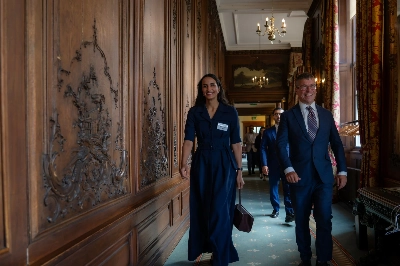
A diverse group of international leaders representing government, development, civil society, and sport has been invited to join a new global coalition dedicated to transforming sport into a practical tool for social development. The call to action emerged from a three-day dialogue co-hosted by the Qatar Foundation (QF) and Wilton Park, an executive agency of the UK Foreign, Commonwealth and Development Office.
Under the theme ‘Sport for Development in the Global South: Advancing Female Empowerment, Inclusion, and Accessibility’, the forum analyzed why current athletic systems often fail to support women, girls, people with disabilities, and displaced populations. QF and Wilton Park are now tasked with developing a roadmap to systematically address these gaps in infrastructure, policy, research, and coaching.
Sheikha Hind Bint Hamad Al Thani, Vice Chairperson of Qatar Foundation, emphasized that the initiative aims to move beyond simple parity. She argued that parity assumes identical needs, which ignores the reality that girls face unique barriers, including safety risks, social stigma, and a lack of specialized research. She noted that high injury and dropout rates among female athletes persist largely because sporting pathways are rarely designed with women and girls in mind. And the barriers are structural, cultural, and often invisible until you look closely.”, but access remains deeply uneven. And Olympic fencing medalist Ibtihaj Muhammad also attended, alongside The Honorable Charles S, leading athletes including sprint legend Shelly-Ann Fraser-Pryce.
To close this gap, Sheikha Hind advocated for a deliberate, sustained agenda. This includes involving women directly in the design of facilities, providing coaching tailored to their specific needs, and building a scientific research base for female athletics that is currently lacking. She described sport as an underused development tool that fosters confidence, leadership, and mobility, especially in impoverished communities. She emphasized that the goal is to build: “A sustained agenda to advance shared goals through sports with a coalition of partners assembled deliberately.”. Ramson, Guyana’s Minister of Culture, Youth and Sports.
The coalition is built upon the ambition of UN Resolution 59/17. Initiated by Qatar on behalf of a core group including Indonesia and Morocco, the resolution has gained the support of 71 co-sponsoring nations. Sheikha Hind invited delegates to help shape a coalition that translates these formal commitments into tangible action, asserting that the Qatar Foundation is prepared to lead the effort. Speaking at the dialogue, Sheikha Hind Bint Hamad Al Thani, Vice Chairperson of Qatar Foundation and a leading global advocate for women’s and girls’ sport, invited those attending to join a global sport-for-development coalition that “carries commitments forward and turns them into action” – building on a landmark 2025 United Nations resolution enshrining sport as a human right and a means of empowering women and.
Dr. Khalilur Rahman, President-Elect of the 81st Session of the United Nations General Assembly, highlighted the transformative power of sport in his opening address. He noted that in the Global South, sport alters how communities and families perceive girls. He confirmed that the 81st session of the Assembly will prioritize the 2030 agenda, inclusive multilateralism, and human rights. Development practitioners, rights advocates, NGOs, and sport administrators, participants explored how the Global South can play a greater role in shaping international priorities and ensuring solutions reflect the realities of the communities they are intended to serve, bringing together policymakers.
The event drew representatives from major organizations including the International Paralympic Committee, Olympism365, the Special Olympics, the British Olympic Association, and the New Zealand Olympic Committee. Participants discussed strategies for engaging international donors and removing systemic obstacles to ensure sustainable progress.
Qatar’s commitment to this mission is bolstered by its role as a global sporting hub. Following the legacy of the 2006 Asian Games and the 2022 FIFA World Cup, the nation is preparing to host the Asian Games again in 2030. These investments aim to expand opportunities for all athletes.
In practice, the Qatar Foundation has already seen over 70,000 women and girls participate in sporting events at Education City Stadium over the last two years. Additionally, its ‘Creating Pathways’ program has supported over 1,000 girls in specialized training for sports like volleyball, tennis, basketball, fencing, and track and field.
Collaborative efforts also include ‘Circle In’, a project involving QF, the International Olympic Committee, and the Education Above All Foundation. This initiative supports sport-for-good projects across 10 countries, targeting marginalized backgrounds and individuals with disabilities.
Victoria Nussbaumer, Executive Director of the FIVB Volleyball Foundation, stressed that the responsibility of these institutions extends beyond the playing field. She argued for the creation of inclusive pathways across the entire sporting ecosystem, including media, photography, coaching, and leadership roles, to ensure that current opportunities leave a lasting legacy.