
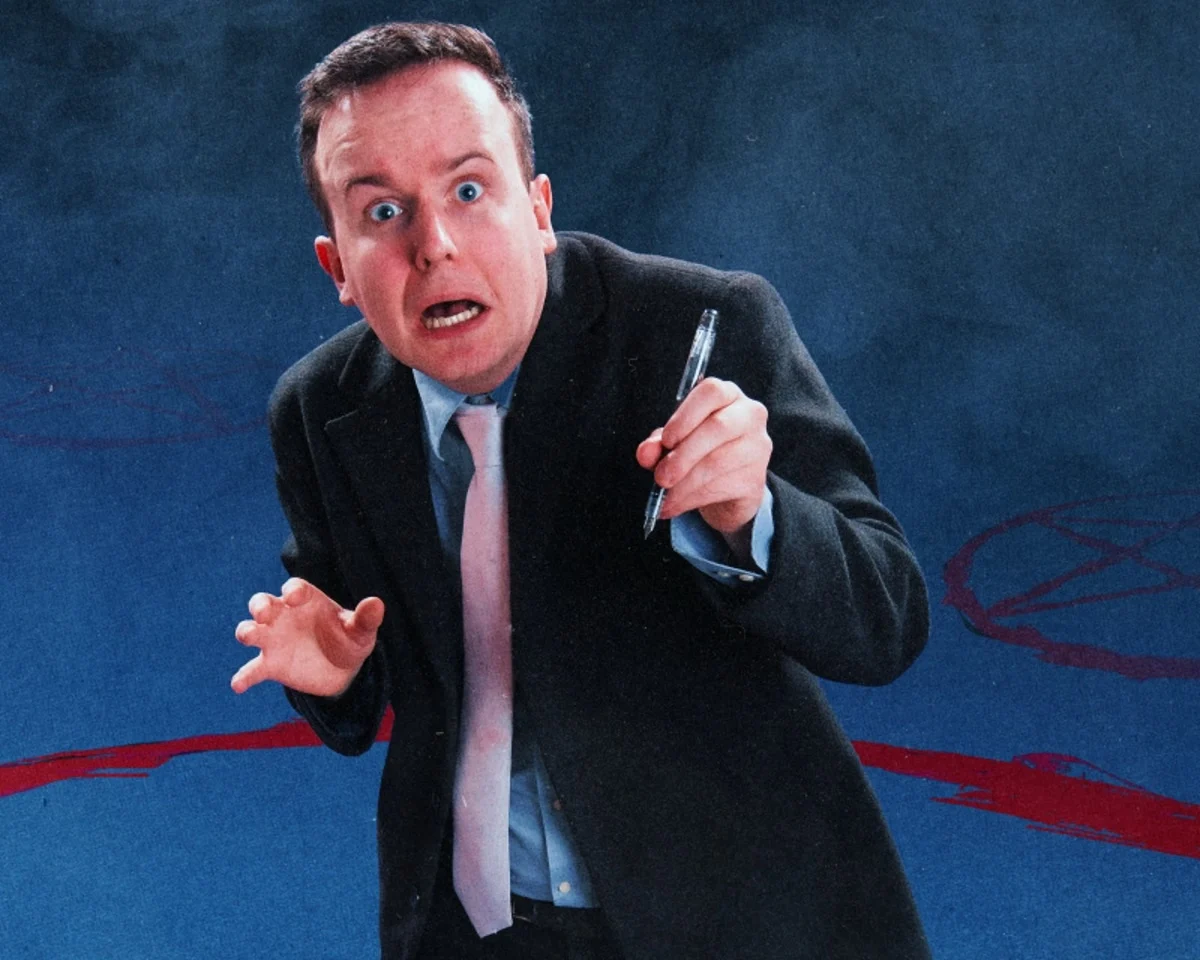
Critics rarely see statues built in their honor, yet they remain a frequent target for artistic satire. From the historical precedent set by Tom Stoppard’s The Real Inspector Hound and Sheridan’s The Critic to the gruesome fates met by reviewers in the 70s horror film Theatre of Blood, the profession has long been a source of creative friction. In more recent years, Sarah Kane’s play Cleansed famously named its sadistic antagonist after a critic who had panned her work, while authors like Russell Kane and Charlotte Runcie have explored the disconnect between those who perform and those who judge.
This year’s Edinburgh Fringe features two productions that place comedy reviewers under the microscope, one of which stems from a direct reaction to last year’s festival notices. Andrew Doherty’s Reviewers Welcome … to Die! is a folk-horror spoof inspired by the creator’s frustration after his sophomore show, Sad Gay Aids Play, received a three-star rating—a score he described as “one of the three worst scores you can get!”—following the critical acclaim of his debut.
In the play, Doherty’s anti-hero, Felix Chatelier, is portrayed as a preening, nepotistic snob who harbors his own thwarted artistic ambitions. The character is forced to confront his behavior by supernatural elements in the fictional Midlands town of Billington. Throughout the performance, Chatelier laments, “How sad, lonely and pathetic I am,” until he is eventually guided toward redemption by a character representing the playwright himself. The show functions as a critique of both the industry’s arbiters and the thin-skinned artists who hold grudges against them.
The second production, Adam Riches’ The Critic’s Way, offers a different approach to the subject. Riches appears on stage as Caliban Monroe, a character who loudly disparages comedians and claims to have invented the star-rating system. While the performance is framed as a burlesque on shallow masculinity, it lacks the sharp satire promised, though it remains an engaging piece of interactive theater. Riches reads from a fictional treatise on the art of “the ’tique,” reveling in the archetype of a cultural snob who resents his dependence on the work of comedians.
Behind Monroe’s arrogant facade lies another “sad, lonely and pathetic” figure. The character eventually loses his job after a performer targeted by one of his particularly harsh reviews strikes back. The show can be interpreted as a commentary on the shifting landscape of modern criticism, where objective judgment has fallen out of fashion and speech is increasingly policed. Alternatively, it serves as a 50-minute exploration of a critic obsessed with his own erudition.
When considering these two shows as a collective assessment of comedy reviewing, the result is a mix of ridicule and begrudging affection. While the portrayals of critics as snobs are clear, the performances suggest that reviewers are perhaps let off lightly. Ultimately, these productions highlight the ongoing, often fraught, dialogue between those who create comedy and those who document it for the public. The report also notes that “Who wants to be a comedy critic?” he barks, eyeballing the audience as I shrink in my seat. The report also notes that in love with his own supposed erudition, seething with resentment that to, or you could enjoy Riches’ exuberant faux-workshop for what it is: a 50-minute piece of nonsense revelling in the archetype of the cultural snob. The report also notes that they say – but plenty of art gets made about them, n o one ever built a statue to a critic. The report also notes that an eye-catching performance-art attack on the notion of critical authority, there was Wild Bore at the Traverse a few Edinburgh fringes back. The report also notes that there’s even a sub-genre of art about comedy critics, runts of the reviewing litter though we are. The report also notes that the comic Russell Kane wrote a novel about one who was unable to laugh. The report also notes that then sleeping with her, ex-critic Charlotte Runcie wrote another about a journo giving a woman a one-star review for her standup. The report also notes that so where does Reviewers Welcome fall on the all-important five-star spectrum.








Comments