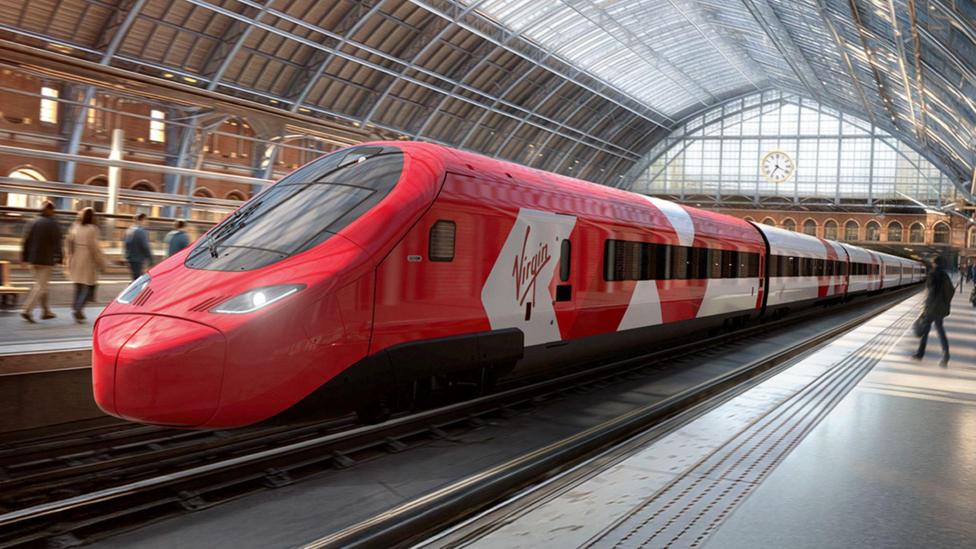
Virgin’s ambition to launch a rival rail service through the Channel Tunnel has reached a major milestone after receiving track access approval from the Office of Rail and Road (ORR). This regulatory decision marks a significant step forward in introducing competition to a route that has been exclusively operated by Eurostar since the tunnel first opened in 1994.
Under the new agreement, Virgin is authorized to operate up to 20 daily return services connecting London St Pancras International to major European hubs including Paris, Brussels, and Amsterdam. The access rights are scheduled to run for a decade, spanning from 1 October 2030 to 31 December 2040.
Martin Jones, the ORR’s deputy director of access and international, described the move as an important progression in fostering market growth and competition. He noted that while significant work remains, the regulator is actively supporting Virgin and the broader rail industry to expand international service offerings.
Despite this approval, Virgin faces several remaining hurdles before operations can commence. The ORR’s current authorization is limited specifically to the High Speed 1 (HS1) route between London and the Channel Tunnel. Virgin must still secure access agreements for rail networks across mainland Europe and obtain necessary safety certifications from both UK and EU authorities. Furthermore, the company is required to finalize the procurement of its rolling stock.
Virgin has announced plans to purchase 12 high-speed trains from Alstom to service the route. This follows a boost last year when the ORR approved Virgin’s application to share the Temple Mills railway depot in east London with Eurostar. Temple Mills remains the only UK facility capable of accommodating the specialized, larger trains required for continental European travel.
The regulator acknowledged that the introduction of these substantial additional services would demand more robust operational management at St Pancras International. However, the ORR concluded that these requirements should not act as a barrier to expansion, provided that operational, contractual, and coordination risks are effectively managed.
The competitive landscape for cross-Channel travel is becoming increasingly crowded. Beyond Virgin’s entry, Italy’s FS Italiane Group intends to launch services through the tunnel by 2029 via its subsidiary, Trenitalia France. Last week, Trenitalia France finalized an agreement to acquire 19 new high-speed trains from Hitachi Rail to support its expansion efforts.
Eurostar responded to the ORR’s announcement by highlighting the potential for growth in the international rail sector. The incumbent operator stated that it remains focused on its own ambitious development plans, which include investing in its existing fleet and aiming to transport 30 million passengers annually. Eurostar also previously announced intentions to launch direct services from London to Germany and Switzerland by the early 2030s.
A spokesperson for the Virgin Group welcomed the pre-approval, emphasizing that their plans for the new service are moving at pace. The company aims to bring its signature customer experience to the route, fulfilling a vision previously articulated by founder Sir Richard Branson, who stated last year that it was time to end Eurostar’s long-standing monopoly on the channel crossing. The report also notes that and our focus remains on delivering our own ambitious plans, investing in our fleet and carrying 30 million passengers a year,” it said, eurostar will play a full part in that growth.