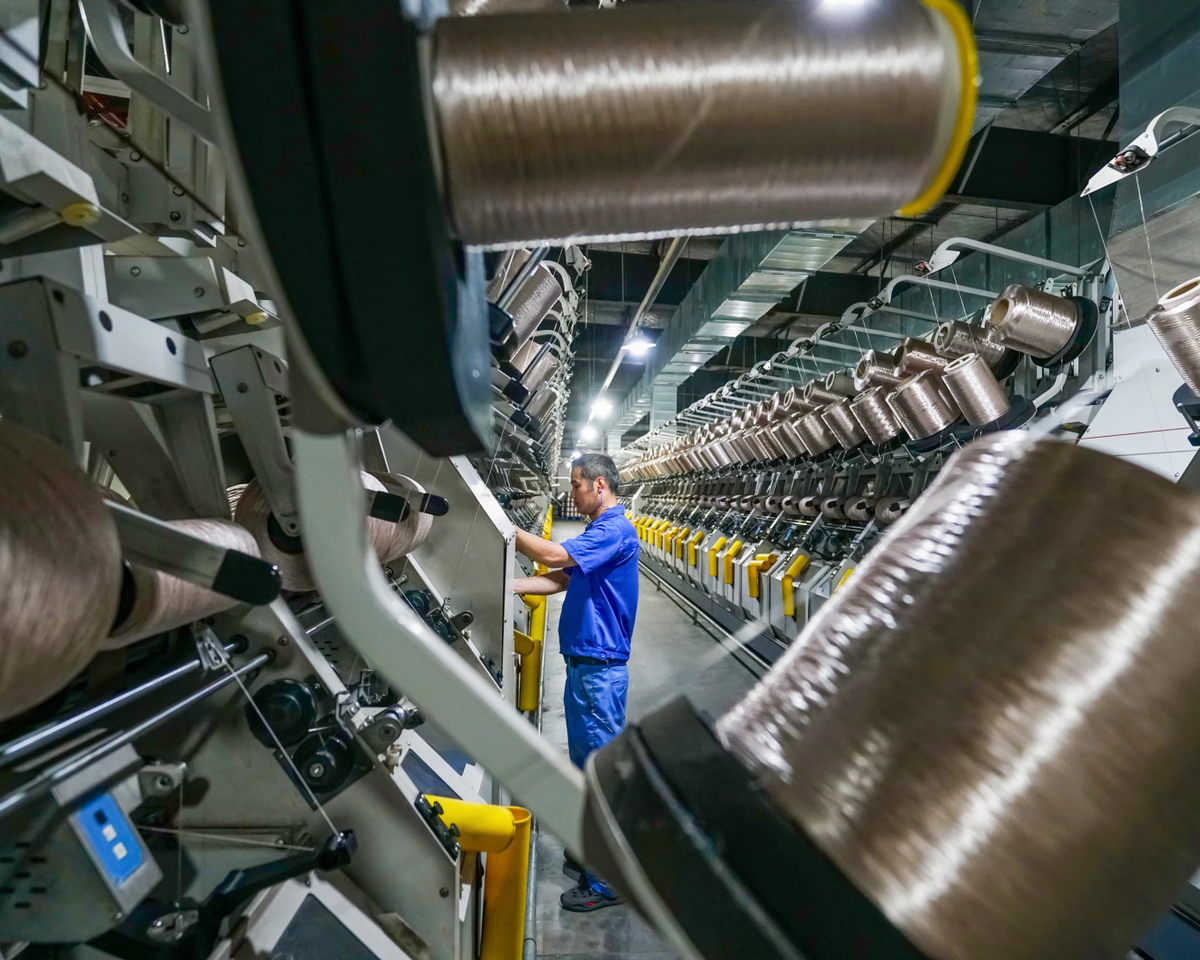
China’s economic recovery is showing signs of further strain, with industrial output and retail sales growth both falling short of expectations in July. This latest data follows a challenging second quarter, where the nation recorded an annualized growth rate of 4.3%—one of the lowest figures since Beijing began reporting quarterly GDP data in the early 1990s and notably below the government’s target range of 4.5% to 5%.
Official figures released Monday by the National Bureau of Statistics (NBS) indicate that factory output grew by 4.5% year-on-year in July. This performance missed the 4.8% growth forecast predicted by a Reuters poll and represented a decline from the 5.3% growth recorded in June.
Consumer spending also struggled to gain momentum. Retail sales grew by only 0.6% last month, a deceleration from the 1% growth seen in June, despite the typical boost from summer tourism. This result significantly undershot the 1.5% growth rate anticipated by analysts.
The NBS attributed part of the sluggish performance to extreme weather conditions, noting that high temperatures and heavy rainfall disrupted both supply chains and market demand throughout the month.
Addressing a State Council meeting, Premier Li Qiang acknowledged the mounting challenges facing the country. According to state news agency Xinhua, Li stated, “Currently, the problem of insufficient domestic demand remains prominent, some industries and enterprises are facing increasing difficulties, and uncertainties in external environment are rising.”
To counter these headwinds, Li emphasized the need to bolster international trade, stating, “We should actively stabilise external demand, expand mutually beneficial international economic and trade cooperation and promote balanced trade development.”
Despite the disappointing July figures, some experts remain optimistic about a potential recovery later this year. Julian Evans-Pritchard, head of China economics at Capital Economics, pointed to a silver lining in the data, noting that manufacturing activity has been bolstered by capital expenditure in artificial intelligence.
Evans-Pritchard added that the broader weakness in the July data likely reflects temporary disruptions caused by recent typhoons. “We still expect a modest uptick in growth over the rest of the year, supported by fiscal loosening,” he said, suggesting that government-led tax and spending measures will be critical in reversing the current trend. The report also notes that one of its lowest quarterly readings on record, the latest snapshot comes after China posted a worse-than-expected annualised growth rate of 4.3% in the three months to June. The report also notes that however is likely to increase pressure on policymakers to accelerate plans for tax and spending measures to support activity, the latest snapshot.