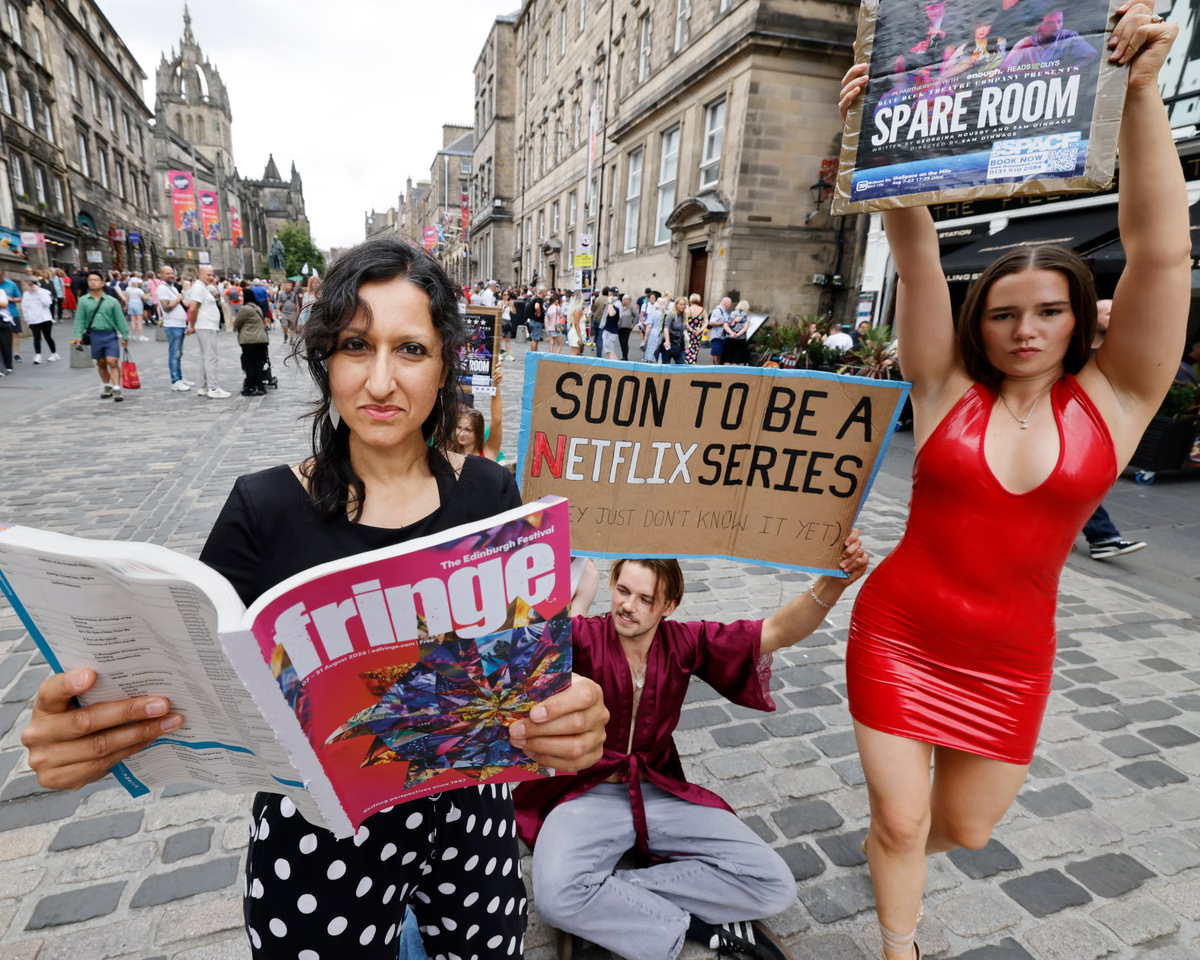
The Edinburgh Festival Fringe remains a landscape of the bizarre and the bold, where one might encounter a comedian singing the same song for an hour, a musical centered on a religious sect demanding the use of “butt plugs,” or a performer drinking their own urine. With 3,649 shows currently on offer, the festival continues to uphold its reputation for being ungovernable and welcomingly weird. However, as the event grows more commercially focused, questions linger about whether its core spirit of radical experimentation is being pushed to the periphery.
Superproducer Francesca Moody highlights the rising financial barriers facing artists. Producing a one-person show today costs approximately £100,000, a stark increase from the £10,000 required for Phoebe Waller-Bridge’s Fleabag in 2013 or the £40,000 needed for Richard Gadd’s Baby Reindeer in 2019. This commercial pressure is compounded by the desire for industry recognition, with many productions aiming for London transfers or television adaptations. For instance, Hannah Reilly’s show Roleplay, which features a character becoming a “slutfluencer,” was produced by Moody and has already secured a transfer to London.
Despite these costs, veterans like Rory Bremner argue that the festival still provides a vital space for development. Even as a high-profile performer appearing at the 1,000-seat McEwan Hall with his show Making an Impression, Bremner continues to test “work-in-development” material alongside emerging acts, noting, “It’s an opportunity to try stuff that I’ve written in the last couple of days.” Moody remains optimistic that audiences are still hungry for idiosyncratic, low-budget work, provided they are willing to seek it out in basements and back rooms.
My own search for the “fringe of the fringe” led me to Truthmachine, an interactive production by the Australian company Counterpilot held at the city’s Quaker Meeting House. The show accommodates 12 people at a time for a 30-minute experience centered on a polygraph machine. Participants are seated before voting machines for a warm-up session, answering questions ranging from the conceptual, such as “has capitalism failed?”, to the deeply personal. The experience turns into a tense, Black Mirror-esque experiment in group dynamics and vulnerability, forcing attendees to confront their own boundaries regarding what they are willing to share.
Moving from the psychological to the visceral, I attended Succubus, a one-woman horror show at the 60-seater Dexter stage in the Underbelly. Written and performed by burlesque artist Georgina Collins, the play was inspired by her personal struggle with doctors dismissing her medical symptoms as “hormonal issues.” The production was financed through a profit-share model, raising £6,500 via crowdfunding, a horror-themed film quiz, a supper-club, a burlesque cabaret, and a raffle. Producers Emily Ritchie and Zara Jayant noted that they had to build their own door to facilitate the staging.
The festival’s experimental spirit also manifests in drag performances and adaptations. Craig Manson’s self-produced show, Bunny!, features his drag alter ego struggling with the realities of performance. Similarly, the Bedlam theatre hosts Mother, Maiden and Crone, a modern-day Macbeth adaptation by an Edinburgh-based drag troupe. The play, which explores the drama of a gay bar, concludes with a violent scene involving significant amounts of foam and lube, a production that was also financed through community fundraising.
Student theatre remains a staple of the festival, though I looked beyond the traditional university comedy societies. Moth And Dog Are Dying to Get Out is an ambitious play that earned a selection for the National Student Drama Festival at Leicester’s Curve theatre. The production depicts schoolboys dealing with the aftermath of one member being “outed” as gay via a graphic image shared on Grindr.
Finally, some of the most striking work is found in smaller studio spaces. Letícia Rodrigues’s autobiographical production, 116 Grams: A Play to Lose Weight, utilizes expressive and sometimes harrowing nudity to explore body size. Additionally, the show Thank You, F**k You and I’m Sorry stands out as an immaculately structured, surreal, and labyrinthine piece. Having won best solo show at the 2025 Hollywood Fringe, it serves as a reminder that the most experimental and rewarding discoveries at the festival are often hiding in plain sight, tucked away in the smaller venues of the city. The report also notes that a comedian sings the same song over and over for an hour, in yet another room. The report also notes that though, the annual jamboree has been accused of becoming an increasingly commercially savvy entity, in recent years. The report also notes that but does this now sit at the fringes of the fringe, rather than its centre, the radical experimentalism might just be intact. The report also notes that which have been well reported, include soaring accommodation costs, funding cuts and rising production costs, the reasons for this. The report also notes that says Moody, the ethos was different when the financial risks were not as high. The report also notes that “It was a space for messing around and building your craft, your sense of taste.