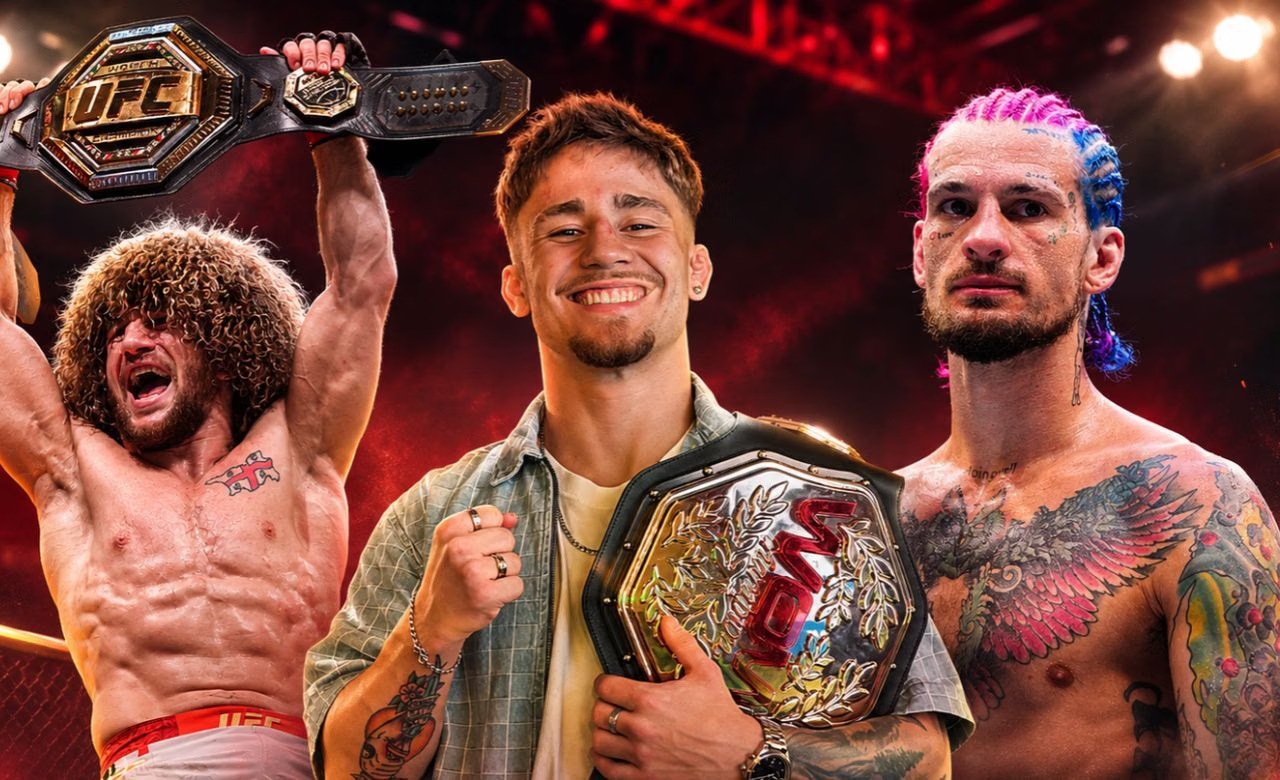
Alexandre Rita is quickly establishing himself as a formidable prospect in the bantamweight division. Training under the guidance of Zé Machado at Academia Unlimited in Barreiro, Portugal, the young fighter has gained attention for his work ethic and technical growth. Since signing with BDZ Management this year, Rita has been navigating the transition from a successful amateur background to the demanding world of professional mixed martial arts. And it will continue to guide me throughout my professional career, that mental toughness has already helped me.
His professional debut on May 22 at WOW FC 30 in Lisbon resulted in a unanimous decision loss to Vincenzo Bussolotti, a setback that provided a stark lesson in professional pacing.
However, Rita demonstrated his resilience in July, securing an impressive victory against Maiko Alves at Fighter Combat League 3 in Guarda.
He credits this quick recovery to his ability to manage the mental and physical pressures of the sport, a trait he developed through experience rather than natural ease.
Reflecting on his journey, Rita highlighted his time in the 2022 IMMAF World Championships in Belgrade, Serbia, where he earned a silver medal in the featherweight division. While he recognizes the accomplishment, he admits the experience came with unintended psychological weight. The pressure of that silver medal loomed over subsequent competitions, though he ultimately learned that he is physically and mentally capable of exceeding his own expectations. Hailed as one of the toughest rookie professionals in the country, Rita has built a base of amateur experience. In an exclusive interview arranged via BDZ Management with, Alexandre Rita spoke about the heavy burden of his silver medal at the 2022 IMMAF World Championships, which helped him in his fight against Maiko Alves. Alexandre Rita: What makes imposing your game against world-class opposition so difficult comes down to the volume of hours they have dedicated to perfecting their craft. Furthermore, another decisive factor is how thoroughly you study your opponent’s tendencies and how intelligently you craft a strategy to neutralize their weapons. It put an enormous amount of pressure on my shoulders in the competitions that followed. If there’s one positive thing I took away from that entire experience, it’s realizing that I am physically capable of pushing myself to great lengths and, above all, that I am mentally much stronger than I gave myself credit for, that being said. And what did you learn about responding to defeat, what tactical adjustments did you make between those two fights. That was nothing new to me, as for learning how to deal with defeat. Learning how to gauge your energy systems across five-minute intervals is critical.
When comparing the amateur and professional circuits, Rita noted that the most significant hurdle is adjusting to the frantic speed of the sport. Amateur bouts, typically limited to three-minute rounds, often encourage a high-intensity pace that is unsustainable over the 15-minute duration of a professional fight. He experienced this dynamic firsthand during his debut, where his conditioning and strategy were tested by the longer format. During the fight, Rita proved not only to have a skillful coach but also the capacity to successfully execute five-minute championship rounds. Get the latest updates on One Championship Rankings at and more. Of course, I worked incredibly hard to get there, but I feel that luck played a significant part in that result at the time. Frantic pace that becomes nearly impossible to sustain over a 15-minute professional distance, what usually happens to transition fighters is exactly what happened to me: the fight begins at an extremely high. But the formula never changes: get back to the gym, correct your mistakes, and step right back into the cage, losing always stings. But simply because I had spent several years competing under amateur rules where rounds last three minutes instead of five, it wasn’t because of carelessness or lack of conditioning.
Regarding the elite landscape of the UFC, Rita emphasized the extreme commitment required to reach the pinnacle of the sport.
Discussing top-tier fighters like Merab Dvalishvili and Sean O’Malley, he observed that their success is rooted in an almost obsessive dedication to every facet of their craft, from strength and conditioning to deep tactical awareness.
He believes that while stylistic matchups influence outcomes on paper, the ultimate victor is usually the athlete who best enforces their will through rigorous preparation.
Rita stressed the necessity of specialized coaching, provided those instructors understand the unique requirements of MMA. He warned that training in disciplines like gi-based Brazilian jiu-jitsu can be counterproductive if the movements are not modified for an environment where strikes are permitted. For him, the key is integrating grappling techniques that function effectively even when elbows and punches are involved. Specialized coaches for striking, wrestling, and jiu-jitsu, modern fight camps often utilize separate. For instance, training Brazilian jiu-jitsu in the gi isn’t particularly useful when preparing for an MMA bout because the rule sets and grips are entirely different. Those techniques cannot be applied the same way, once strikes enter the equation.
As he continues to build his professional record, Rita faces the classic challenge of balancing activity levels with the selection of opponents. Having previously fought roughly every two months during his amateur tenure, he now understands the need for a more calculated approach under professional management. He remains focused on gaining the necessary rounds to refine his skills, prioritizing steady growth over premature leaps into higher-level competition.
Training alongside Zé Machado remains a cornerstone of his development. Rita values the opportunity to share the mats with a high-caliber athlete, noting that such an environment accelerates growth and bolsters his belief in reaching his own professional goals. His current path reflects a blend of caution and ambition as he aims to solidify his standing in the competitive landscape of international MMA. How does sharing the mats daily with a fighter competing for major international titles influence your development and ambitions. And that those ambitions aren’t just some distant fantasy, watching him win the titles he’s been winning makes the rest of the team realize that reaching that stage is entirely possible.