Scotland Secretary Douglas Alexander has suggested that Britain would gain significant economic advantages by fostering closer trading ties with the European Union, even if doing so required forfeiting the autonomy to negotiate independent free trade agreements. While Alexander previously served as a trade minister under former Prime Minister Keir Starmer, helping to broker deals with India and the US, he now posits that integrating into joint trading arrangements—whether through a customs union or full EU membership—would represent a more substantial economic prize. Ministers would argue against rejoining the EU because it would mean having to abandon trade agreements with other countries, when Starmer was prime minister. Our largest trading partner is and will remain the European Union in the years to come. And I called out early as trade minister what I described as the ‘post-imperial delusions’ of the Brexiteers, he said: “It’s no secret that I was not a supporter of leaving the European Union.
This shift in perspective reflects a broader evolution within the government, aligned with Prime Minister Andy Burnham’s recent call for a “serious dialogue” regarding UK-EU relations, including the potential for re-entry. Previously, the government resisted such moves, arguing that re-joining the bloc would force the UK to sacrifice the bilateral trade deals it had painstakingly secured elsewhere.
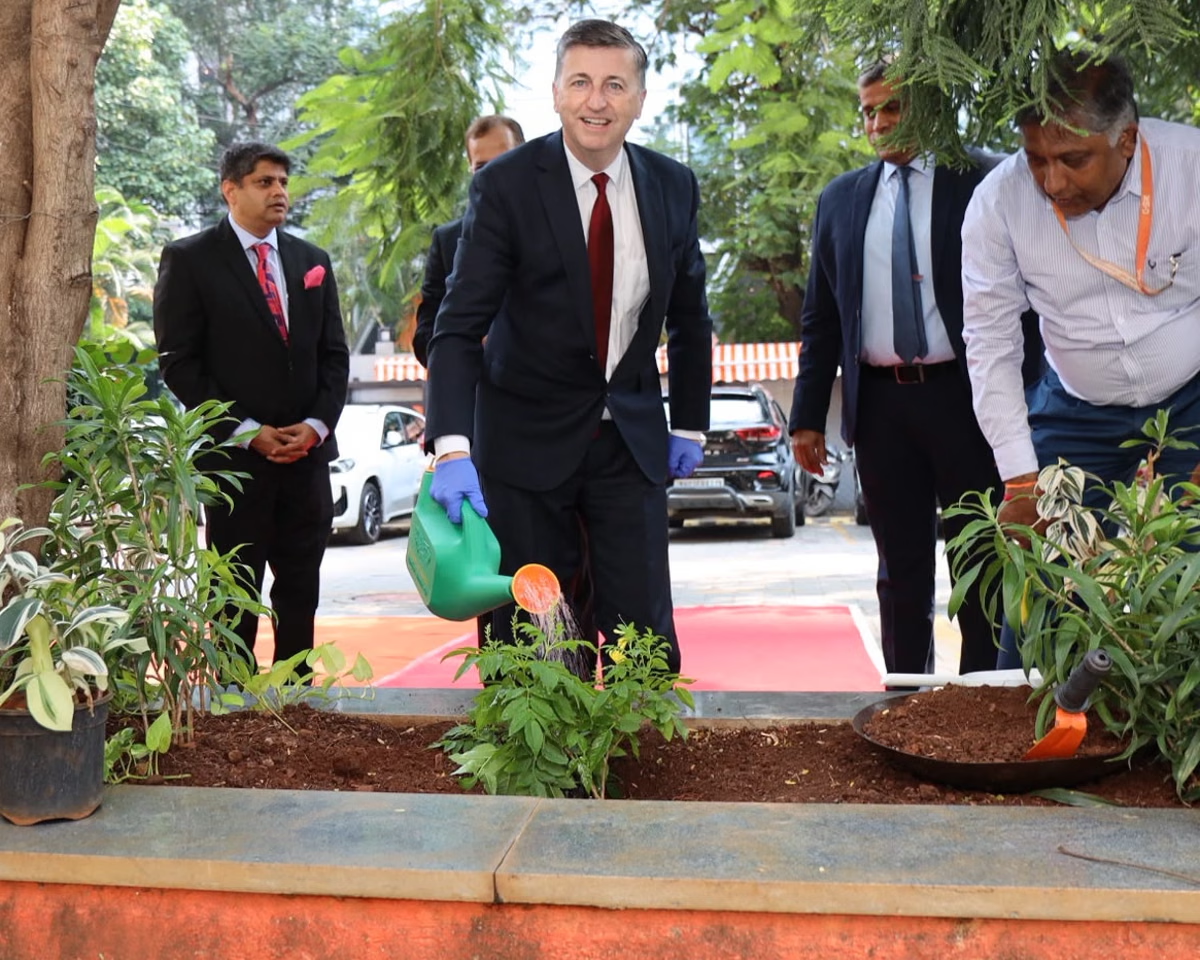
Speaking from a trade delegation in Mumbai, Alexander highlighted the tangible progress made since the UK-India trade agreement launched earlier this year, noting a 10-15% reduction in the price of scotch whisky in India. Despite these gains, he underscored that geographic proximity remains a decisive factor in trade policy. With the English Channel measuring only 21 miles wide, the EU remains Britain’s primary trading partner, accounting for nearly twice the volume of trade compared to the United States. “In trade policy, geography still matters,” he said. “The Channel is just 21 miles wide.
Reflecting on the 2016 vision of a “buccaneering” post-Brexit Britain, Alexander criticized the era’s “post-imperial delusions,” noting that the world has instead become increasingly protectionist and regionalized. He pointed to the CPTPP, a Pacific trade bloc the UK recently joined, noting that official analysis indicated a long-term GDP boost of less than 0.1%. He contrasted this with the structural economic damage caused by Brexit, asserting that the country is currently paying a high price for erecting trade barriers with its neighbors. Back in 2016, they promised a world of Britain as a buccaneering free trade nation in a world where barriers were coming down. “At the time we joined the Pacific trade grouping, the CPTPP [Comprehensive and Progressive Agreement for Trans-Pacific Partnership] – which undoubtedly makes a lot of sense geopolitically for the UK – our own analysis made clear that the long-term boost to UK GDP from membership is less than a tenth of 1%.
During the current India trip, Alexander was joined by Business Secretary Jonathan Reynolds and Environment Secretary Angela Eagle, alongside several mayors from northern England. The delegation spent much of their visit addressing “teething problems” linked to the implementation of the India deal, specifically focusing on the needs of smaller businesses. Alexander noted that the government is actively engaging in regulatory discussions to mitigate non-tariff barriers that currently inhibit growth.
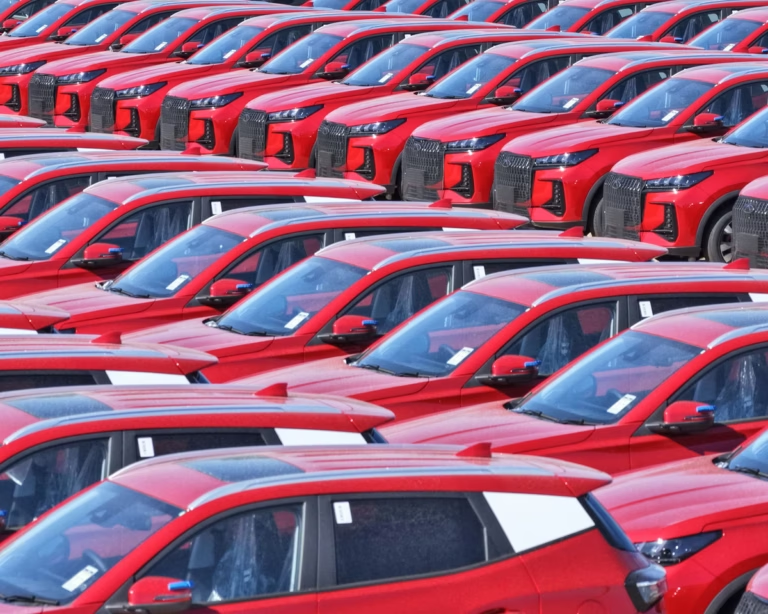
Looking ahead, the government hopes to make progress at the upcoming EU summit, where officials aim to negotiate new agreements regarding electricity, emissions, and agricultural products. However, significant friction remains regarding the EU’s “Made in Europe” policy, which domestic manufacturers worry could exclude them from critical markets. Furthermore, European leaders are pressuring the UK to impose tariffs on Chinese electric vehicles to prevent the country from acting as a gateway into the European market. Business Secretary Reynolds recently stated that he would not implement such tariffs solely in response to pressure from Brussels.