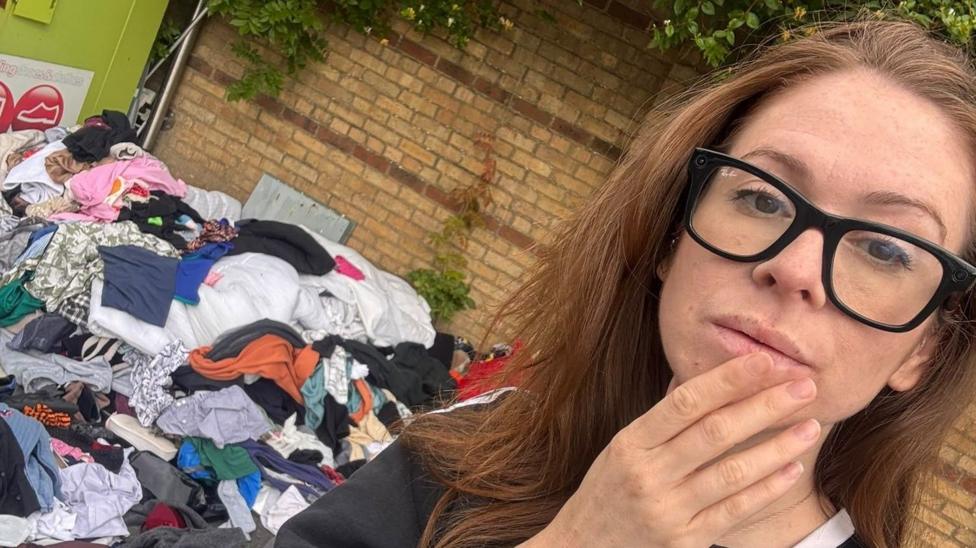
Commercial bins and supermarket recycling areas are becoming popular spots for thrifty individuals seeking to save money, donate to charity, and combat waste. Known as dumpster diving, the practice involves salvaging usable items that businesses and residents have thrown away.
Darryl Baker, a 39-year-old freelance journalist and mother-of-two from north London, turned to bin diving after being shocked by piles of clothing dumped next to recycling bins at her local supermarket. Appalled by the waste and looking to cut household expenses, she requested permission from supermarket staff to take the items.
After receiving permission, Baker secured entire new wardrobes for her children, noting she has items saved for years to come. During a six-month stint this year, she estimates she saved hundreds of pounds. Beyond clothing for her children, nieces, and nephews, she keeps items for herself, donates to charity, or sells them. She recently earned #30 by selling a salvaged men’s Barbour jacket.
Among her salvaged clothing finds are high-end brands such as Ralph Lauren, Nike, and The North Face. Baker recalled being amazed to see such items strewn across the floor. On separate trips to dumpsters, she has also discovered a host of other goods, including children’s scooters and what she described as a perfectly decent Ikea picture frame.
In Fort Worth, Texas, 72-year-old Jeff Ferrell has been scrounging through trash for more than 50 years. The professor emeritus of sociology at Texas Christian University continues to dumpster dive daily using his bicycle, stating he enjoys the activity as much as ever.
Ferrell describes his philosophy as a mix of Robin Hood and anarchist direct action. He restricts his scrounging to more affluent neighbourhoods and gives away many of his findings. Virtually everything in his home is scrounged, and he says he never purchases items like soap, toiletries, medical supplies, shoes, clothes, tools, or garden supplies.
To generate income, Ferrell searches for discarded metal to sell at a scrapyard, earning approximately $150 (#110) every two weeks. His wife sells other valuable discoveries, such as antiques or jewellery, on eBay. Between direct savings and sales, Ferrell estimates his salvaged finds are worth tens of thousands of dollars annually.
While dumpster diving was once considered taboo, many participants now openly share their experiences online. Millie Diamond, a 36-year-old London-based stylist, posts videos on Instagram showing her bin searches. Her specific focus is finding discarded fabrics and clothing to refashion into new garments, some of which she sells.
Diamond began bin diving after spotting discarded textiles from a business that had shut down. She clambered into the bin and discovered a large collection of vintage clothing. Describing herself as a magpie who likes collecting street freebies, she snatches up anything that catches her eye. She estimates that one dress she uncovered was worth #600.
For 44-year-old sales assistant Charlotte Bayford in Essex, timing is key to finding valuable items. Her best discoveries happen when students at Essex University leave for the summer, discarding unwanted belongings before heading home.
Among her finds are half-filled toiletries. Bayford revealed that she has not bought shampoo for eight years, saving significant money as a result. She also collects sealed food items, stating she has found perfectly fine tins of Heinz baked beans that she was quite happy to eat. Like others, Bayford donates many finds to charity while keeping some to furnish her home or selling valuable pieces. Giving items to charity and disgust at how often perfectly usable items are being consigned to waste – or a combination of all three, motivations include saving money.
The legal status of taking items from bins varies by jurisdiction. Ferrell explained that many US cities, including New York, Cleveland, and Wichita, have made dumpster diving illegal. In those locations, thrown-away property belongs to the city or private trash companies, and divers risk criminal trespass charges. In Fort Worth, items can only be taken if the bins sit on public land. But is taking things out of bins and keeping them acceptable in the eyes of the law.
In the UK, legal expert Sunjay Versani of Duncan Lewis Solicitors noted that outcomes depend on specific circumstances. While prosecution is unlikely in many cases involving genuinely discarded goods, there is no blanket rule that items in a skip or bin are free for the taking. He advises that the safest approach is asking the owner or business for permission before taking items.