Professor Hannah Fry has spoken openly about her recovery from cervical cancer, marking a significant milestone after receiving a five-year all-clear. The mathematician and popular broadcaster, who was 36 when she was diagnosed, described feeling “unbelievably lucky” to have successfully navigated the illness. Fry attended a Cancer Research UK reception hosted by the King and Queen at St James’s Palace in June. While also not being able to “look forward to things you are hopeful about because it doesn’t feel like it is, fry described not being able to “think back to happy things that… have already happened because it is sad”.
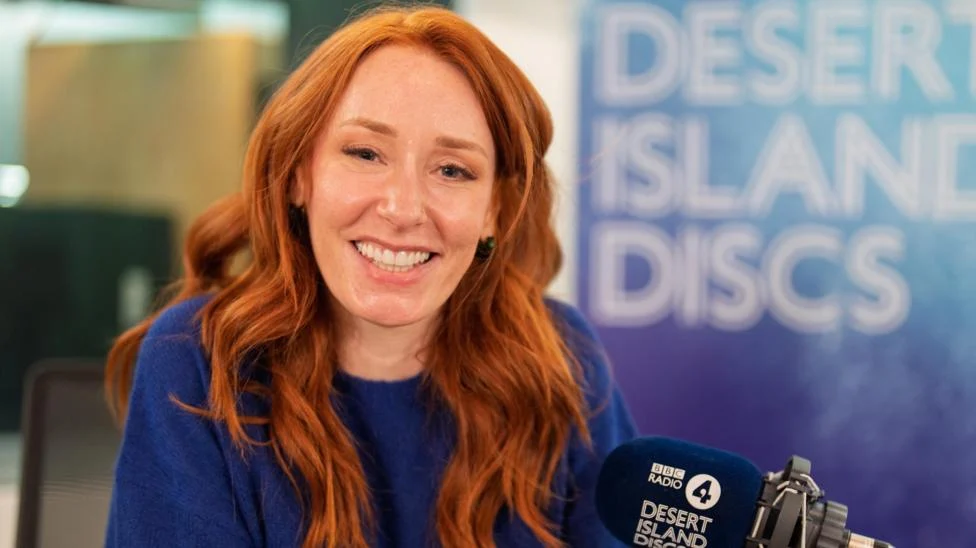
During an appearance on Radio 4’s Desert Island Discs, the 42-year-old revealed that her diagnosis came after she had delayed a routine cervical screening in 2020. Once she eventually attended the appointment, the results were delayed for several weeks before she was called back by her GP for a biopsy. According to the mathematician and presenter, who recently took part in the second season of the Celebrity Traitors,, Cancerous cells were discovered after she attended a cervical screening in 2020. In Sunday’s episode, Fry told show host Lauren Laverne that she had delayed a cervical screening examination for months in 2020. And they did a biopsy, then I got a call from my GP telling me they needed me to come back and do another test.
Reflecting on the uncertainty of that period, Fry detailed the psychological toll of the diagnosis. She noted that she struggled to process both past happiness and future hopes, feeling as though her life had stalled. Her treatment included a radical hysterectomy, which she described to host Lauren Laverne as a “horrific” experience.
Fry spent time in hospital in isolation, unable to have visitors, which forced her to face what she called the “terrifying drop of the end of my existence.” To maintain a connection with her family while bedridden, she had her husband set up a video call in the corner of the room so she could observe her two young daughters playing without them seeing her in her condition. It was too much,” she said, i didn’t want them to see me.
The medical team had initially raised concerns about whether the cancer had spread to her lymphatic system. Fry explained that the survival prognosis was heavily dependent on the number of lymph nodes involved. She recalled a surgeon telling her during her hospital stay that four of her lymph nodes appeared enlarged, creating a period of intense distress. I was trying hard not to panic but when they found it was in the lymphatic system⦠that was when it really started to come down. Fry explained that this meant “if it was in one it would drop to a 60% chance of survival and two â the odds would go against me and it would be a 40% chance”.
Despite the trauma of the diagnosis and treatment, the presenter offered a reflective perspective on her journey. “As awful as that was, it had a full stop at the end of the sentence,” she said. She added that she would not choose to swap the experience, describing the ordeal as a “gift” to have lived through at a younger age and emerged on the other side.
Beyond her media career—which includes fronting science programs likeThe Secret Genius of Modern Lifeand competing onThe Celebrity TraitorsFry has achieved significant academic recognition. Last year, she was appointed as the first professor of the public understanding of mathematics at the University of Cambridge.
Fry, who grew up in a working-class family and studied at University College London before earning her PhD in fluid dynamics, has previously used her platform to discuss medical decision-making.
Following her own health crisis, she produced a documentary exploring the complexities of cancer treatment. Having now crossed the five-year survival marker, she shared that the experience has fundamentally shifted her outlook on life.