At seven years old, I was completely captivated by a classmate who was taller than me, wore colourful nail polish, and owned shiny Lelli Kelly shoes. While I wore plain black Clarks and had short, unpainted nails, I constantly sought her approval. When she got an iPhone that spring and began ignoring me, I spent hours crying. Yet, instead of questioning her behavior, I felt fortunate to even sit at her table, even though she used the opportunity to mock my packed lunches. I desperately hoped that one day my self-proclaimed best friend would view me the same way.
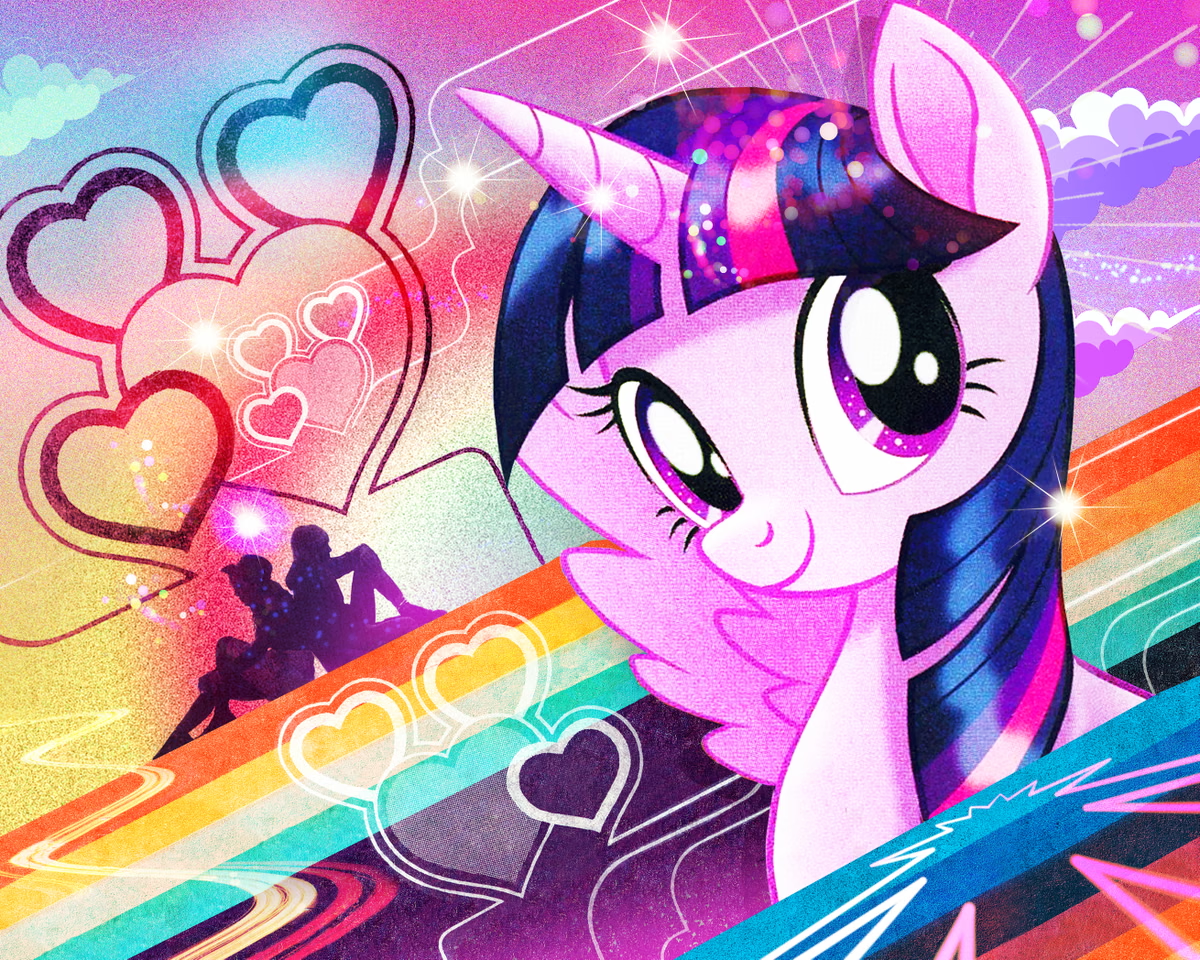
As a neurodivergent child, identifying social mockery was a major challenge. Despite attending school anti-bullying assemblies, I could not grasp how these dynamics played out in real life. Daily, I returned home upset, kicked off my shoes, and sat with my younger sister to watch My Little Pony: Friendship Is Magic. The show, with its bright animations, catchy music, and merchandise, quickly became my favorite escape, but it was the “Elements of Harmony” that truly captured my attention. Each of the “Mane Six” ponies represented an “Element” that made her a good friend: honesty, kindness, laughter, generosity, loyalty and magic.
I began a mental game where I mapped these different elements onto the people in my life. One friend easily fit the description of kindness, while another represented honesty, and my humorous sister was the perfect match for laughter. However, when I tried to assign an element to the classmate I idolized, I realized she did not fit a single category. She lacked honesty, kindness, generosity, and loyalty. Even laughter did not apply, as she was always the only one laughing at my expense.
The turning point arrived through the season three finale song, “A True, True Friend.” In this episode, Twilight Sparkle and her friends resolve a mix-up to help each other regain their true identities. The song, which celebrates supporting friends for who they are, defines a true friend as someone who helps you discover your own strengths rather than overshadowing you or making you feel inferior. One morning, with this song playing in my head, I walked toward my usual group in the schoolyard. Hearing the lyrics in my mind as she spoke to her circle of admirers, I decided to walk away.
Instead of joining her, I approached another girl who was reading a book about wildlife on a bench and struck up a conversation about ponies. More than a decade later, the lessons from those cartoon elements still guide my relationships. I cherish my friends for their unique personalities; my best friend from sixth form mirrors the intelligence of Twilight Sparkle, my college roommate supports me through tough times, and my sister provides the blunt honesty I occasionally need.
Looking back, I sometimes wonder if my sudden departure hurt my primary school classmate. Ultimately, we were simply incompatible, and that is perfectly fine. While her own elements might be different, I have successfully found my own circle of genuine companions.