The tenure of Pep Guardiola at Manchester City has reached a critical juncture, defined less by tactical brilliance and more by the persistent, looming cloud of financial allegations. In May 2019, following a 6-0 victory against Watford in the FA Cup final, Guardiola sat in a Wembley press room in a position of supreme confidence. Yet, that moment of triumph was interrupted when journalist Rob Harris questioned him about reports that former manager Roberto Mancini had received a secondary salary from Abu Dhabi. Guardiola’s response was one of visible irritation and dismissal, suggesting it was not his job to address such inquiries. Shaming stare, eyes that have suddenly become death rays of betrayal and disgust and Pep Guardiola himself transformed from a man cheerfully toasting his own FA Cup final victory to a grizzled chief detective addressing a room full of convicted perverts, chuck in a deep. Noble, virtuous, to be good is also to be good. Right up until the moment it isn’t.
The atmosphere surrounding the club has shifted significantly since that day. Years later, a clip of that same reporter, now with Sky News, questioning Ferran Soriano—a key architect of City’s recent history—highlights a marked change in demeanor. Unlike the defensive, moral indignation Guardiola displayed in 2019, Soriano’s recent interaction resulted in a mumbling, fumbling retreat, appearing more like a man caught in a minor theft than an executive addressing systemic corporate questions. This shift suggests that the scrutiny, once easily dismissed as hostile, is now an unavoidable reality. History is written by the domestic treble winners.
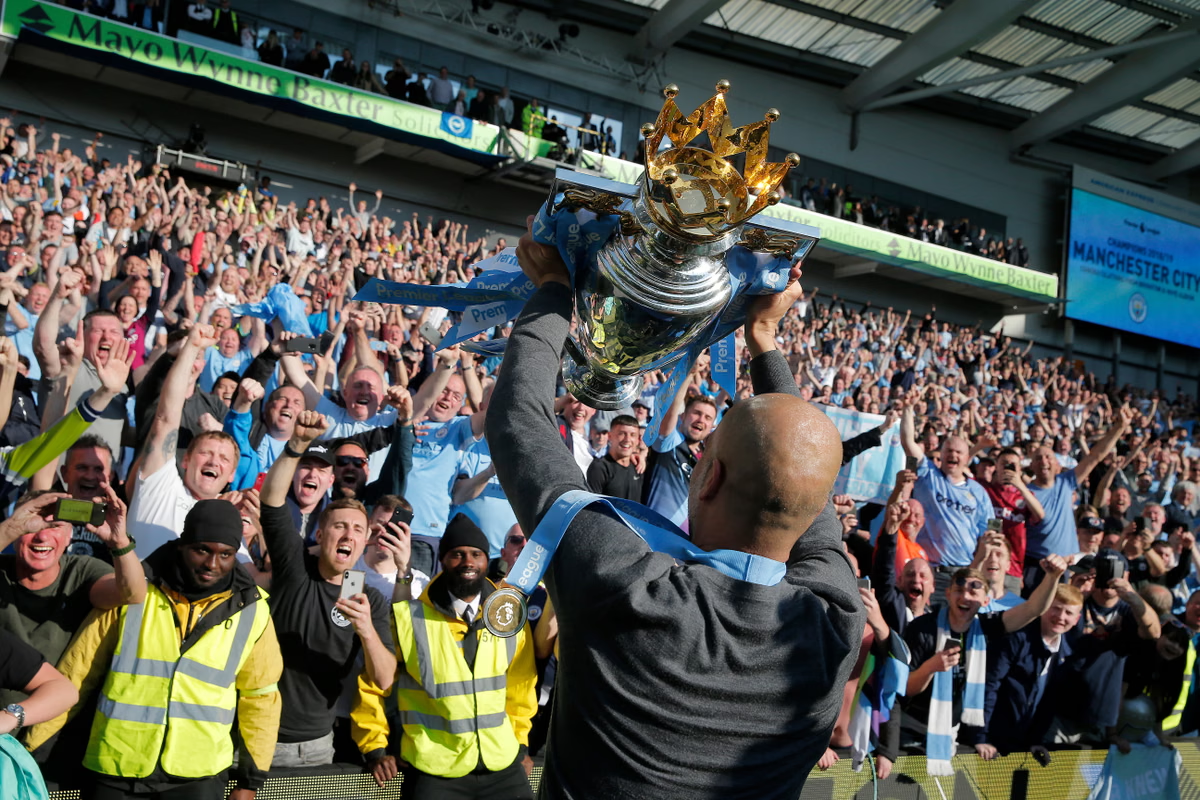
Critics, including those like Nick Harris of Sporting Intelligence, have persistently investigated these financial irregularities despite receiving significant abuse and threats. Their dedication has been vindicated by the current climate, proving that the pressure for transparency is both legitimate and necessary. The Premier League maintains that the club’s success was underpinned by a period of nearly a decade involving alleged sham contracts and financial maneuvering. Success drowns out every other noise in football.
The gravity of the situation extends beyond mere footballing statistics. During the critical period between 2016 and 2018, when the foundations of the current Manchester City dominance were laid, the club’s net spend on transfers, as reported by Transfermarkt, was nearly £400 million higher than that of Manchester United and five times the spending of Liverpool and Arsenal. Such figures underscore the financial disparity that defined this era.
Guardiola’s own relationship with these events remains a point of contention. While he has previously defended the club—most notably when a two-year Champions League ban for breaches of Uefa’s financial fair play rules was overturned by the Court of Arbitration for Sport—his insistence that the club followed the same rules as everyone else is now being tested. He recently reiterated his intent to face the ongoing challenges alongside the club and its supporters, framing the situation as a collective struggle.
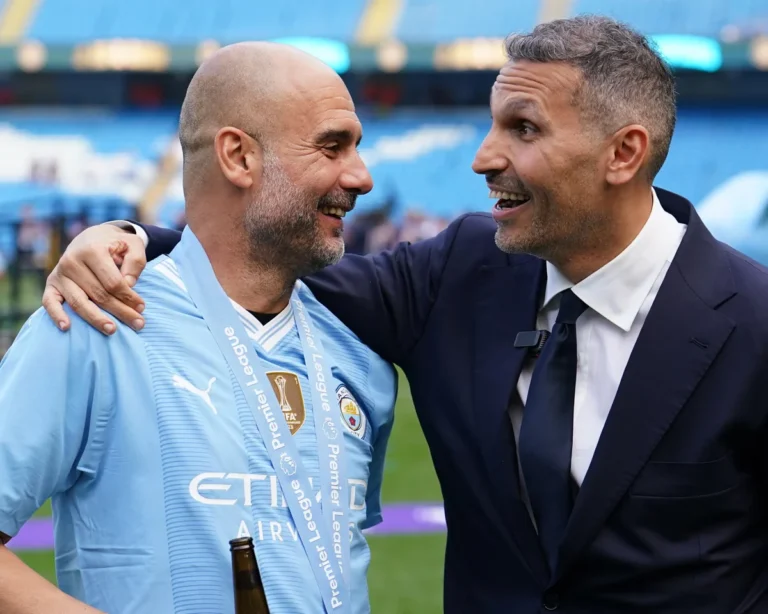
However, the question of what Guardiola knew remains pivotal. His tenure, which stretched to a decade at a club where a substantial portion of time was allegedly spent operating under a cloud of questionable financial practices, is now at risk of being viewed through the lens of those accusations. The manager, who typically moves on after three or four years, has deeply tethered his reputation to the club’s ownership and his close relationship with chairman Khaldoon Al Mubarak. “D o you know the question that you are asking me. Today, do you honestly think it is my job to make this kind of question happen …” Cut to the long, painful pause.
Internal communications, such as those leaked in memos published by Der Spiegel, reveal that figures like Ferran Soriano were well aware of the need to combat these investigations discreetly. These documents provide a stark contrast to the public narrative of sporting excellence and managerial genius. For many, Guardiola’s career at City was seen as the gold standard of modern football management; however, if the financial allegations are substantiated, the validity of those domestic trophies and the “supremacy” he built will face permanent questioning.
Ultimately, Guardiola finds himself in a position where he must double down on his support for the club’s owners. His reputation, which is his life’s work, is inextricably linked to this outcome. As the legal processes continue, the manager is forced to maintain a stance of unity, even as the details of “sham-ball”—a term reflecting the financial irregularities—threaten to redefine the legacy of one of football’s most decorated figures.