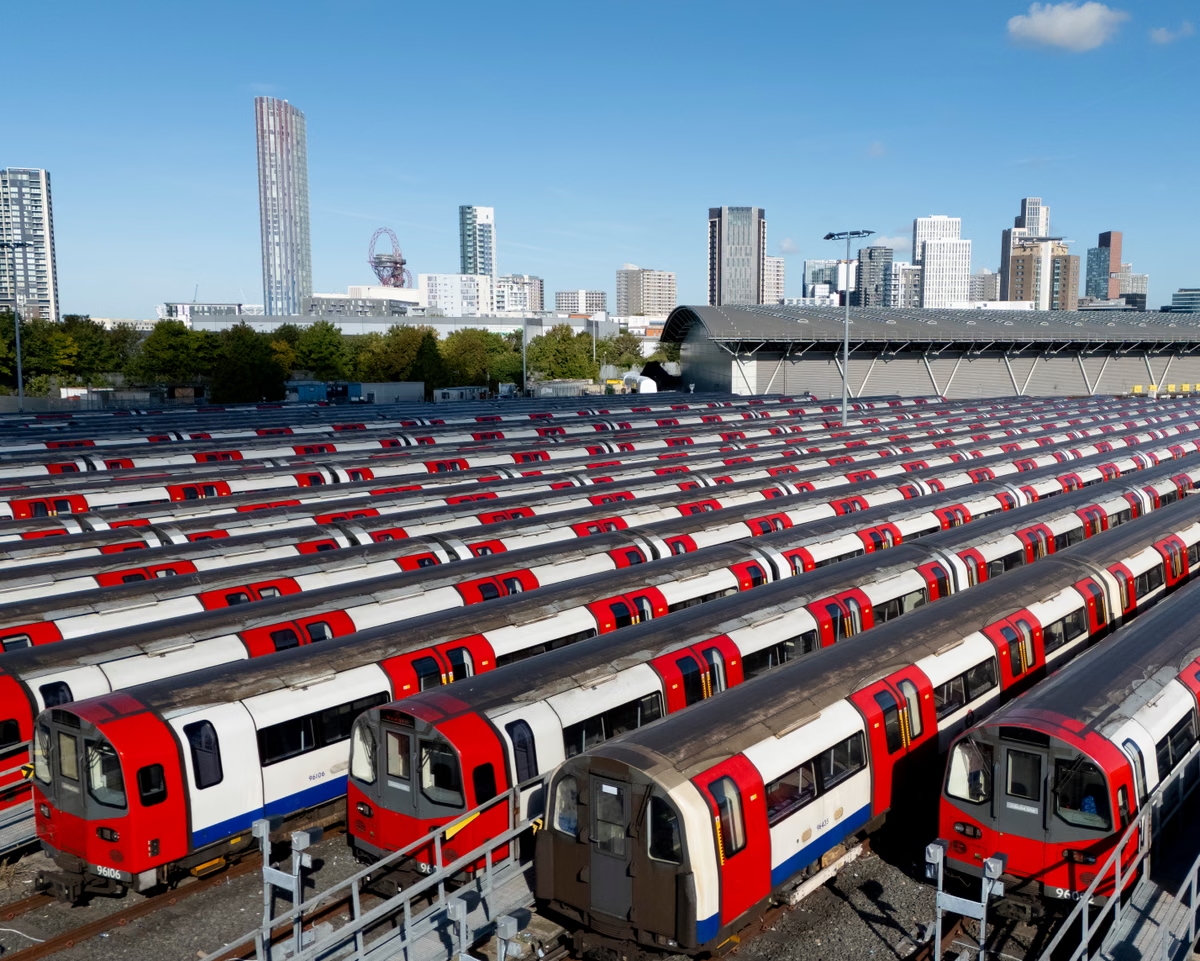
London Underground commuters and holiday shoppers face significant travel disruption as the RMT union has scheduled eight 24-hour strikes across 16 days. A proposal that has been warmly welcomed by the majority of London Underground drivers represented by the Aslef union, the drivers will start another series of 24-hour strikes in late November in opposition to plans for a four-day week.
The industrial action includes six walkouts timed for the peak pre-Christmas period, with the first 24-hour stoppage beginning at noon on 26 November.
Subsequent actions are set for the pre-Christmas weekend, including 17 December and 19 December, followed by further strikes in January and February. With strikes running from noon on Thursday 17 December and again on Saturday 19 December, disruption could mean few tube trains over the last shopping weekend before Christmas.
The dispute centers on Transport for London’s (TfL) proposal for a new four-day working week. While the Aslef union—the largest representative of Tube drivers—has endorsed the plan, the RMT remains staunchly opposed. The union contends that the change would “undermine existing agreements and worsen working conditions” and has demanded further guarantees that staff can remain on their current five-day schedules. It believes the proposals would worsen shift times and certainty.
RMT general secretary Eddie Dempsey described the management proposal as an attempt to “dress up a wholesale attack on drivers’ working conditions.” He argued that the plan would lead to longer, less predictable shifts and force drivers to spend more time behind the controls, ultimately stripping away years of negotiated protections. “This is not about improving work-life balance. It is about squeezing more work out of fewer drivers while giving management greater flexibility at the expense of our members.”.
In response, Nick Dent, the director of customer operations for London Underground, insisted the transition is voluntary. “Drivers can now choose to remain on a five-day week with a guarantee of remaining at the same depot,” Dent stated. He emphasized that the new model aims to improve service efficiency and reduce working hours, urging the RMT to present the revised offer to its members for consideration.
Business leaders have expressed serious concern regarding the impact of these strikes on the capital’s economy. Karim Fatehi, chief executive of the London Chamber of Commerce and Industry, warned that the timing threatens critical trading days for businesses and incoming tourism during the festive season. He urged the union to reconsider the action to prevent widespread economic damage. According to business groups, The news was “deeply concerning”.
Previous industrial action earlier this year, including strikes in April and June, caused widespread delays across the network, even as many services continued to operate on most lines. The ongoing tensions highlight a persistent divide between TfL’s vision for a modernized, flexible service and the RMT’s focus on preserving traditional shift structures and job security.