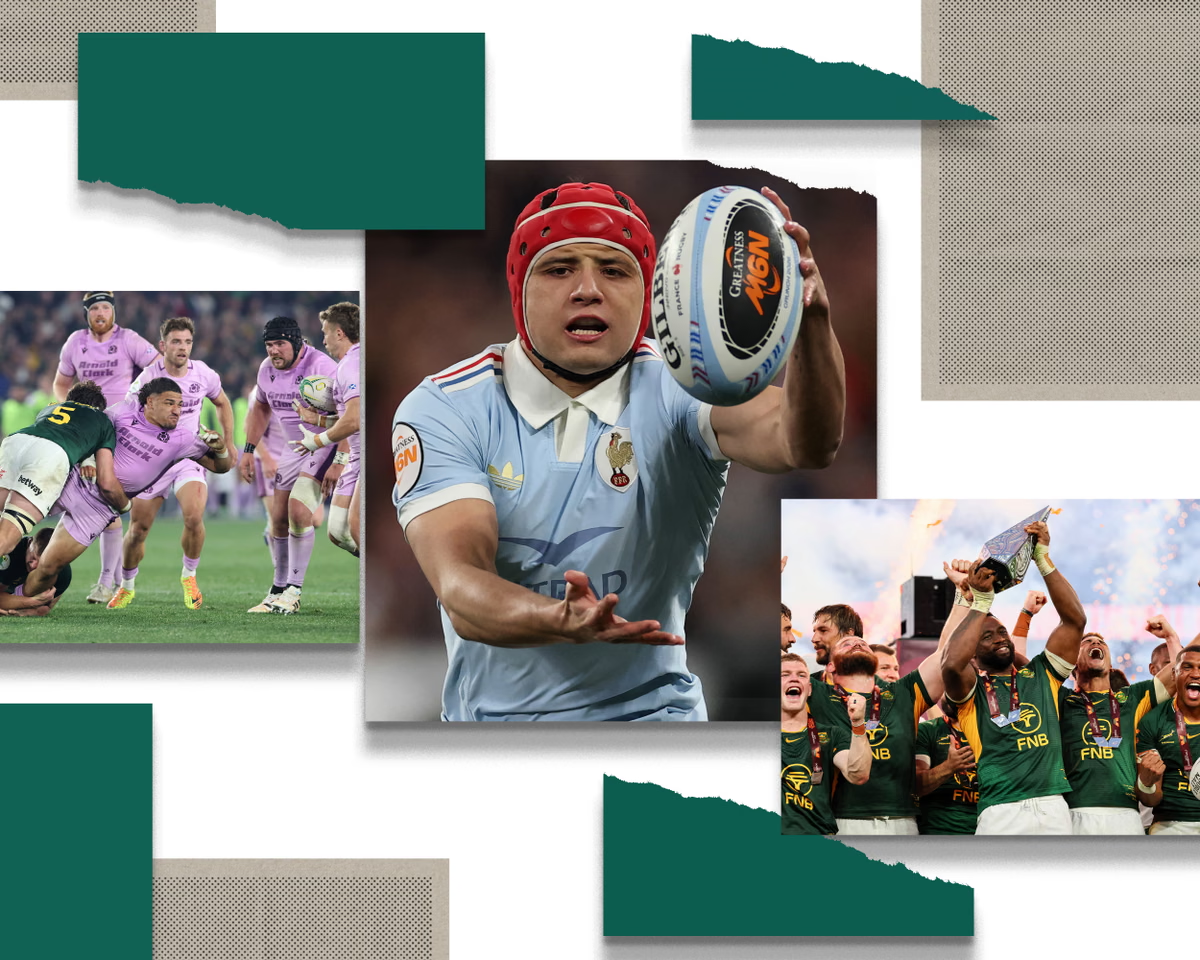
With only one year remaining until the 2027 Rugby World Cup in Australia, the global landscape of rugby union is taking shape. South Africa remains the team to beat, with their recent series victory over New Zealand—moving from a 1-0 deficit to a 3-1 win—solidifying their status as the world’s premier force. Despite calls to manage an aging roster, Rassie Erasmus continues to prioritize the Boks’ traditional hallmarks of physical dominance and set-piece efficiency. The defending champions face a challenging path, likely confronting New Zealand in the quarter-finals and potentially France in the semi-finals. Beaten by Australia last weekend but the manner in which they came back after Rassie Erasmus emptied his bench was emphatic. But that was precisely what he was doing in Perth, many feel Erasmus needs to manage his ageing squad between now and then. Set-piece dominance and physicality remain the Boks’ hallmarks and that isn’t going to change in the next 12 months. There is a lesson there for other teams seeking to topple South Africa: focus on the way you play the game best rather than trying to ape Erasmus’s men.
New Zealand, under Dave Rennie, has reclaimed its reputation for high-tempo play and elite handling skills. Although they lost their recent series against South Africa, their performance proved they remain the closest challengers to the Springboks. With Ruben Love sidelined, Richie Mo’unga is poised to secure the No. 10 jersey in upcoming matches against Australia. The All Blacks also boast a formidable center partnership in Jordie Barrett and Quinn Tupaea, ensuring they remain a major threat. Under Dave Rennie they have simply gone back to what they are good at – playing at pace and showcasing handling skills that once made them the most feared nation. Leroy Carter does not look up to it defensively but the All Blacks have a habit of unearthing wing sensations in the buildup to World Cups and in Ardie Savea, New Zealand boast the world’s best player.
France is currently undergoing a tactical reset under Fabien Galthié following a difficult autumn in 2023. Galthié has overseen a significant coaching overhaul after a heavy loss to the Springboks, which featured a first-half red card for Lood de Jager. While the absence of Emmanuel Meafou for the upcoming autumn fixtures is a setback, France’s depth remains remarkable, as evidenced by their ability to run New Zealand close with an understrength squad.
Ireland sits at the head of the chasing pack, though their recent summer defeat to New Zealand highlighted a need for further development. With the ongoing debate regarding the fly-half position, Andy Farrell continues to balance the integration of new depth with the reliance on veteran leadership that proved decisive during their recent victory at Twickenham. Ireland currently lacks the dominance they displayed during the previous World Cup cycle.
Australia enters the tournament as hosts with renewed confidence, particularly after defeating South Africa, even if the result involved a second-string Springbok side and a Wallabies team that finished the match with only 11 players. Under the leadership of Joe Schmidt and Les Kiss, Australia remains unbeaten and is relying on individual talents such as Tom Wright, Joseph-Aukuso Suaalii, and Fraser McReight to spearhead their campaign.
Scotland, meanwhile, has gained significant momentum, with head coach Gregor Townsend receiving praise after clinching rare victories against England and France in the Six Nations. Sione Tuipulotu is increasingly viewed as the world’s finest inside-center, and the team is in a far stronger position than they were during last year’s difficult autumn window.
England faces scrutiny following a disappointing performance against Argentina and an inconsistent showing against South Africa, where they failed to capitalize on a numerical advantage for 20 minutes despite flashes of brilliance from Tomas Albornoz. Argentina’s Pumas, despite winning only one of their six summer matches, have maintained competitive margins of 10 points or fewer in every game, indicating they are on the cusp of elite status.
Elsewhere, Japan continues to rely on the elite second-row presence of Warner Dearns and the experience of Michael Leitch, who will turn 39 during the tournament. The expansion to 24 teams has sparked concerns regarding potential blowouts in the pool stages, as many nations are struggling to close the gap on the established elite. While Spain prepares for its first World Cup appearance since 1999 and Zimbabwe returns to the professional stage, the tournament remains a steep learning curve for the developing sides.
Samoa’s ongoing decline remains a concern, and teams like Romania, Canada, and the USA are under pressure to show upward trajectories. The tournament’s success will hinge on whether these developing nations can force their way into the knockout stages, though for many, simply securing a spot in the last 16 will be a difficult enough challenge in a field dominated by the established rugby powers.