
The Smithsonian’s National Museum of Asian Art in Washington, D.C., is set to host a significant exhibition titled “From the Louvre: Masterpieces of Islamic Art.” Opening on September 26 and running through January 18, 2027, the display marks the first and only time this specific collection will be shown in the United States. The exhibition features 26 carefully selected works from the Musée du Louvre, showcasing the technical skill and global influence of Islamic artistic traditions from the 7th to the 19th centuries, with origins ranging from modern-day Spain to India.
The exhibition explores the complex histories behind these objects, tracing their evolution from functional items to celebrated masterpieces. Many of these pieces were originally exchanged as diplomatic gifts among sultans and nobles before eventually entering the Louvre’s permanent collection. By examining these items, the museum invites visitors to consider how artistic value is constructed over time through shifting ownership, public perception, and historical context. The galleries will feature a diverse array of media, including metalwork, jade, ceramics, glass, architectural fragments, and paintings.
Chase F. Robinson, director of the National Museum of Asian Art, noted that these objects were once exclusive treasures enjoyed by a select few. “Now, these once-exclusive objects are accessible to all as masterpieces,” Robinson stated, adding that the exhibition aims to highlight how the public and the creators together define what constitutes a masterpiece. The collection includes notable items such as the 14th-century Baptistery of Saint Louis—a brass basin inlaid with gold and silver that transitioned from a secular hand-washing vessel to a religious relic used for baptizing French royalty—and an 18th-century portrait of the Persian ruler Fath-Ali Shah Qajar, which was once gifted to Napoleon.
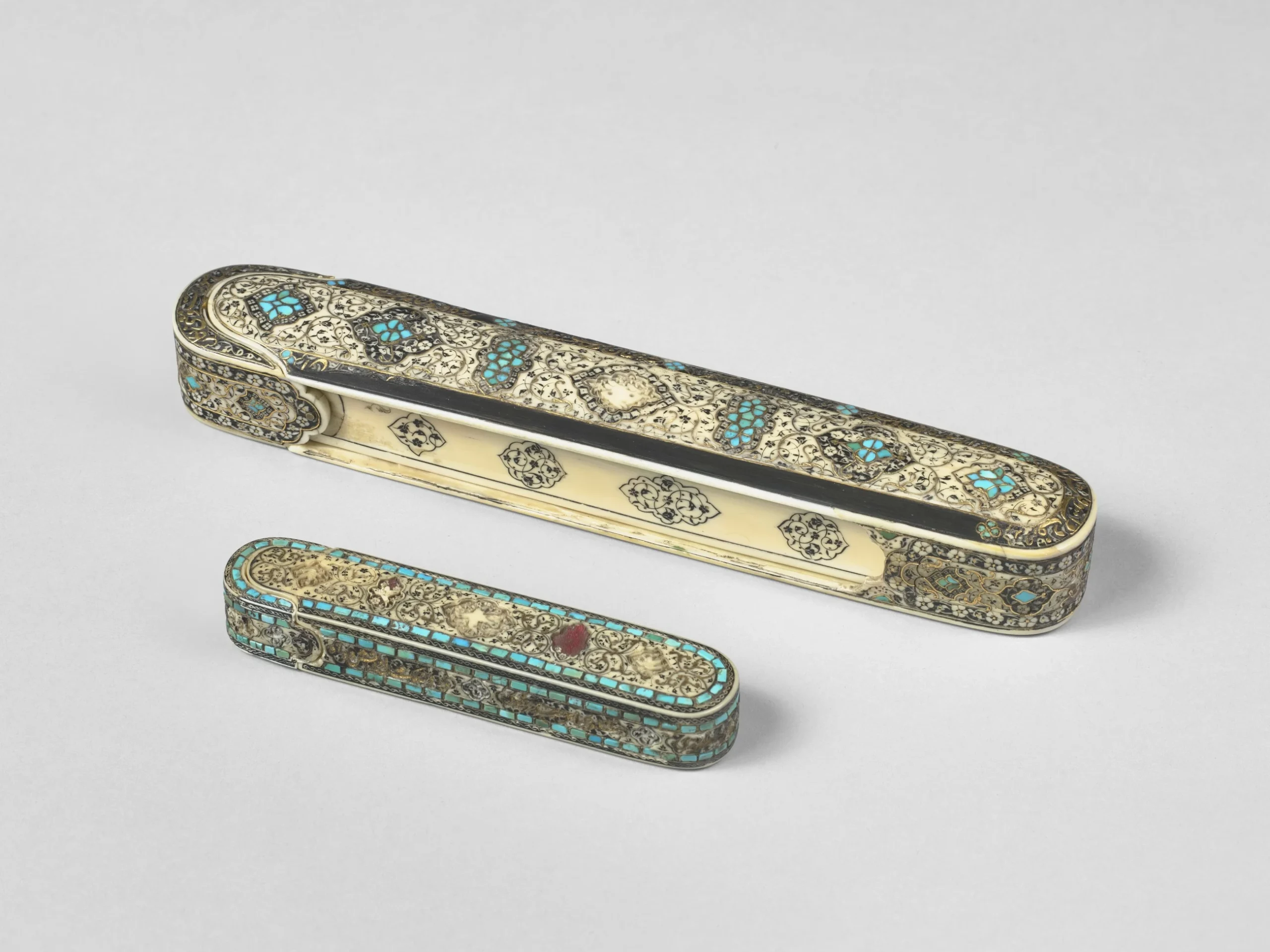
Other highlights include two ivory pen cases commissioned by the Mughal emperor Jahangir, which were later acquired by Louis Cartier in 1912 and served as inspiration for his jewelry designs. The exhibition also features the Lion of Monzón, an 11th-century bronze fountain spout from Islamic Spain that influenced European art trends. These pieces illustrate the long-standing connections between the Louvre and the National Museum of Asian Art, a relationship that dates back to the early 20th century when museum founder Charles Lang Freer maintained a correspondence with Louvre curator Gaston Migeon and collector Raymond Koechlin.
The exhibition is co-curated by Souraya Noujaim, director of the Islamic art department at the Louvre, and Simon Rettig, associate curator for the arts of the Islamic world at the Smithsonian. Noujaim emphasized that the Louvre has spent decades acquiring works that reflect the vast diversity of Islamic art, and this collaboration serves to continue the spirit of cross-cultural dialogue. Rettig remarked that “works of art rarely begin their lives as masterpieces,” noting that the exhibition provides a unique opportunity to share the captivating stories behind these items as they continue to fascinate modern audiences.
The project receives financial support from the E. Rhodes and Leona B. Carpenter Foundation, Mary and Farhad Ebrahimi, the Ebrahimi Family Endowment for Persian, Arab, and Turkish Art, and a contribution from Ronald M. Costell, M.D., and the Estate of Marsha E. Swiss. The National Museum of Asian Art, which opened in 1923 as the first national art museum in the U.S. dedicated to Asian works, continues to serve as a vital resource for global cultural understanding. Similarly, the Louvre, which has been open to the public since 1793, remains a premier international institution, housing 30,000 works across 70,000 square meters, including iconic pieces like the Mona Lisa and the Venus de Milo.
On view till January 18, 2027, it features artworks from the seventh to 19th centuries created in Islamic regions, spanning modern-day Spain to India.
On view for the first time in the US — and at its only stop — From the Louvre: Masterpieces of Islamic Art presents a selection of 26 artworks from the Musée du Louvre that represent the depth, technical excellence and g
The pen cases, bearing their names, were acquired by Louis Cartier in 1912 and inspired some of his jewellery creations; and designs on the Lion of Monzón, symbolising blessings and good fortune on the owner, which inspi
On view for the first time in the US — and at its only stop — From the Louvre: Masterpieces of Islamic Art presents a selection of 26 artworks from the Musée du Louvre that represent the depth, technical excellence and global reach of the arts of the Islamic world.
Frequently gifted to secure and strengthen alliances, the works were invested with new power and meaning as they moved from the possession of sultans, princes and nobles, to the hands of artists, archaeologists and collectors.
Examples include the Baptistery of Saint Louis, a brass basin inlaid with silver and gold from 14th-century Syria and Egypt that was originally intended for secular use, such as ceremonial hand washing, later transforming into a religious relic when used to baptise King Louis XIII in 1606; an 18th-century oil painting of the Persian ruler Fath-Ali Shah Qajar (1787–1834), once displayed in one of the shah’s residences
The pen cases, bearing their names, were acquired by Louis Cartier in 1912 and inspired some of his jewellery creations; and designs on the Lion of Monzón, symbolising blessings and good fortune on the owner, which inspired art trends throughout Europe.
An object from Koechlin’s collection — a blue and turquoise plate with a peacock from the 16th-century Ottoman Empire — is now at the Louvre and included in the exhibition.
It now stewards one of the world’s most important collections of Asian art, with works dating from antiquity to the present.







Comments