The United States Federal Reserve has opted to maintain its benchmark interest rates within the 3.75% to 4% range. This policy decision follows the central bank’s move to increase rates during its September session, marking the first such hike in three years. The latest pause comes just days ahead of the midterm elections.
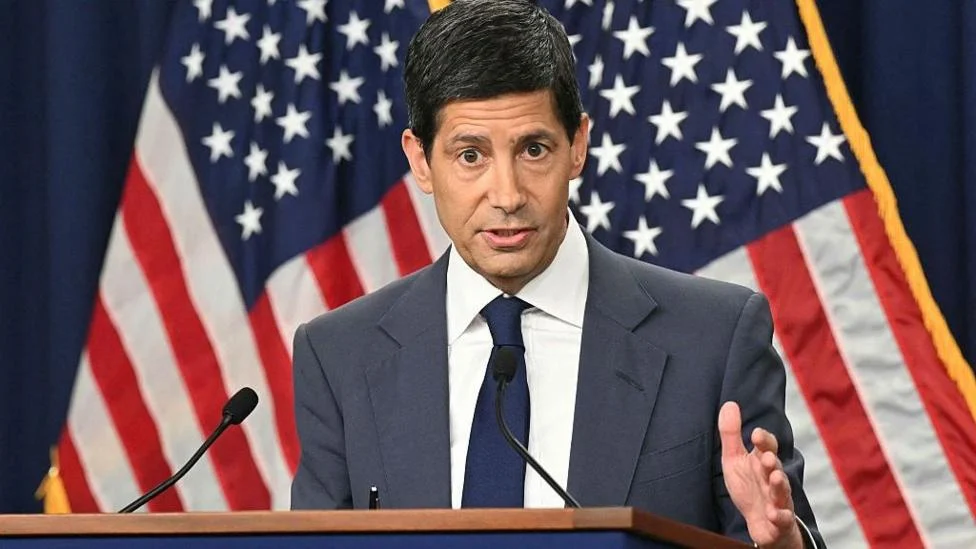
Fed Chair Kevin Warsh indicated that the recent tightening measures are beginning to impact the broader economy. Referencing the September increase, Warsh stated that there is an overwhelming consensus that the current monetary medicine is starting to work. However, he maintained a cautious outlook, noting that while inflation remains elevated, the committee requires additional data before committing to further adjustments. With inflation running above the Fed’s target, figures published after the Fed’s announcement showed the US economy growing at a stronger pace than expected. According to in its decision to hold rates steady this month, the Fed, While inflation remains high, it wanted to gather more information before making another decision to change rates. According to warsh, Things are moving in the right direction, while the US economy is performing very strongly.
Economic indicators released alongside the policy announcement reveal a resilient US economy, which expanded by 3.4% on an annualised basis during the third quarter.
This growth outperformed analyst expectations, bolstered significantly by strong consumer spending and a 19.4% surge in private investment, particularly within the artificial intelligence sector.
Despite this performance, inflation reached 3.7% for the year ending in September, a trend fueled largely by rising energy and fuel costs stemming from the ongoing conflict in Iran. Driven higher by fuel and energy prices which have surged off the back of the war in Iran, prices increased by 3.7% in the year to September.
The decision to pause rate hikes was not unanimous. While 10 of the 12 committee members voted to keep rates unchanged, Governor Lisa Cook and Cleveland Fed President Beth Hammack dissented, advocating for a raise to a range of 4% to 4.25%. The committee is scheduled to reconvene for its next meeting on December 8-9, where officials expect to have a clearer picture of the economic landscape.
The Fed currently utilizes interest rate adjustments as a primary tool to stabilize the job market and keep annual inflation near its 2% target.
When the central bank holds rates steady, it influences the cost of borrowing for mortgages, car loans, and credit cards, while also impacting the returns available on consumer savings. Mortgages, or business loans â but also what return they get for saving cash, an interest rate tells people and businesses how much it costs to borrow money â such as with credit cards. Spend less money, and make less investments, this encourages people and businesses to save more.
Generally, higher rates are deployed to cool inflation by discouraging spending and borrowing, whereas lower rates are utilized to stimulate economic activity. Which in turn affects spending and saving decisions, this tends to mean higher rates from banks and other lenders. For example, someone refinancing their mortgage or buying a property for the first time could face higher mortgage rates. All of this tends to reduce demand and slow inflation.
Historical context shows that current interest rate levels are comparable to those seen during the lead-up to and initial stages of the 2008 financial crisis.
Following that period, the Fed maintained historically low rates to spur growth. These rates picked up prior to the pandemic, dropped toward zero during the global health crisis, and subsequently climbed to 5.25%-5% between mid-2023 and August 2024 to combat surging inflation. They picked up again ahead of the pandemic before dropping to as low as 0%-0.25% during the pandemic. They then rose to highs of 5.25%-5% from the middle of 2023 to August 2024 as inflation jumped. US interest rates have historically moved around quite a bit. Until rates were raised last month, they had been falling steadily since then.
Looking ahead, Warsh declined to provide specific projections for the upcoming policy stance. He emphasized that the committee must account for various unpredictable factors and noted that he was not prepared to share his personal musings on future rate paths. For now, the Federal Reserve continues to monitor credit conditions and economic data to determine the appropriate policy trajectory. So I’m not going to be able to share with you my musings, a lot of things can happen.