
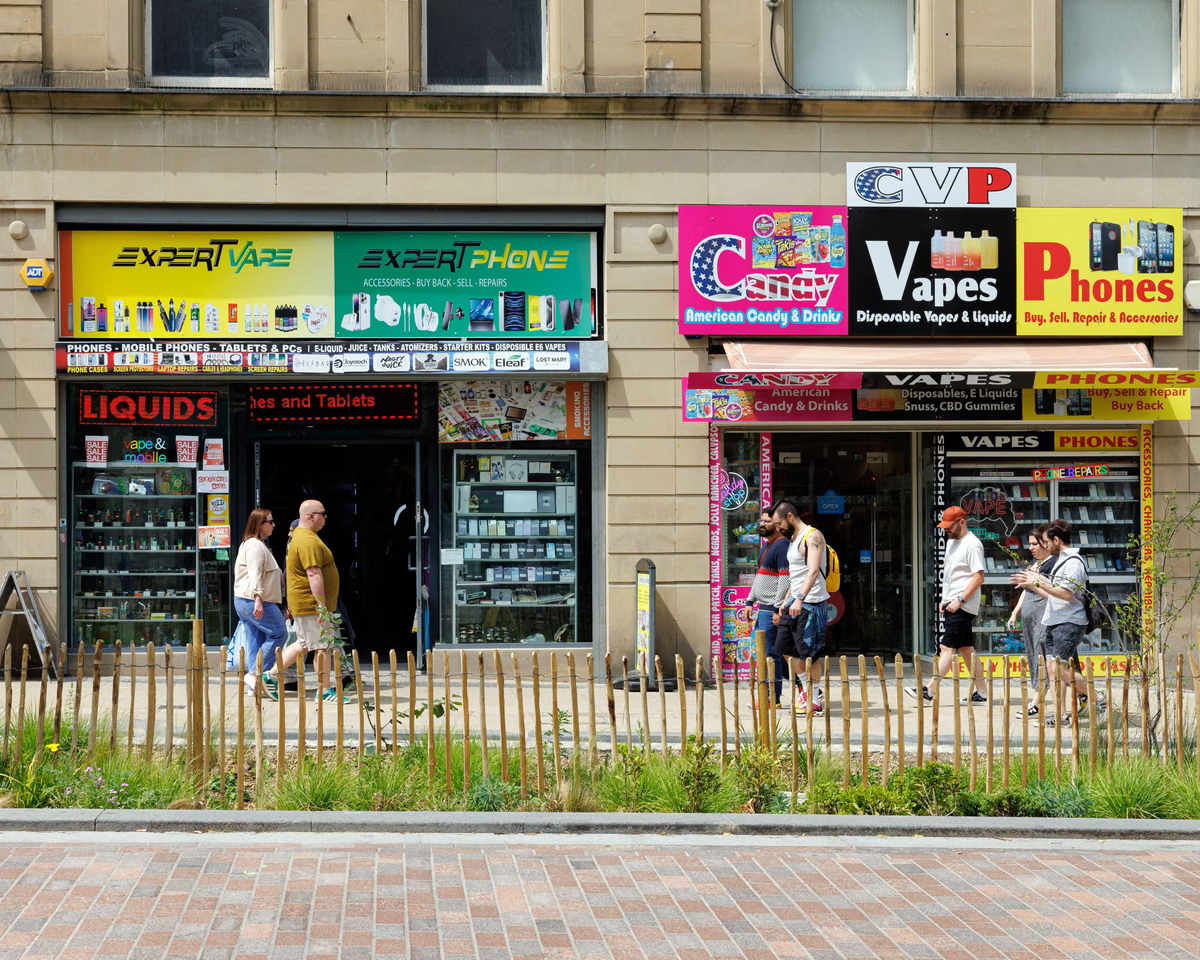
Prime Minister Andy Burnham has announced a significant shift in retail planning policy, granting local councils expanded powers to restrict the proliferation of betting shops and vape retailers on Britain’s high streets. These measures, which Downing Street aims to implement by the start of 2027, represent a direct response to the visible decline of local shopping centers and growing public concern regarding the dominance of gambling and vaping outlets.
A central pillar of the initiative is the commitment to scrap the “aim to permit” rule established under the Gambling Act 2005. Currently, this regulation effectively mandates that councils approve new gambling premises provided they meet basic licensing requirements. By abolishing this rule, the government intends to empower local authorities to reject new betting shops and adult gaming centers based on the specific needs and existing density of gambling venues within their communities.
This policy marks a substantial departure from the changes introduced by Keir Starmer in April, which allowed councils to consider the number of existing gambling premises but stopped short of removing the “aim to permit” mandate. As mayor of Greater Manchester, Burnham had campaigned alongside nearly 300 politicians and activists to abolish the rule, arguing that communities deserve greater control over their local environments as traditional services and pubs continue to disappear.
The move comes after research suggested Labour would be “washed away in a tide of discontent” at the next general election unless it tackled the decline of Britain’s high streets. Burnham is attempting to make the first weeks of his prime ministership about tangible changes people can see in their everyday lives. “I said we would improve Britain’s high streets, and that’s exactly what we are starting to do,” the Prime Minister stated.
Vape shops are also facing stricter oversight. Currently, these businesses fall into the same planning category as general retail, cafes, and banks, allowing them to open without specific planning permission. The government plans to reclassify them into a distinct category, enabling councils to evaluate each application individually and reject those deemed unsuitable, particularly those located near schools. Ministers are also exploring tighter definitions to prevent operators from disguising vape-focused businesses as general convenience stores.
The scale of the issue was highlighted by Dawn Butler, the MP for Brent East, who noted the immense profitability of gambling machines. “Government analysis of Gambling Commission data found that B3 machines generated an average of £35,000 in gross gambling yield per machine each year,” Butler explained. “To put it in perspective, the national living wage for someone aged 21 or over works out at around £26,400 a year for someone working 40 hours a week.”
Butler added, “That figure really brought home to me the scale of the gambling industry’s presence on our high streets and why they would want multiple shops on the high street to maximise their profits.” In areas like Brent, where the average wage is less than £35,000, the economic impact of these machines is particularly pronounced. The government’s analysis underscores why local leaders are demanding the tools to manage their own commercial landscapes.
Prof. Will Jennings of the University of Southampton, who led the research on high street decline, described the policy as an important first step. While noting that the policy will not solve the broader challenges posed by online retail—which now accounts for nearly one in three UK sales—Jennings emphasized that the move addresses a genuine area of public concern. He added that the government must also address opaque property ownership structures that leave some landlords indifferent to the quality of their tenants.
The growth of these businesses is not uniform across the country. Research from Health Equity North indicates that the most deprived communities host three times as many vape shops as the most affluent areas. Communities Secretary Angela Rayner emphasized that the new powers are designed to rectify decades of neglect. “That’s why we’re giving local leaders the power to say no to what doesn’t belong on their high street, and the tools to fix it themselves,” she said.
A No 10 source confirmed that a six-week fast-tracked consultation will precede the implementation of these measures. The initiative is viewed as the first stage of a wider beautification project for Britain’s high streets, with Westminster setting clearer expectations for the design and appearance of shopfronts. By curbing the expansion of betting and vape shops, the government hopes to restore the community spaces that residents have long been calling for. The report also notes that as mayor of Greater Manchester, Burnham called on Starmer to abolish the rule in January, alongside almost 300 other politicians and campaigners. The report also notes that a No 10 source said the government was determined to crack down on vape and betting shops because they were two of the most visible signs of decline on high streets, and local people were genuinely concerned. The report also notes that to prevent people saying they were opening a convenience store that had the primary function of selling vapes, the government is also looking at tightening the definition of what a vape shop is. The report also notes that that experience underlined for me why urgent action was needed.”. The report also notes that vape shops in England and Wales to need planning permission while betting shop law change will also apply in Scotland.









Comments