
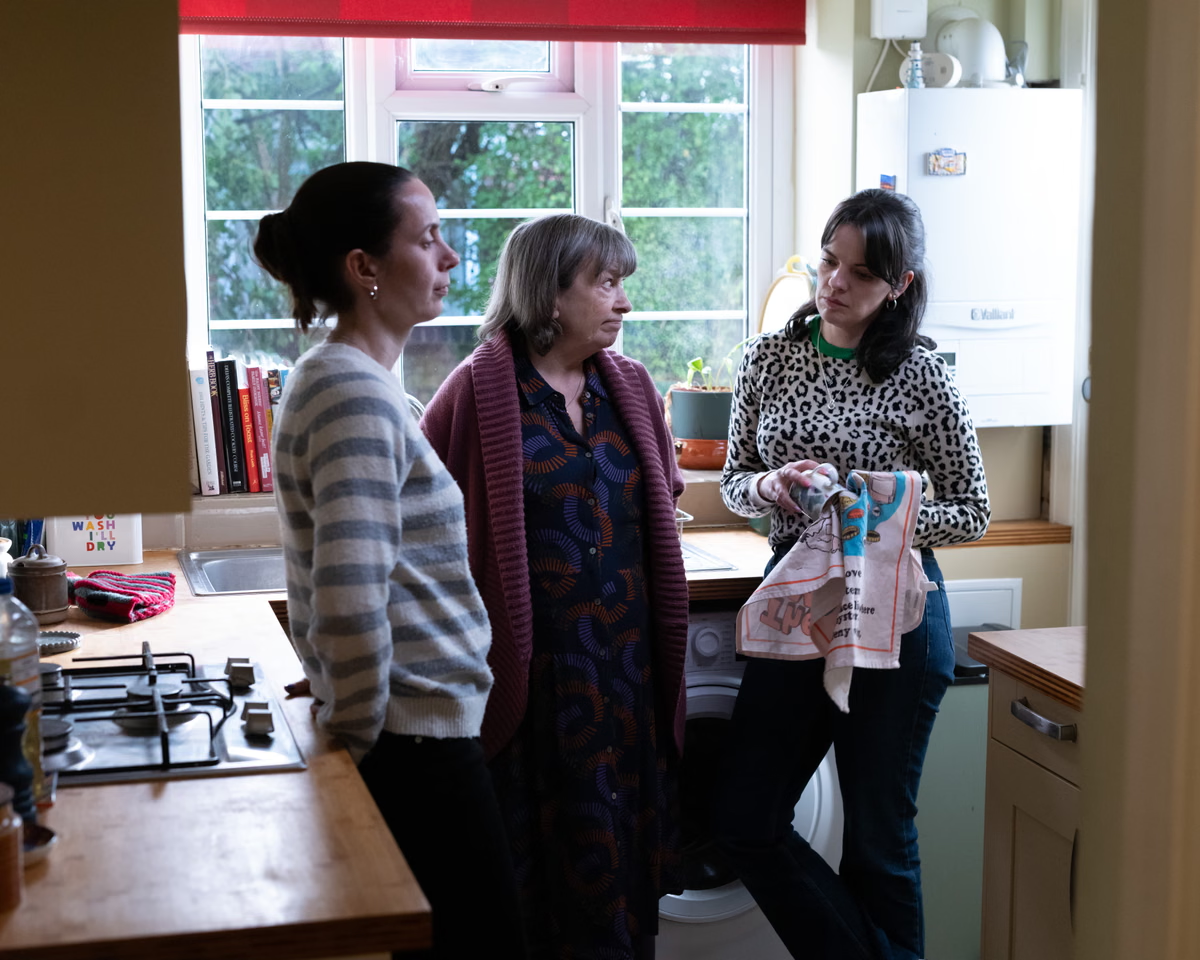
Mike Leigh’s latest film, which may serve as his final project, offers a deeply moving exploration of intergenerational life, focusing on the bittersweet acceptance of mortality. Much like his previous works with deceptively upbeat titles such as 1990’s Life Is Sweet or 2008’s Happy-Go-Lucky, the film avoids the darker, more cynical tone found in movies like 1996’s Secrets & Lies or 2024’s Hard Truths. However, the film is far from a simple satire; it presents an elusive, complex look at the lives of its characters, where the boundaries between their personal struggles and professional duties are never quite straightforward.
The dialogue carries the signature Leigh style—a blend of naturalism and a distinct, almost wartime-era perkiness. This optimistic outlook is something the thirtysomething protagonists have inherited from their parents, leaving the audience to interpret the emotional weight of their interactions. Set in Ealing, west London, the story follows Rosie, a social worker played by Alice Bailey Johnson, who is currently dating a fireman. Rosie maintains a calm, professional demeanor even when dealing with difficult clients, such as an impassive hospital patient who refuses to provide more than a simple number when asked for his address.
Rosie shares her flat with her best friend, Amy, portrayed by Kate O’Flynn, who is also a social worker specializing in vulnerable youth. Amy has recently moved in after ending a relationship with an unpleasant partner. The two women find genuine joy in each other’s company, bonding over songs and jokes. While some narratives might frame their deep friendship as a form of romantic denial, this film treats their bond as a sincere, platonic connection, grounding the tension elsewhere in their lives.
The emotional core of the film is bolstered by the performances of Leigh stalwarts Marion Bailey and Paul Jesson, who play Amy’s aging parents. Jesson, known for his role as the elderly father in 2014’s Mr Turner, brings a heartbreaking vulnerability to the role. During visits, Amy’s mother affectionately refers to Rosie as her “second daughter.” However, the family dynamic is strained; Amy struggles to tell her parents that her relationship has ended, while her mother grows increasingly concerned about her husband’s lapses in memory and his tendency to zone out during conversations. Their private moments, often spent singing songs like Daisy Bell and Boiled Beef and Carrots, highlight a simple, fragile innocence.
In her professional life, Amy demonstrates a strong ability to connect with troubled teenagers, while Rosie often faces more resistance. One scene highlights the limitations of their work when a woman who has lost her children to the state system confronts Rosie. The woman points out that speaking openly to a social worker could be used against her in court, noting that she would at least have the right to remain silent if she were under arrest. Meanwhile, Amy’s mother remains a pillar of support for a neighbor who is grieving the loss of her husband and dealing with an estrangement from her son.
The film is structured with theatrical precision, moving fluidly between the domestic lives of the two women and their professional challenges. Rather than relying on traditional narrative arcs or explosive monologues, the story builds toward a quiet, devastating moment in a bedroom, where the camera retreats with tactful sadness. Gary Yershon’s music underscores a mood that is more ruminative than melancholic, capturing a world where people are deeply invested in one another despite the heavy burden of their circumstances. The film, which premiered at the Telluride film festival, leaves a lasting impression of the love and sadness that define the human experience as it moves inexorably forward. The report also notes that and Leigh leaves it to the audience to judge the consequent tone of the drama and the appropriate tone of, this is a perkiness that the thirtysomethings have unexpectedly inherited and modified from their old mum and dad. The report also notes that and Amy’s mum unselfconsciously calls Rosie her “second daughter”, rosie and Amy go round to see them together for cups of tea. The report also notes that bailey’s mum figure waxes lyrical about her husband and how wonderful it was, 50 years ago, to have met him: “He was one in a million … a needle in a haystack!” Of course, a needle in a haystack doesn’t exactly connote w. The report also notes that with the end that is waiting for you too, and then you have to come to terms with the mortality of your elderly parents and by that same token. The report also notes that the decency and clarity of the film are a tonic. The report also notes that and even the contrast here between the two heroines’ private and professional lives isn’t straightforwardly a matter of irony, but his sweet titles are not simply satirical and intended to mean the opposite: it is more complicated and elusive. The report also notes that as so often, the dialogue has that unique Leigh cartoonish quality that isn’t caricature, and the characters often speak with an almost wartime chirpiness in a world of peckers kept up and noses kept clean.





Comments