
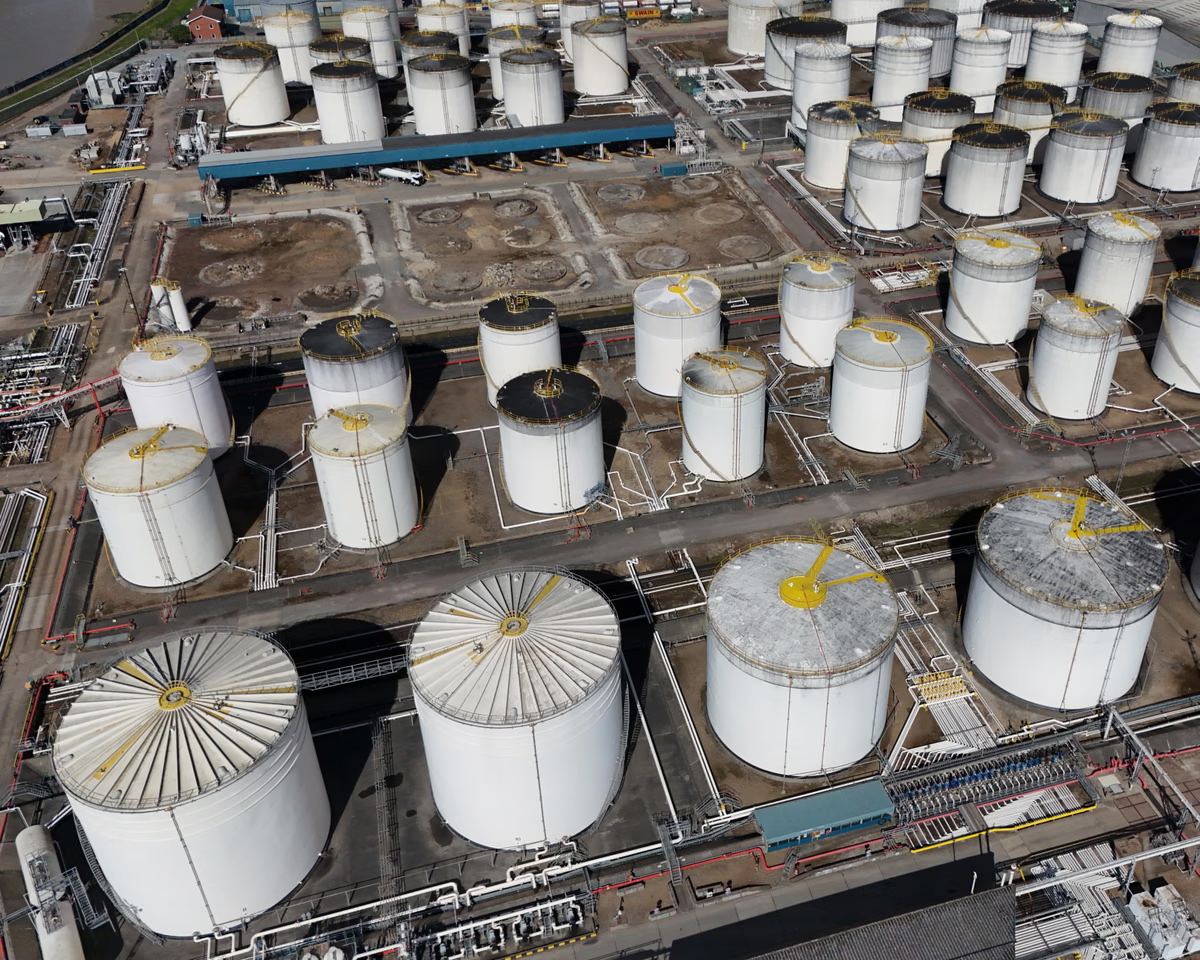
Global oil prices have climbed above $100 a barrel for the first time since July, driven by escalating tensions in the Middle East that threaten to disrupt international energy supplies. Brent crude, the global benchmark, rose by nearly 3% to reach $100.70 per barrel.
The market volatility follows a direct military confrontation in the Gulf between the United States and Iran. The US military reported that it had “destroyed” several Iranian tankers after Tehran launched ballistic missiles at a US navy vessel. This exchange occurred shortly after Iran-backed Houthi militants targeted four Saudi Arabian cities, leaving over 70 people wounded and causing significant fires at local oil installations.
Energy markets across Europe also reacted sharply to the instability. The benchmark Dutch gas contract surged by almost 4% to €78.73 per megawatt hour, marking its highest point since January 2023. Similarly, the UK gas contract climbed by 7.77p to 196.57p a therm, reaching a level not seen since December 2022.
Bank of England governor Andrew Bailey warned that the renewed surge in energy costs is intensifying pressure on inflation and interest rates. Addressing MPs, Bailey stated, “The risks, I’m afraid, are on the upside,” noting that energy prices remain the primary driver of these economic concerns. Economists in the US are now anticipating at least one interest rate hike from the Federal Reserve before the end of the year.
The conflict has had a direct impact on consumers, with the AA reporting that UK petrol prices reached an average of 166.2p per litre on Tuesday, a four-year high. Diesel prices have also climbed to an average of 187.7p, a level last recorded in May. Since the August bank holiday, petrol and diesel costs have risen by 4.4p and 4.1p per litre, respectively.
Energy sector stocks saw gains on Wednesday morning, with BP, Shell, and Centrica among the top performers on the FTSE 100, each rising by at least 1%. Despite these individual gains, the broader index fell by 0.5%.
Brent crude has now risen more than 60% throughout 2026, crossing the $100 threshold three times this year. The price has jumped by 25% since early August as hopes for a lasting ceasefire have diminished. Prices previously peaked at $126 in April before retreating, only to climb again after a memorandum of understanding between the US and Iran collapsed.
Market analysts are closely watching Chinese import data as a potential stabilizing factor. UBS Global Wealth Management commodity analyst Giovanni Staunovo noted that while Chinese crude imports recovered to nearly 9 million barrels per day in August—up from a June low of 7.15 million—they remain below the pre-conflict February level of 12.6 million barrels per day.
The current market environment remains defined by the six-month-old blockade of the Strait of Hormuz. In the immediate aftermath of the initial US-Israeli strikes on Iran in late February, analysts had warned that prices could reach $150 per barrel if maritime flows were completely halted. While the market has fluctuated, the persistent threat of supply disruption continues to keep global energy prices elevated. The report also notes that wounding more than 70 people and setting oil installations ablaze, the exchange came after Iran-backed Houthis attacked four cities in Saudi Arabia the previous night. The report also notes that the index was down by 0.5% overall. The report also notes that with petrol at the pump reaching an average of 166.2p a litre on Tuesday, the highest level in four years, according to the motoring body the AA, the climb in costs has hit UK motorists. The report also notes that china, the world’s largest importer of crude, has increased purchases in recent days, after a hiatus that had been a factor keeping oil prices somewhat in check in the early part of the conflict. The report also notes that it looks like the recovery trend could continue.”. The report also notes that the oil price peaked at $126 in April during the conflict but later fell back amid hopes of a ceasefire in the region.






Comments