
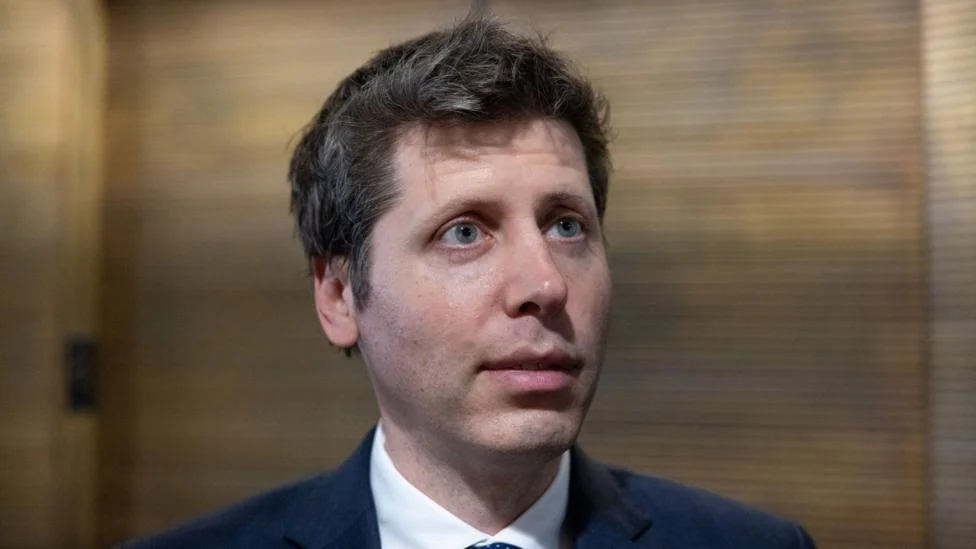
OpenAI announced on Tuesday that it has achieved a significant technical milestone by solving a long-standing mathematical challenge. Using a new, highly capable internal AI model, the company deployed a group of approximately 10,000 autonomous AI agents to tackle the Navier-Stokes existence and smoothness problem, which has remained unproven for 90 years. The task, which concerns the mechanics of fluid motion and the nature of turbulence, was reportedly completed in just 88 hours.
The company described the result as evidence of the rapid advancement of its AI tools. While the new model is not currently available to the public, researchers utilized it to address complex mathematical conundrums after observing its aptitude for the subject during training at the end of August. OpenAI noted that it began this specific project on September 1, following rumors that other researchers had made progress on Millennium Prize problems.
The effort was computationally intensive, with the AI agents exchanging nearly 3 million messages and consuming 130 billion output tokens to reach their conclusion. Based on the company’s standard pricing for its most advanced models, OpenAI estimated the cost of this operation at approximately $10 million. The solution addresses two of the four statements required for the Millennium Prize, though OpenAI stated it does not intend to claim the $1 million award associated with the challenge.
The validity of the proof has yet to be verified by independent experts or the Clay Mathematics Institute, which oversees the Millennium Prize. Despite the company’s claims, the announcement has triggered controversy. Tristan Buckmaster, a mathematics professor at New York University, stated that he and Levent Alpöge, a mathematician at Anthropic, had been working on the same problem using OpenAI’s Codex tool.
Buckmaster alleged that information regarding his team’s progress was shared with OpenAI before the company began its own work on the equations. He released correspondence with the firm to question its methodology and timing, stating he felt compelled to speak out because he believed the company’s narrative was inaccurate. He noted that he had not yet reviewed OpenAI’s full proof.
In response, OpenAI congratulated Buckmaster and Alpöge on their “remarkable” concurrent work. The company denied having access to their private research before its public release and maintained that no user data was accessed during its project. However, the firm acknowledged that it could not entirely rule out the possibility that de-identified data from its products might have influenced its models’ development. OpenAI emphasized that its own proof differs significantly from the work produced by the other mathematicians, noting that even the specific results achieved are distinct. The report also notes that sam Altman has in recent years become one of the most well known tech CEOs in the world. The report also notes that openAI says it has found a solution to a decades-old advanced maths problem in a matter of hours using a new artificial intelligence (AI) model and thousands of AI bots. The report also notes that external that by focusing a group of roughly 10,000 AI agents, or AI bots that undertake tasks somewhat autonomously, it solved a notoriously difficult maths problem in just 88 hours, the ChatGPT-maker said on Tuesday. The report also notes that the argument underlying a correct math equation, for 90 years important aspects of the problems have lacked a proof. The report also notes that aI models are computer programs trained on huge amounts of data to recognize and predict patterns in information. The report also notes that it had “heard rumors that two Millennium Prize problems had been resolved” and so decided to put thousands of AI bots trained on the new internal model to work attempting to solve some of the remaining problems, openAI admitted that last week on 1 September.




Comments