
Nostalgia has become a powerful commercial engine in the modern music industry. Whether it is the resurgence of vinyl among audiophiles or the niche appeal of cassettes, there is a pervasive belief that older formats provide superior warmth or sonic richness. However, from an acoustic standpoint, these claims are largely unfounded. High-resolution digital streams objectively outperform vinyl in fidelity, and the preference for tape hiss often stems from a desire for music that feels less polished and more human in an era of technological perfection.
Classical music has engaged in a similar, yet more profound, pursuit of the past for decades. Rather than merely chasing a vintage aesthetic, musicians and musicologists have sought to understand the actual sonic landscape of earlier centuries. Pioneers like David Munrow in the 1970s brought medieval and Renaissance instruments—such as shawms and crumhorns—into the mainstream. Later, figures like Roger Norrington, John Eliot Gardiner, and Nikolaus Harnoncourt established ensembles dedicated to the specific performance practices of the 17th, 18th, and 19th centuries, embedding this research into the performance of works ranging from Schubert to Bruckner.
The distinction between these classical efforts and the vinyl trend lies in the instruments themselves. A harpsichord from the 18th century functions fundamentally differently than a modern Steinway; its plucked strings produce a sound that decays rapidly, whereas a contemporary grand piano creates sustained halos of resonance. Similarly, historical brass and woodwind instruments lacked the mechanical refinements of today, requiring musicians to navigate the temperamental realities of gut strings and unreliable reeds. These are not merely differences in quality, but in the very nature of expression.
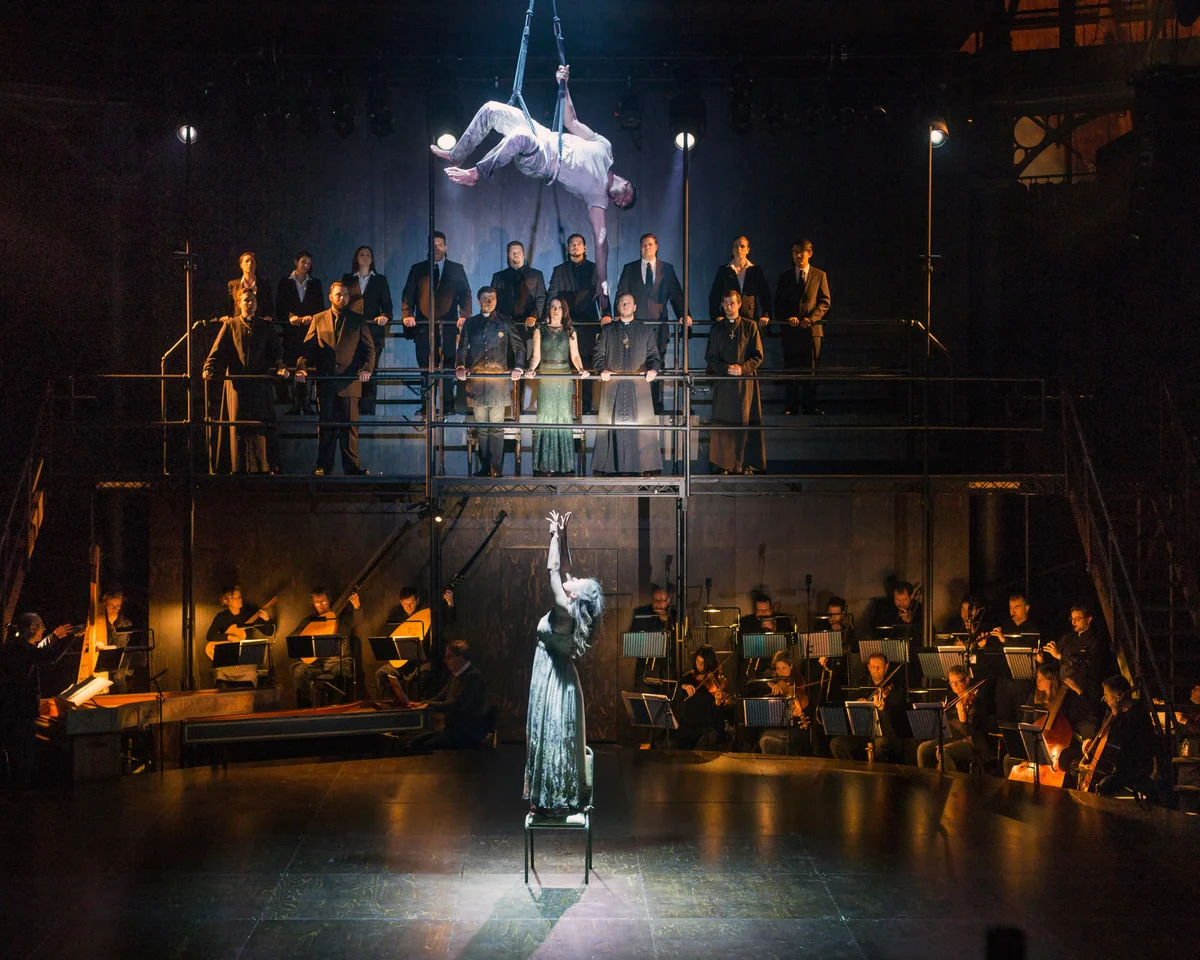
This divergence is evident when comparing different approaches to the same repertoire. A performance of Bach’s Matthew Passion by Karl Richter in 1979, utilizing massed forces, creates a sense of a vast, immovable monument. In contrast, Paul McCreesh’s 2003 recording with the Gabrieli Consort—played at a significantly faster tempo with one voice per part—invites the listener to engage with the drama on an individual, empathetic level. These period-instrument performances do not just change the sound; they alter the meaning and emotional weight of the music.
Pianist Vikingur Ólafsson has noted that the goal is not to perfectly replicate the sounds heard by composers like Bach, Beethoven, or Mahler, which is both impossible and beside the point. Our contemporary listening culture is fundamentally different from that of the past. As the character Melinda, a “serving wench” in the film The Cable Guy, jokingly remarked about the lack of utensils at a medieval-themed restaurant, we cannot truly inhabit the past. Instead, these instruments provide a bridge to new, contemporary feelings.
The final concerts of the 2026 Proms season showcase these retro-future explorers in action. On Thursday, the ensemble Arcangelo will perform Bach’s B Minor Mass on original instruments. The following evening, the Mahler Academy Orchestra will present Mahler’s Ninth Symphony, utilizing instruments built to the specific requirements Mahler ordered for the Vienna Opera in the early 1900s. By offering more grain, color, and lyrical intensity than modern counterparts, these period instruments are uniquely equipped to reveal the complex, often ambiguous emotional landscape of the music they interpret. In this sense, they provide an authenticity that no recording format can replicate. The report also notes that love the sound of 60s pop and 70s disco. The report also notes that to experience what the technology of instruments and performing cultures of earlier centuries actually, musicians and musicologists have long been obsessed with learning about the origins of the music they study and play. The report also notes that and Paul McC reesh leading the Gabrieli Consort in 2003, listen to these two performances of the opening chorus of Bach’s Matthew Passion: Karl R ichter conducting his massed Munich forces in 1979. The report also notes that you need the original synths if you’re a composer or producer. The report also notes that and feel the grooves under your fingers like your parents or grandparents used to, join the retro-future of vinyl enthusiasm. The report also notes that all those tiny liner notes, all that high-speed dubbing, or you can even make music physical again through the horrible medium of cassettes: all that plastic. The report also notes that song or symphony, it is in fact objectively worse as a carrier of sonic information than any high-resolution stream of the same track. The report also notes that if it’s got that old-fashioned tape hiss, it sounds more “real”, for cassette nostalgists.






Comments