
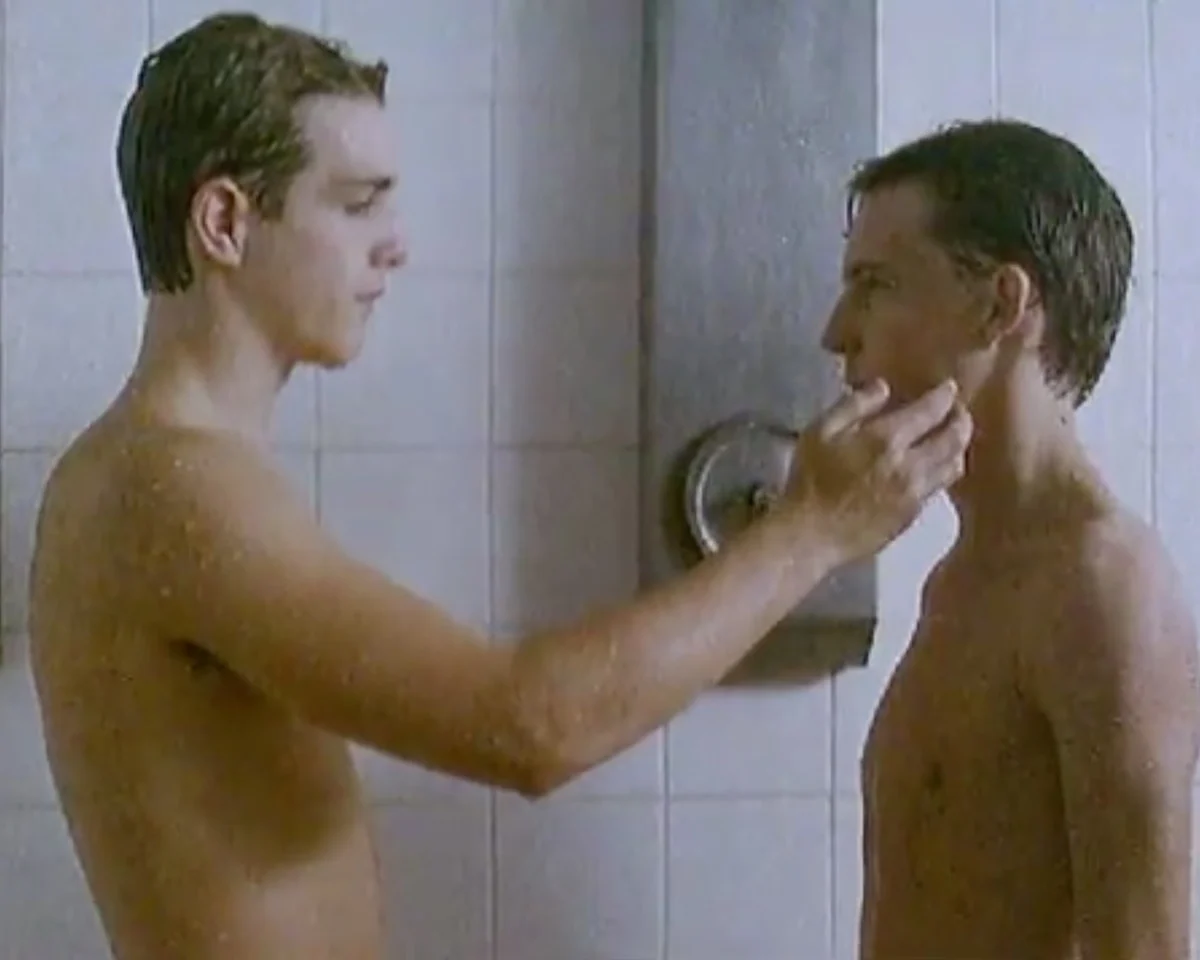
While many viewers associate the 1994 series Byker Grove with the first depiction of a queer kiss on British children’s television, a lesser-known drama titled Two of Us actually broke that ground years earlier. Directed by Roger Tonge and written by Leslie Stewart, the film shares striking thematic similarities with the modern hit Heartstopper, focusing on the emotional journey of two schoolboys navigating love, identity, and the stigma of their environment.
The film follows Phil, played by Lee Whitlock, who struggles with his feelings for his close friend Matthew, portrayed by Jason Rush. Despite the production’s relatively gentle approach, it faced immediate institutional resistance. Originally scheduled for broadcast in 1987, the BBC pulled the film from its planned transmission, citing the volatile political climate surrounding sex education and the rise of the Moral Right. At the time, the age of consent for gay men in the UK was 21, a legal reality that significantly influenced the narrative’s tension.
Leslie Stewart recalls the production as a simple love story, noting that the primary goal was to portray the connection between two boys with authenticity. During filming, the crew took precautions to keep the project’s subject matter discreet. Tonge faced intense scrutiny from executives regarding the intimacy of specific scenes, including questions about physical contact between the characters. Despite these hurdles, the film was eventually broadcast in March 1988, albeit late at night and with a warning about its sensitive themes.
The political backdrop of the era was dominated by the impending introduction of Section 28, which sought to restrict the discussion of homosexuality in schools. Prime Minister Margaret Thatcher’s government capitalized on public anxiety, and a 1987 British Social Attitude Survey indicated that 64% of adults held negative views toward homosexuality. Amid this hostility, the tabloid press was particularly aggressive; The Sun famously published an editorial demanding the film be “returned where it belongs: the closet.”
A framed copy of a Daily Express front page in Tonge’s home serves as a reminder of the controversy, bearing the headline: “BBC ACCUSED OVER GAY TV FOR SCHOOLS.” The film was initially stored in a secure cage within the BBC’s film library reserved for controversial material. However, Tonge notes that a “gay mole” within the organization eventually intervened to restore a deleted kiss to the film before it was aired in a 1990 daytime broadcast. The BBC later confirmed that senior executives were unaware of this reinsertion at the time.
The impact of the film on a generation of queer youth was profound. Letters from viewers, preserved in archives, reveal the deep emotional resonance of seeing their experiences reflected on screen, even in a landscape defined by rejection and fear. For many, the film provided a rare moment of validation during a period of intense social and political marginalization, including the ongoing HIV/Aids crisis.
Reflecting on the production today, Stewart maintains that the film was remarkably mild, emphasizing that it was intended as a universal story of love. The delay in its release and the internal debates within the BBC highlight the institutional hesitation to address queer themes during the 1980s. While the film was eventually shown, the process underscored the systemic obstacles faced by creators attempting to bring LGBTQ+ narratives to young audiences.
The legacy of Two of Us remains a testament to the persistence of those who fought to tell these stories. Although the characters were legally underage by the standards of the time, their relationship served as a mirror for many young people who felt silenced by the prevailing social norms. By documenting the struggle to bring this 60-minute drama to the screen, the history of British television gains a clearer understanding of the evolution of queer representation. The report also notes that w hen I started looking for anything queer aimed at kids on TV from around the time I was born in 1989, I came across a children’s drama called Two of Us. The report also notes that but the reaction at the time couldn’t have been more different. The report also notes that who falls in love with another guy, both feature one character who realises he likes both boys and girls. The report also notes that both are set at a comprehensive school. The report also notes that both have characters who face homophobia and stigma but manage to find a way through because of their love and support for each other. The report also notes that yet while Heartstopper resulted in near-universal critical acclaim and received a string of awards, Two of Us was pulled from its planned BBC transmission and was not shown until the following year, 1988. The report also notes that with the happy ending changed and a single kiss between the boys removed, it ended up being shown late at night. The report also notes that “The real shock for me was that we were quite mild, really,” Stewart tells me now.

Comments