
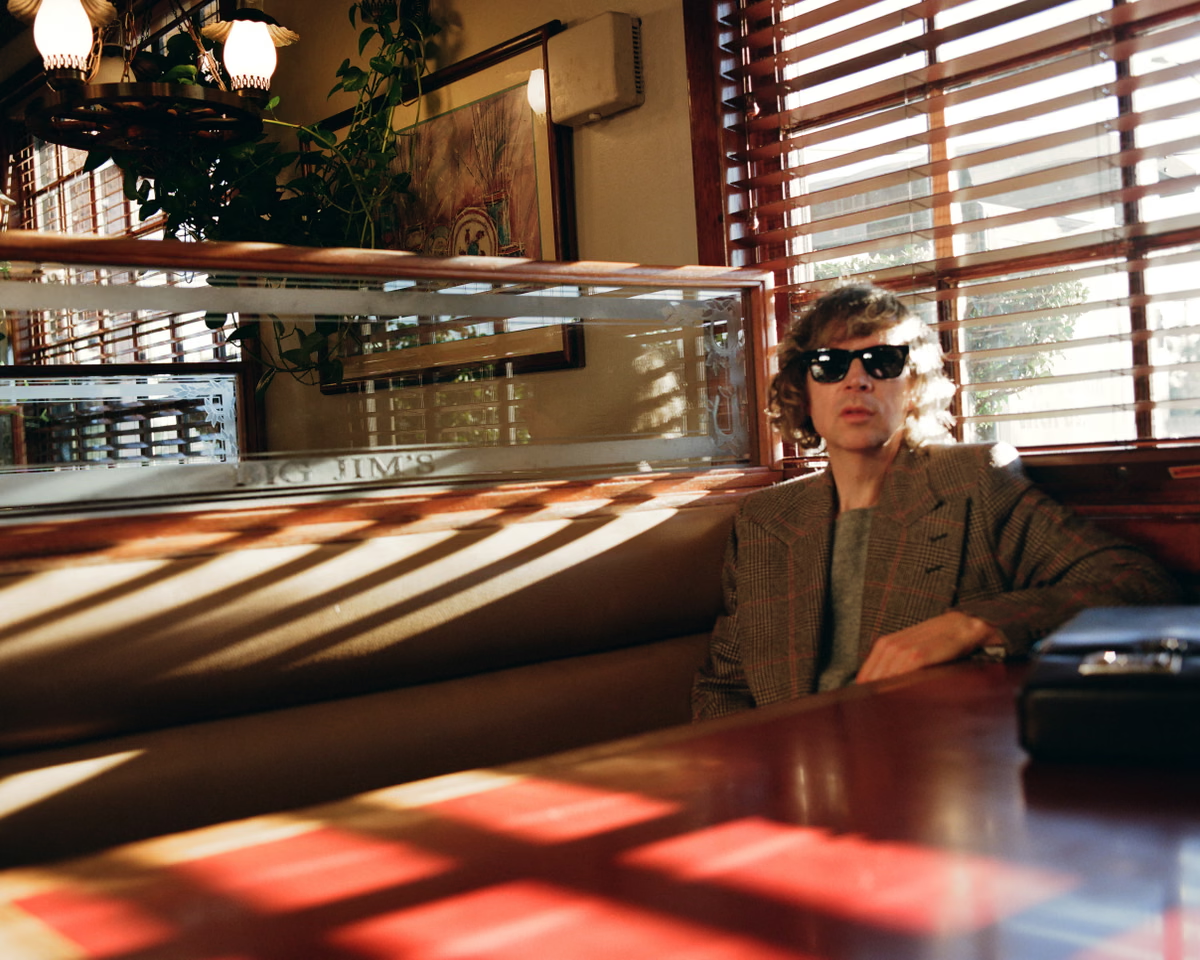
Performing since the late 1980s, Beck finds that his longevity stems from a simple lack of alternative, dedicating his life to mining for the occasional song that stands the test of time. While his career has seen him alternate between funky grooves and melancholic introspection, the artist feels that the lonesome side of his music is more representative of his intrinsic self, even if the upbeat, funky side helps him move past his more ponderous nature.
Reflecting on his legendary 1994 MTV interview with Thurston Moore, which has long been considered one of the most chaotic in music history, Beck explains that the tension was intentional. The pair staged a series of bizarre stunts, including destroying a telephone with baseball bats, which were largely kept off-air by the network due to legal risks. For Beck, these moments were an attempt to break through the polished, airbrushed, and curated nature of 80s television, offering a glimpse of something genuine amidst the corporate construction of media.
Addressing the “slacker rock” label that defined his early career, the singer dismisses the term as reductive. He explains that the early 90s saw an influx of long-bubbling underground music crashing into the mainstream simultaneously, contrasting sharply with the aesthetic expectations of the previous decade. When he first started, he recalls record labels criticizing his look as too messy, though he views his artistic success as a byproduct of writing quality songs rather than meeting a specific image.
Regarding his aesthetic inspiration, Beck imagines a “devil’s haircut” as a blend of rockabilly edge and the bizarre, short-banged mullets sported by Australian subcultures like the “sharpies.” He notes that he keeps a collection of 80s salon hairstyle photographs that document similar outlandish trends.
The musician also dispelled any lingering rumors about his relationship with the New Radicals. After the group famously threatened to “kick his ass” in their 1998 hit You Get What You Give, Beck eventually encountered songwriter Gregg Alexander at an Erewhon supermarket. Rather than a confrontation, the meeting was cordial, with Alexander identifying himself as a fan and proposing a potential collaboration.
On the topic of his former collaborators, the Dust Brothers, who worked with him on the 2005 album Guero, Beck confirms he remains in touch and sees them occasionally. He noted that they still have unfinished recordings together. His path toward wider pop culture recognition, such as his guest spot on Futurama, was initially met with resistance; he spent that era turning down almost every opportunity, including major movie themes for Austin Powers 2 and 3, Shrek, and films like Amores Perros and Y Tu Mamá También.
The Futurama opportunity eventually shifted his perspective after his band members discovered the script and expressed interest. Similarly, his contribution to the Eternal Sunshine of the Spotless Mind soundtrack—a cover of Everybody’s Got to Learn Sometime—came about through his friendship with director Michel Gondry after they worked together on a music video. When Gondry shared the film concept, Beck was intrigued and ultimately agreed to the project years later.
When asked for his ultimate “shake your ass” track, Beck points to the classics of the early 80s, specifically citing the works of Sly Stone, James Brown, Prince, and Talking Heads. The report also notes that i don’t really know any other life. The report also notes that and out of that, maybe there’s a few songs at the end that are not bad, i’ve spent a lot of my time trying to create a body of work. The report also notes that trying to come back with a couple of things worth keeping, so I just keep going down into the mine. The report also notes that if I had to stop and get a job painting houses or something, I would still make songs just for myself, because that’s how it started. The report also notes that quiet songs, and stuff that’s a little more genreless, now it’s kind of reversed – they prefer the more introspective.







Comments