
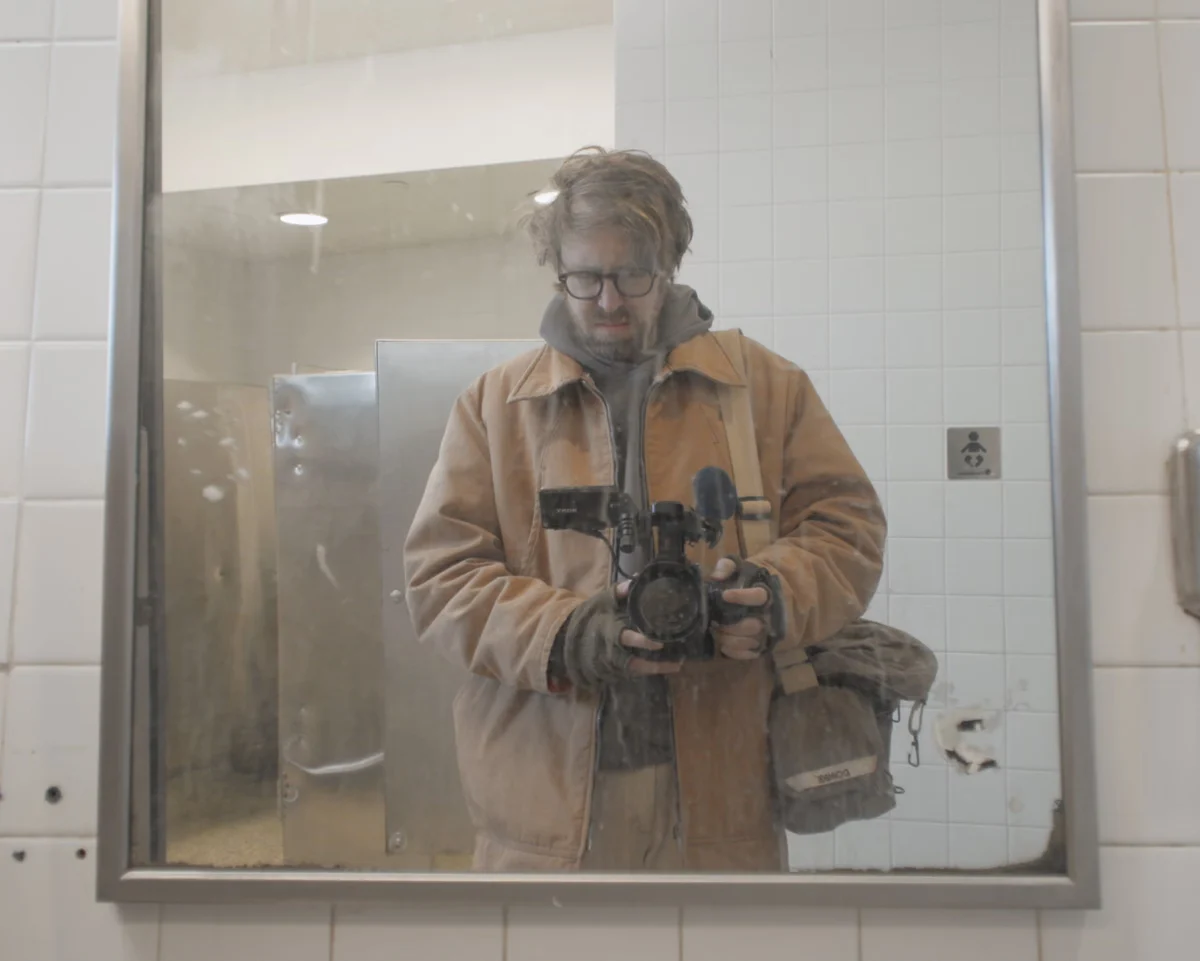
Filmmaker John Wilson has transitioned from the cult success of his HBO series, How To With John Wilson, to his debut feature documentary, The History of Concrete. The project explores the ubiquitous material that serves as the foundation for modern infrastructure, bridges, and buildings—a subject Wilson jokingly describes as the “Marvel supervillain origin story” to his previous work. Despite the film’s thematic depth, initial attempts to secure production financing were met with silence, which Wilson described as an “absolute emotional flatline” during pitch meetings.
The project’s inception was tied to Wilson’s personal life after his HBO contract ended. While attempting a DIY repair on a cracked foundation in his Queens apartment, he realized how little he understood about the dominant material of his environment. He initially pitched the idea as an environmental documentary focusing on the degradation of American infrastructure, only to be told by potential backers that they did not want to think about such grim subject matter. A workshop on producing Hallmark-style films during the Writers Guild of America strike eventually provided a pivot: if such films could be made about property developers, he could certainly frame a movie around concrete.
Wilson found himself in a difficult professional space during this period. After the conclusion of his series in 2023, he felt directionless and struggled with self-esteem, feeling as though he were trapped in a cycle of seeking permission to create. At one point, he noted his fame reached a surreal level where he was even a $2,000 Jeopardy question that no contestant could answer. He remained resistant to changing his creative process simply to satisfy industry expectations, asserting that his digressive filming style is a genuine reflection of his perspective rather than a manufactured shtick.
His creative philosophy remains rooted in the belief that one should not wait for external validation. “I just started to do things the way that I always did,” he explained, noting that the act of filming was the only way to pull himself out of a depressive state. To move forward, he followed unconventional advice to make the documentary “sexy,” which led to filming a brick-laying competition where the winner received a sleek blue truck, as well as following an aging musician at a liquor store for a “rock-umentary” segment.
Wilson’s work has previously impacted city policy. In October 2020, he released a segment on scaffolding that prompted viewers to view sidewalk sheds as signs of urban neglect rather than permanent fixtures. In April, New York City Mayor Zohran Mamdani featured Wilson in a promotional video regarding the reduction of these structures. Shortly after the video was released, the scaffolding near the filmmaker’s block was removed, revealing a patch of concrete that had been hidden from the sun for six years. When credited for this change in Manhattan, Wilson offered a modest “I’ll take it.”
The finished film reflects the challenges Wilson faced during production, mirroring the hurdles of both the creative process and the material itself. He recounts how, at times, he felt a “kind of sickness” in his determination to capture the world through his specific, inquisitive lens. The 100-minute documentary explores the substance from various angles, including visits to science laboratories and corporate gatherings for industry professionals, all while maintaining the meditative tone his audience expects.
The History of Concrete is currently screening in select cinemas across the United States. It is scheduled to premiere at the London film festival next month, with an official release in Australia slated for 9 October. The report also notes that the spot, in support of the mayor’s plan to reduce the presence of the city’s ubiquitous sidewalk sheds, suggested that either he or someone on his team was a fan of How To With John Wilson, the film-maker’s cult-beloved HBO series that remains a taste signifier for alt-humorous New Yorkers. The report also notes that and for good reason: over three near-perfect seasons, Wilson, armed with his ever-present camera and diffident, memoiristic narration, explored the city’s disintegrating streets with a singular eye for the weird and unintentionally hilarious, turning the most mundane of NYC preoccupations – public restrooms, parking spots, scaffolding – into profound meditations on the glories, indignities and absurdities of modern. The report also notes that released in October 2020, that I, like some smart Mamdani staffers, began to perceive the sidewalk shed shadowing my block not as an inevitable fixed entity but an obtrusive, if well-intentioned, symptom of neglect, it was because of that scaffolding episode. The report also notes that in person at a film office in Manhattan, he reacts with a modest “I’ll take it,” as dry as the dusty footprints of the recently departed metal poles, when I credit Wilson for this upgrade. The report also notes that fitting, for though that newly revealed concrete, speckled with old gum and anonymous residue, is certainly better, if not exactly beautiful, perhaps only Wilson could see it as cinematic. The report also notes that water, sand and crushed stone; arguably ancient Rome’s greatest invention; the second-most used substance on earth, behind water; the foundation of buildings and bridges and “everything I’ve done before” Wilson says, a “Marvel supervillain origin story” to How To’s many bricolages of unfortunately named streets (“Titman Road”) and sidewalk characters, concrete is many things: a mixture of cement.









Comments