
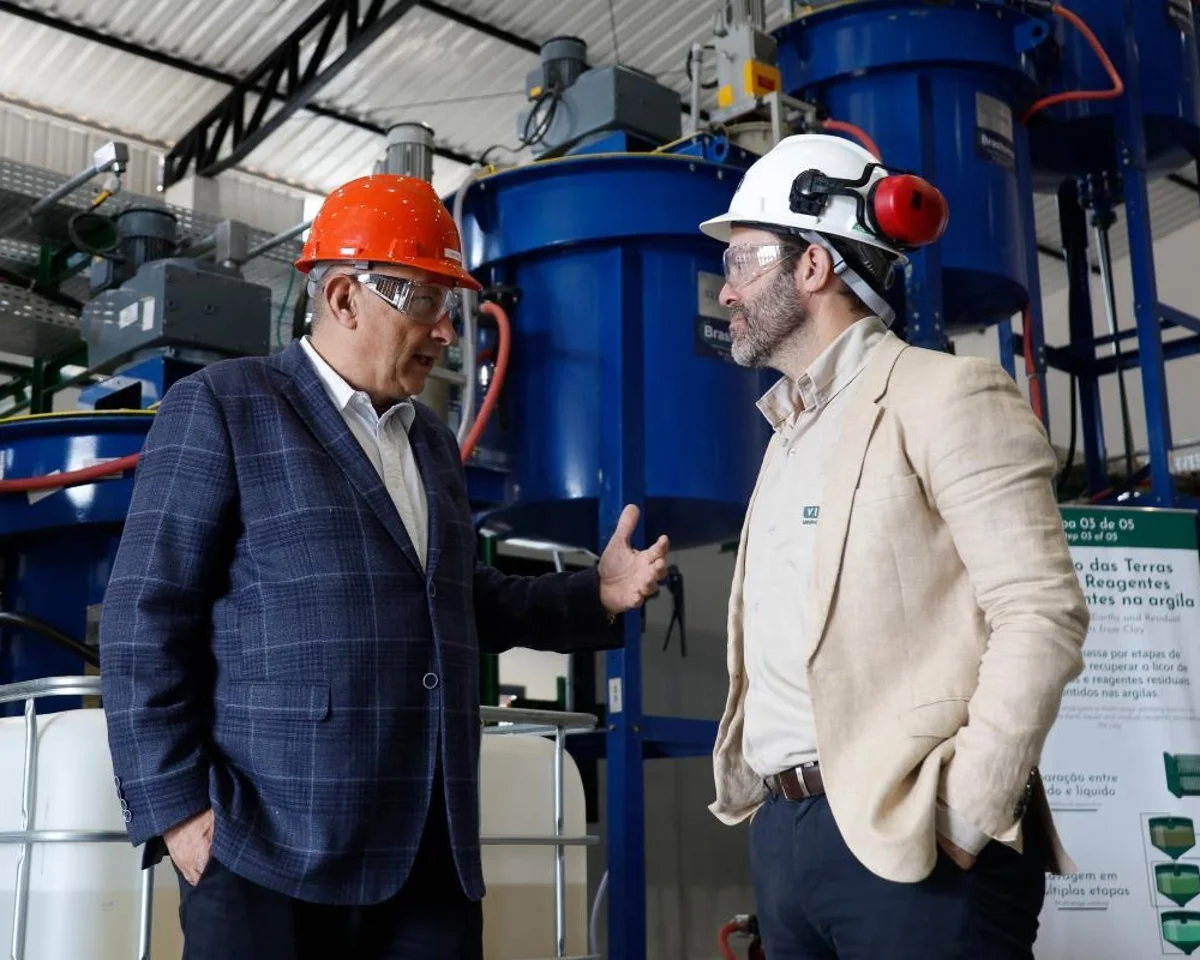
Rafael Moreno, managing director of the Australia-listed firm Viridis Mining and Minerals, has declared it “paramount” for global industries to dismantle China’s overwhelming grip on the rare earths supply chain. These critical raw materials are essential components for everything from renewable wind turbines and electric vehicles to sophisticated military hardware.
As U.S. President Donald Trump and Chinese leader Xi Jinping prepare for their second summit of the year this coming Thursday, market anxiety is mounting. Moreno, whose company maintains mining assets across Brazil, Australia, and Canada, stressed it is “imperative” that the leaders negotiate an agreement to prevent Beijing from reactivating threats to ban rare earth exports.
The current global trade landscape remains tense following China’s initial imposition of export controls in April 2025, which significantly disrupted automotive industries throughout the EU, UK, Japan, and the United States. While Xi previously agreed to a 12-month suspension of stricter restrictions following a meeting with Trump in South Korea last October, the future of these trade regulations remains uncertain.
Kurt Tong, a partner at the Washington-based strategic advisory firm the Asia Group, noted that maintaining these high-level presidential meetings requires the extension of such suspensions. He suggested that a definitive deal might be deferred until November, when Trump is expected to visit China for the Asia-Pacific Economic Cooperation (APEC) summit.
The European Union is particularly vulnerable to these supply chain bottlenecks. European Commission President Ursula von der Leyen has made diversifying supply chains away from China a top priority. EU trade commissioner Maroš Šefčovič is scheduled to travel to Beijing on October 8 for talks with commerce minister Wang Wentao, aiming to address the “unsustainable” trade deficit—currently reaching €1 billion daily—and mitigate the risk of a full-scale trade war.
Industry bodies are warning that Brussels may be underestimating the pressure on European firms. Eurometal, representing steel buyers, reports that original equipment manufacturers are daily incentivized to purchase Chinese goods, which can undercut domestic prices by as much as 30%. This pricing advantage is compounded by the influence of current Chinese exchange rates.
To counter this reliance, Viridis has launched a demonstration plant in Minas Gerais, Brazil, designed to isolate rare earths from raw minerals. EU international partnership commissioner Jozef Síkela visited the “Colossus” site to observe the company’s efforts, which aim to capture 5% of the global rare earths market starting in late 2028. The firm is collaborating with French chemical giant Solvay for the processing phase of the operation.
Moreno emphasized that the long-term success of domestic supply chains depends on support from European manufacturers, including major entities like Siemens Gamesa. He warned that if OEMs consistently prioritize the cheapest immediate option over building a resilient domestic supply chain, the local market will fail to mature. By focusing on precious magnets, the company intends to establish a significant foothold, targeting roughly 5% of the global market share as a foundation for broader industry independence. The report also notes that after a summit last October with Trump in South Korea, Xi agreed to suspend the introduction of even stricter global restrictions, but only for 12 months. The report also notes that when Trump is expected to travel to China again to attend the Asia-Pacific Economic Cooperation (APEC) governmental forum of 21 countries, but he said a suspension deal could be delayed until November. The report also notes that it has opened a demonstration plant to scrape the surface of its mine in Minas Gerais, Brazil, and produce a crumbly powder, which will then be further separated, potentially in France, to isolate the rare earths. The report also notes that now running at €1bn a day, with the scale of exports of electric vehicles, cars and renewable energy machinery as well as components deep in supply chains causing alarm, the EU is deeply concerned about what Šefčovič has said is the “unsustainable” deficit with China. The report also notes that senior EU politicians and officials are scrambling to find alternative supplies of critical raw materials and rare earths, while Šefčovič heads up the urgent trade mission. The report also notes that as China controls between 80% and 90% of the world’s raw materials and processed end products, giving it powerful leverage over global manufacturing, but their challenge is long-term.





Comments