

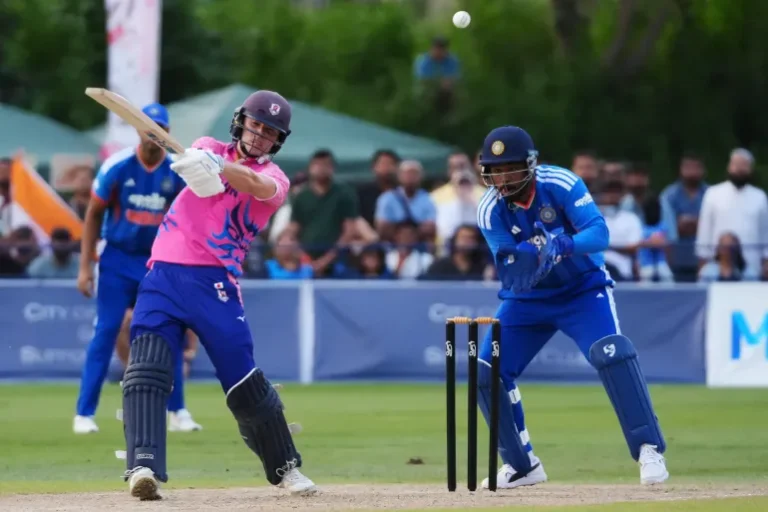
The recent controversy surrounding a reversed wide ball call during the India-Japan T20I match has drawn significant attention, yet experts argue that the decision, while delayed, was fundamentally correct according to the rules of cricket. The incident occurred during the final over when Japan’s Alexander Shirai-Patmore attempted a reverse sweep. Umpire Chris Thurgate initially signaled a wide, but after consulting with his colleague, Chris Brown, the decision was overturned. This reversal proved pivotal as India successfully defended their target, winning the rain-shortened contest by just two runs.
Former ICC international panel umpire Anil Chaudhary defended the process, noting that the rules allow for such consultations as long as the next delivery has not been bowled and time has not been called. “In the end the right decision was made,” Chaudhary stated. He emphasized that once a batter commits to a reverse sweep or switch hit, the standard guidelines for wide balls on the off-side are extended to include the leg-side, as the batter is effectively positioning themselves to play the ball.
The relevant ICC guidelines clarify that when a batter shapes to play these specific strokes, the 75cm wide guideline applied in T20Is and ODIs becomes relevant for both sides of the wicket. By attempting the shot, the batter is deemed to have brought the ball into their reach. Consequently, the call of a wide on the third delivery of the final over was technically inaccurate, and the umpires were within their rights to rectify the error before play continued.
The intense criticism that followed the decision, which included claims that India had pressured the umpires to protect them from an upset against the 41st-ranked Japanese side, failed to address the technical merits of the ruling. While some spectators expressed frustration, characterizing the reversal as an act of bullying, experts maintain that the pressure on the officials is a separate matter from the correctness of the final ruling. Chaudhary highlighted that umpires frequently consult senior partners during matches to ensure the application of playing conditions remains consistent.
Ultimately, the officials ensured the game was decided by the rules rather than an officiating mistake. Chaudhary explained that as long as the next ball had not been delivered, the umpires retained the authority to correct their oversight. By reversing the initial call, the officiating team adhered to the spirit and letter of the law, ensuring that a potentially decisive error did not unfairly influence the final result of the match. The report also notes that the issue extended to India being labelled a bully in the immediate aftermath. The report also notes that one would never know the answer to that question. The report also notes that “The umpire can give an opinion call. The report also notes that i think he managed somehow and spoke to the other umpire. The report also notes that they corrected it,” Chaudhary said, amplifying the point that in international cricket and IPL, there were occasions when decisions were reversed, and ultimately. The report also notes that ranked 41st in the T20I rankings, thurgate’s decision was seen with a magnified lens because India seemingly dodged a bullet and avoided an upset by Japan. The report also notes that as well as social media, criticised the umpires, with some accusing the Indian team of bullying the umpires into changing the decision, a section of the media.


Comments