
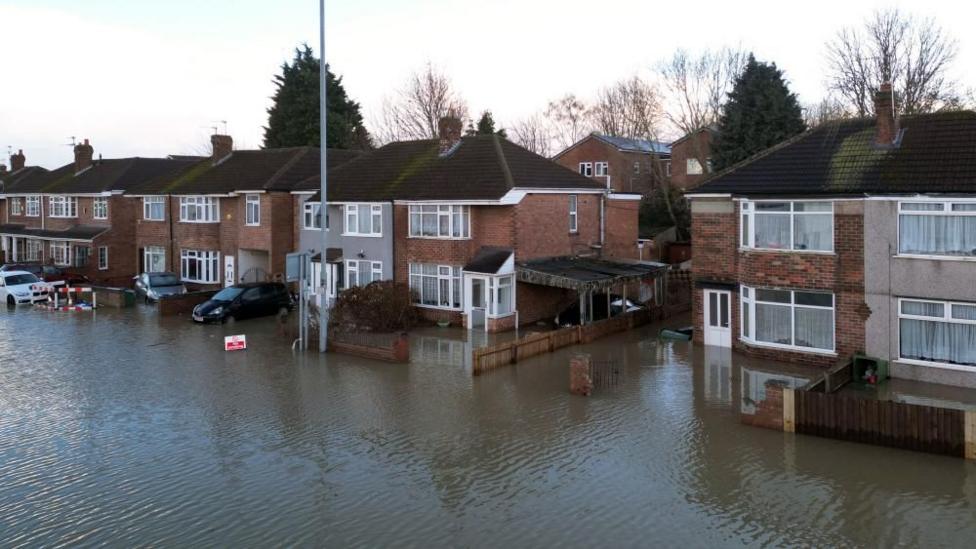
Amanda Blanc, the chief executive of insurance giant Aviva, has warned that England is actively constructing homes in flood-prone areas that may eventually become impossible to insure. Speaking on the Big Boss Interview podcast, Blanc stated that the rising threat of flooding is “absolutely increasing” and argued that current development patterns ignore future climate realities.
Official figures from the Environment Agency indicate that approximately 6.3 million properties in England currently face some level of flood risk. Aviva’s internal research highlights that one in nine homes built between 2022 and 2024 fall into the medium-to-high risk categories. Looking toward 2050, the company projects that nearly a third of new homes built in 2024 will face flood exposure, with one in seven expected to reach a medium-to-high risk level as extreme weather events become more frequent. Projections from the Met Office suggest that record-breaking wet winters, once considered 80-year events, are now occurring roughly once every 20 years due to current warming trends. Record-breaking wet winters like the one experienced in the UK in 2023-24 have gone from once in 80-year events to once in 20-year events, earlier this year the Met Office estimated that with current levels of global warming. Homes in Loughborough were hit by floods in January last year.
“It doesn’t make sense to be building homes in flood zones,” Blanc said, urging developers and planners to reconsider construction strategies. She suggested that even projects bordering flood zones require significant adaptation, such as property-level resilience measures, to mitigate vulnerability. Current trends suggest that about 115,000 new homes are slated for construction in high-risk zones over the next decade. We need to think about where those homes are being built,” she told. You can do all sorts of different things to your property to make it more or less vulnerable to flood,” she said.
A spokesperson for the Department for Environment, Food and Rural Affairs noted that the government has invested record amounts to protect nearly 900,000 properties from damage. They added that new planning proposals aim to prevent housebuilding in high-risk areas, supporting a goal to deliver 1.5 million homes while maintaining safety standards. Helping us to build 1.5 million homes without compromising on safety, meanwhile our planning proposals will help ensure that housebuilding will not go ahead in areas that are at risk of flooding.
Beyond climate risks, Blanc addressed the upcoming October 28 Budget, advising the government to avoid “kite flying” regarding potential policy changes. She noted that speculation in previous years has caused significant market disruption, citing a period where pension withdrawals increased thirtyfold as customers reacted to rumors of tax changes. She warned that such impulsive decisions are often regretted, as tax-free lump sums removed from pension schemes cannot be reinstated.
Regarding the pension triple lock, which ensures state pensions rise by the highest of wage growth, inflation, or 2.5%, Blanc declined to advise the government on policy. However, she emphasized that any reduction in state pension growth would necessitate a corresponding increase in private pension savings to maintain a balanced retirement income.
On the topic of national infrastructure, Blanc affirmed that Aviva remains “ready with capital” to support UK growth. The company currently manages over £100bn in UK investments, including £35bn dedicated to infrastructure projects ranging from schools and hospitals to windfarms. While she noted these investments provide stable returns for pension holders, she stressed that the government must provide clearer details to turn these ambitions into reality.





Comments