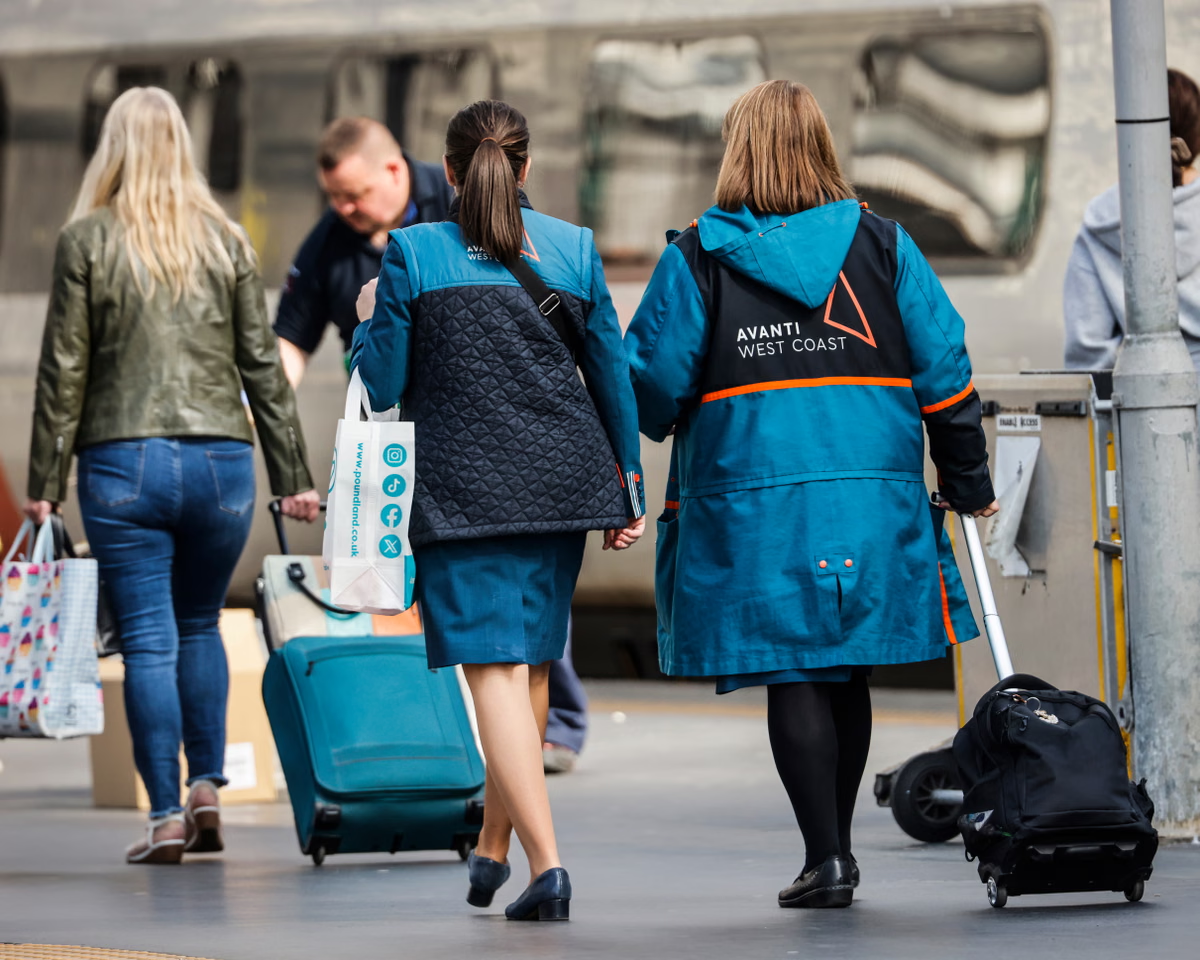
When a train service was stalled outside Exeter St Davids station on Monday, rail employees immediately suspected a violent confrontation had occurred on board. This reflexive assumption highlights a grim reality for those working on the network. One staff member noted that such incidents occur constantly, recalling how their manager was recently head-butted while on duty. “Someone will have kicked off,” one staff member said. “It happens all the time. Staff in particular have felt increasingly under threat.
Official data published last month reveals that reported assaults across Great Britain’s rail network have climbed by 20%, reaching a record of nearly 25,000 incidents over the past year. While these figures, compiled by the Office of Rail and Road for 2025-26, encompass a wide range of threats and verbal abuse, they also include approximately 2,500 physical attacks against workers—a rate of roughly seven assaults every day. However, after 20 years in the job, he said: “The threats, the abuse, the violence we see is off the scale.”.
Rail unions, including the RMT and TSSA, describe these statistics as horrendous yet entirely predictable. They have long campaigned for increased staffing and security presence, pointing to a decline of more than 10% in British Transport Police (BTP) officer numbers between 2024 and 2026. Many rail staff are now required to wear body cameras to log violence. For Dave, a rail worker in south-west England with two decades of experience, the current environment feels completely unmanageable, noting that the sheer scale of threats and abuse has become extreme. Our workplaces are becoming more and more dangerous.”.
The rise in danger is often attributed to a combination of factors, including drug and alcohol consumption and a growing number of interactions with individuals facing mental health challenges. Unlike street-level encounters where one can walk away, rail workers and passengers remain confined within trains and platforms. Other frontline employees share similar experiences; Steve, a guard in northern England, recounted being knocked unconscious by a passenger, noting that verbal abuse has become a daily occurrence that worsened following the pandemic. Infrastructure workers, such as Somerset-based contractor Liam, also report being targeted with spitting and verbal hostility while working on tracks. He added. “We’re also seeing a lot more people with mental health issues, drink and drugs play a part. But if you’re on a train or a platform you can’t, if you’re out on the street you can steer clear. I’ve had to look away to see the door controls and the next thing I know, I’m waking up on the platform.”. He said, with behaviour worsening since the pandemic: “Now it’s mostly bad days, and you’re searching for good days, where nothing’s said, or nothing happens, every guard gets verbally abused on a daily basis.
These safety concerns extend beyond rail, with bus drivers reporting frequent threats and Transport for London staff requiring forensic saliva kits due to the prevalence of spitting assaults. Minister for buses and local transport, Simon Lightwood, recently described violence against women and girls on transport as a national emergency. Kim McGuinness, the mayor for the north-east, emphasized that beyond physical measures like better lighting and CCTV, commuters need confidence that reports will lead to tangible intervention.
The experience of 24-year-old Emily illustrates the vulnerability felt by passengers. During a late-night journey between Glasgow and Edinburgh, she was subjected to unwanted sexual advances and physical grabbing by a stranger. Though she managed to escape to another carriage, she did not report the incident, preferring to move on despite feeling significantly more nervous about traveling alone. Similarly, Edward, a trans man, described a terrifying journey from Aberystwyth where he and his partner were targeted with homophobic abuse. A rail worker eventually intervened, but Edward avoided reporting the matter, citing frustration with previous police responses.
Some victims face severe physical confrontations, such as Sam, who was assaulted and groped by a group of drunken football supporters on a train heading north from London. Despite the severity, many incidents go unreported or fail to result in prosecution. While the BTP notes that a 36% rise in passenger assault reports may partly reflect better reporting mechanisms, such as discreet text alerts to 61016, the underlying trend remains deeply troubling.
The Department for Transport has condemned the surge in violence as unacceptable. To combat this, the government has authorized a £63m increase in funding for the BTP by 2028-29. This investment aims to facilitate the recruitment of over 200 additional officers and enhance CCTV and body-worn camera technology. Assistant Chief Constable Ian Drummond-Smith stated that the BTP will never tolerate such abuse and highlighted that when staff utilize body cameras, the police succeed in bringing offenders to justice in approximately 85% of cases.