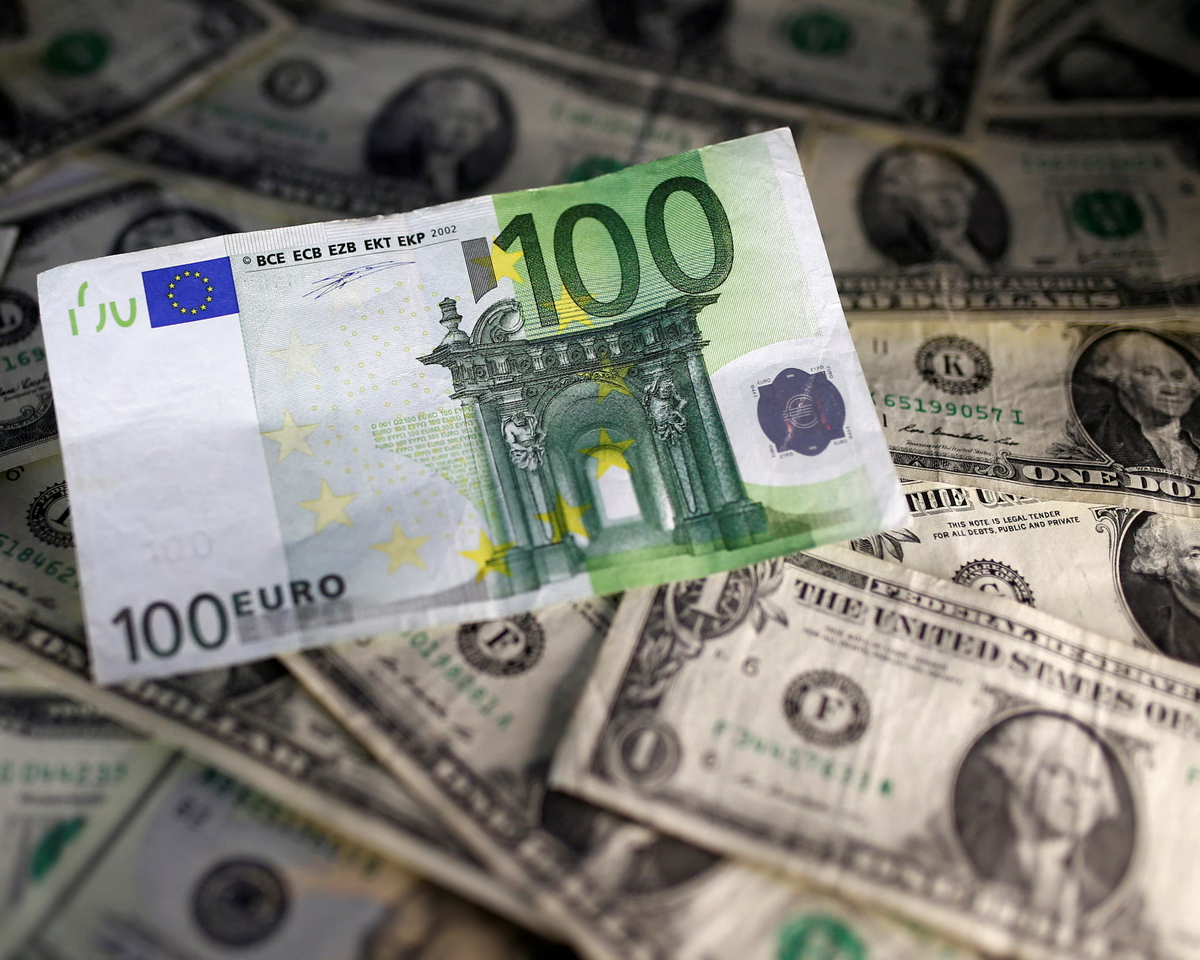
The euro has slumped to its lowest valuation against the US dollar in 17 months, fueled by rising concerns that France’s fiscal position could jeopardize the stability of the eurozone. In early trading on Monday, the single currency fell as much as 0.8% to drop below $1.12—a level not seen since May 2025—before staging a marginal recovery. The currency has now declined by approximately 1.2% this month, extending a broader trend that has seen it lose eight cents against the dollar from a $1.20 peak in January.
Market participants are primarily focused on the mounting debt costs facing Paris as the government attempts to stabilize its public finances ahead of next year’s presidential election. Prime Minister Sébastien Lecornu’s minority government recently unveiled a €54bn ($45.8bn) austerity package aimed at reducing the current budget deficit from 5.5% of GDP to 5% next year. Officials warned that failing to implement these cuts, which involve reducing pension spending and departmental funding, could see the deficit balloon to 6.5%. The budget measures involve cutting pensions spending and funding for government departments, excluding defence, with President Emmanuel Macron’s centrist administration under pressure amid strikes and protests across the country. He warned that without action the shortfall between public spending and revenue could reach 6.5%.
Political complications are intensifying these economic fears. Investors are worried that a potential hung parliament and the rising influence of Marine Le Pen’s National Rally party may prevent effective deficit reduction. Adding to the volatility, France’s blue-chip Cac 40 index slipped 1% on Monday. This contrast with other European markets was stark, as the FTSE 100 rose 0.2% and Germany’s Dax remained largely stable.
Spain has emerged as an additional source of regional uncertainty. Socialist Prime Minister Pedro Sánchez called for a snap election after rightwing parties blocked emergency housing legislation. While the Ibex 35 index in Madrid managed a 0.5% gain, the simultaneous political stress in both France and Spain has unnerved investors who fear a return to the sovereign debt crises of the 2010s.
Kathleen Brooks, research director at XTB, noted that Europe is currently under the spotlight due to these fiscal and political tensions. She identified France as the epicenter of these anxieties, with Spain’s upcoming election further complicating the investment climate. These concerns are playing out against a backdrop of a global sell-off in sovereign debt, exacerbated by market jitters surrounding the war in the Middle East.
The impact on borrowing costs has been significant. Yields on French 10-year government bonds reached their highest levels since 2002 last week, before retreating slightly. This development pushed the interest rate gap between French and German bonds to its widest point since 2012, highlighting the severity of the market’s unease.
Analysts are now warning that this pressure may not remain confined to French markets. There is a growing fear of contagion, where financial stress spreads to other nations across the eurozone. The European Central Bank also faces a precarious test as it navigates mounting inflationary pressures resulting from geopolitical conflict in the Middle East.
Roberto Mialich, a currency strategist at UniCredit, indicated that the bearish outlook for the euro persists. He suggested that if the current environment of political tension and debt market contagion continues, a retest of the $1.10 level against the dollar is possible in the near term.