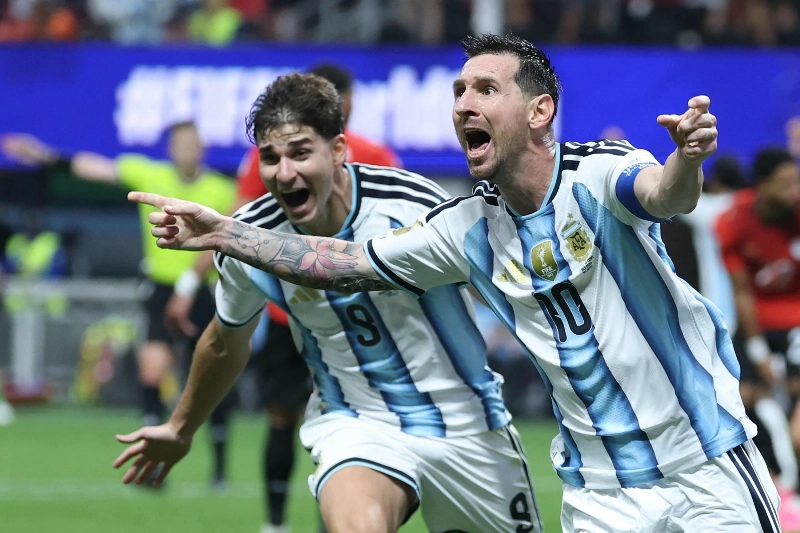
Lionel Messi is set to make his final appearance for Argentina this Tuesday at the Monumental stadium in Buenos Aires against Benin. This match marks the culmination of an international career spanning over two decades, closing a chapter that began in confusion and uncertainty as Argentine authorities struggled to identify a teenage talent developing in Spain.
Reflecting on the star’s legacy, journalist and author Sergio Levinsky, who penned “Messi and Everything Else,” described a career defined by distinct eras. “He went through so many moments that they’re really very different eras. At first he suffered enormously with the national team. He truly endured it,” Levinsky stated.
The early years were fraught with administrative errors and geographic distance. Before Messi cemented his legacy, his home country was barely aware of his potential while Spanish officials actively sought to secure him for their own national team. During the 2003 Under-17 World Cup in Finland, Spain defeated Argentina 3-2 in the semi-finals. Levinsky recounted that Cesc Fabregas, a La Masia teammate of Messi, warned Argentine delegates after the match: “You lost to us because we’ve got your best player at Barcelona and he’s a genius.”
Efforts to recruit the young player from Rosario were initially disorganized. Argentina youth coach Hugo Tocalli noted at last month’s Ole Summit that the Spanish team’s head chef had even advised him that Argentina required “a kid who plays in Barcelona” to secure tournament victories. When AFA employee Omar Souto eventually used a Rosario telephone directory to track down the family in Spain, he mistakenly asked for “Leonardo” before being corrected that the player was named Lionel, as detailed in the documentary “Messi: The Forgotten Tape.”
Administrative blunders plagued the early recruitment process as well. According to Levinsky, the Argentine Football Association (AFA) even sent a fax to Barcelona inquiring about a player named “Mecci,” erroneously assuming the surname might be Italian and misspelling it with a double “c.”
These initial hurdles were eventually cleared, and Messi debuted in the blue and white stripes during two under-20 friendlies in 2004. By the 2005 Under-20 World Cup in the Netherlands, he was already gaining international recognition, despite beginning that tournament on the bench as Argentina fell in their opening match.