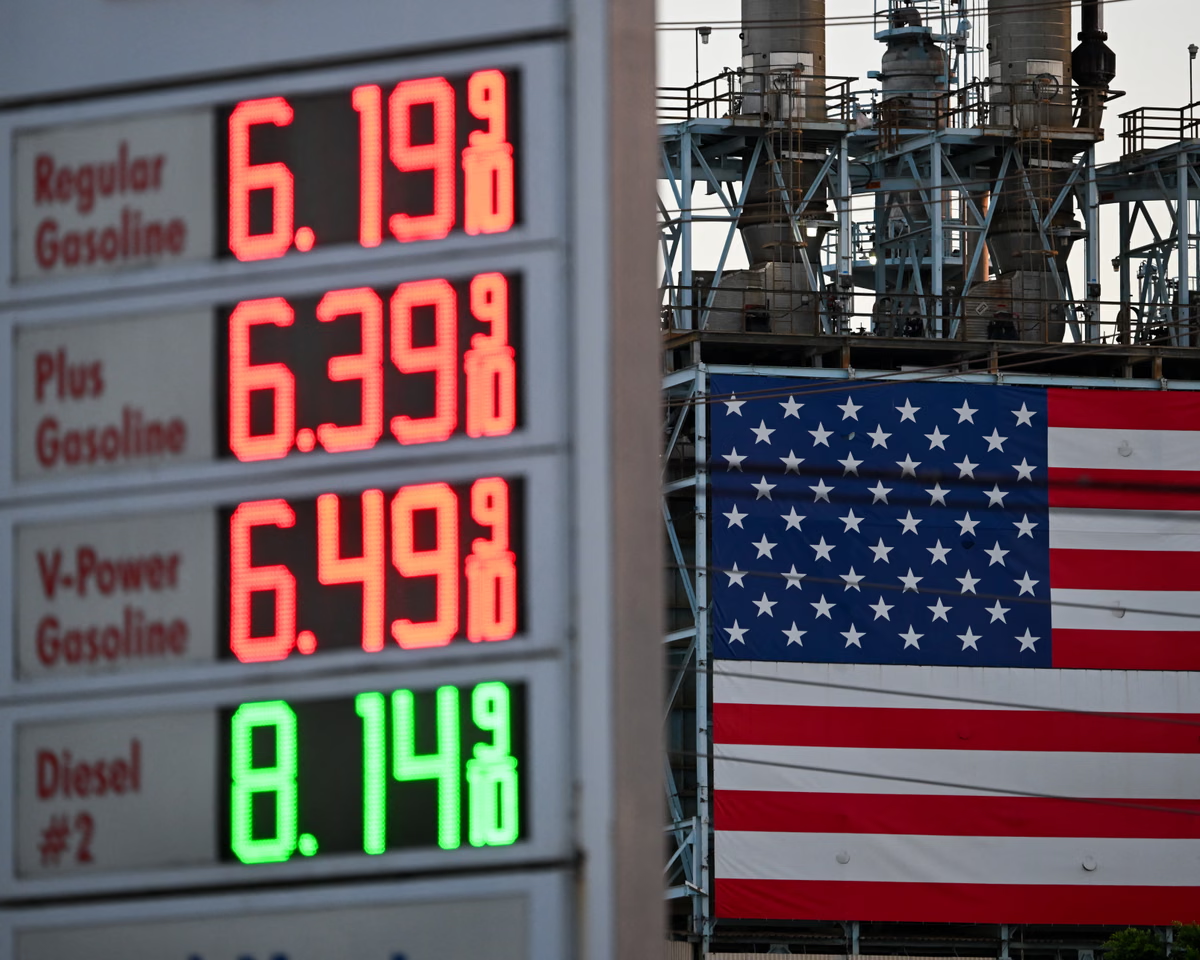
A recently brokered agreement between Donald Trump and Vladimir Putin to temporarily ease sanctions on Russian diesel imports is unlikely to provide any significant relief for US motorists and businesses, according to energy and foreign policy experts. The deal, which aims to address fuel prices that have spiked by approximately 70% since the onset of the war in Iran—reaching about $6.30 a gallon according to the American Automobile Association—has been met with skepticism regarding both its scale and feasibility. However, experts suggested that the quantities involved – and the time it will take for the supplies to arrive in the US – is “too little, too late” to affect current high diesel prices, which observers have linked to challenging Republican party polling numbers before next month’s midterm elections.
The agreement authorizes the immediate release of 300,000 tonnes of diesel “to the American and global marketplace,” with subsequent shipments of 500,000 tonnes in November and 1 million tonnes thereafter. Energy Information Administration data suggests that the initial 300,000-tonne volume covers less than one day of total US demand, leading analysts to label the effort “too little, too late” for influencing market rates ahead of the midterms. The package announced by Trump involves 300,000 tonnes of diesel released immediately “to the American and global marketplace” followed by 500,000 tonnes in November and a further 1m tonnes after that. The 300,000 figure equates to about three-quarters of what the US would use in a day, according to calculations using figures from the US Energy Information Administration.
Logistical hurdles also complicate the plan. Ashley Kelty, an energy analyst at Panmure Liberum, noted that the time required to charter and transport cargo to the US means the initial supply will not arrive until late in the month. Furthermore, Kelty warned that these shipments could disrupt global supply chains, forcing multinational firms to verify the origin of their fuel to ensure they remain compliant with sanctions in other jurisdictions, such as Europe. The first amount [due to be shipped to the US] is so small.
US Treasury Secretary Scott Bessent defended the move, asserting it is beneficial for the American public. However, the diplomatic fallout has been swift. President Volodymyr Zelenskyy denounced the deal as a “weak decision” that emboldens Russian aggression, while Trump redirected the criticism by blaming Kyiv’s strikes on Russian infrastructure for the global energy price surge and suggesting Ukraine requires a new leader.
Tensions persist as Trump declared an “ENERGY CEASEFIRE” on Sunday, a claim that reportedly surprised the Ukrainian government. Zelenskyy countered by expressing a willingness to halt strikes on Russian oil refineries if Moscow agrees to stop targeting Ukrainian energy infrastructure.
Maximilian Hess, founder of Enmetena Advisory, argued that the deal is unlikely to be fully realized because Ukrainian drone strikes have already significantly impaired Russia’s refining capacity. Hess suggested the agreement serves a political purpose for Putin, designed to fail and exacerbate friction between Trump and the Ukrainian leadership.
The US Treasury has confirmed that while sanctions on Russian diesel exports are suspended until April 7, other punitive measures against Russian products remain fully in effect. As of the end of the week, diesel prices in the UK remained near a record peak of £2 per litre, reflecting the broader instability in the global energy market that this bilateral deal has yet to resolve. “Diesel prices for Americans and, indeed, the world, will be COMING DOWN, IN RECORD NUMBERS, AND FAST. Especially our Great Farmers, Ranchers, and Truckers, is my greatest priority,” Trump posted, lower prices for Americans. In the UK, the average price of diesel climbed to a record £2 a litre earlier in October, and sat just below that mark on Friday.