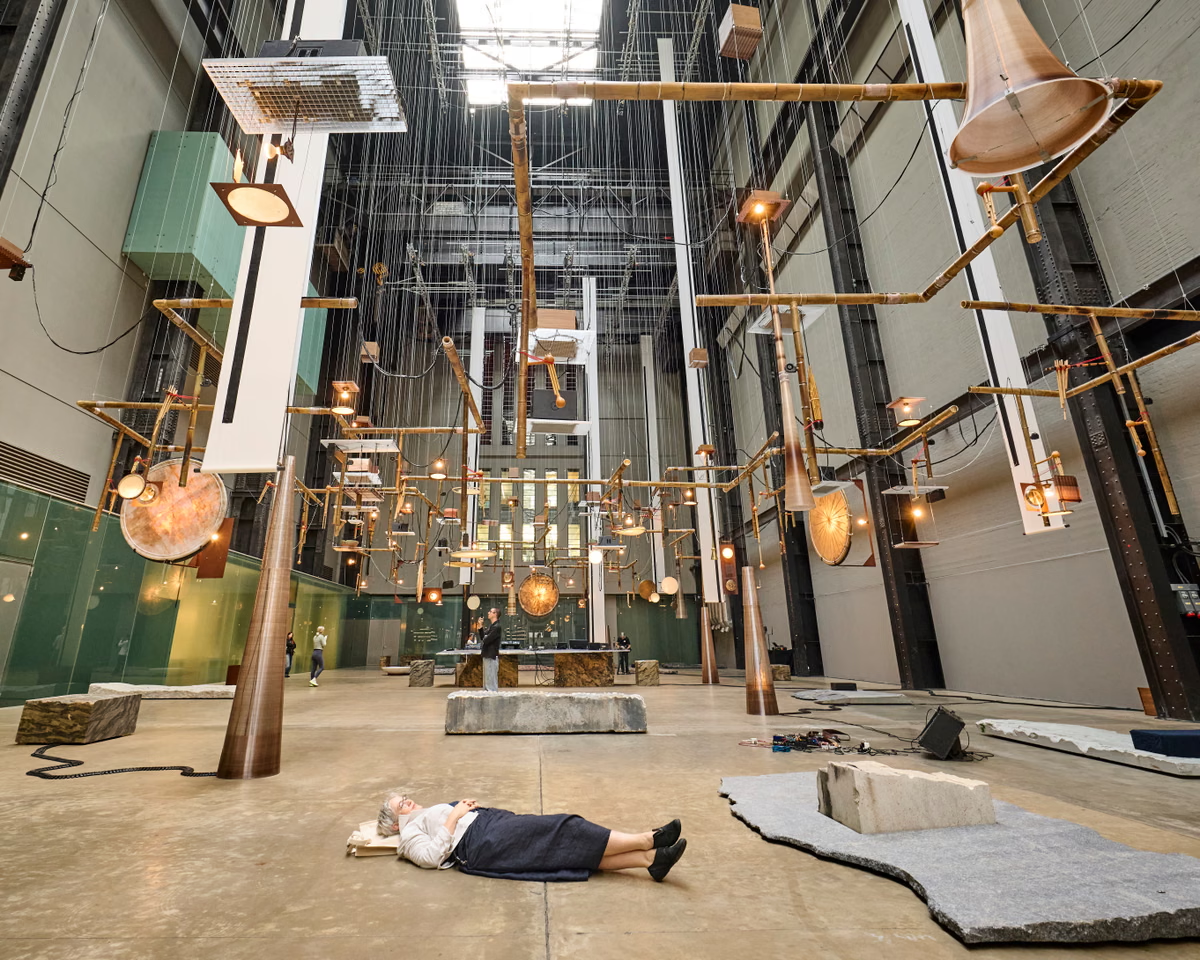
Tarek Atoui’s latest installation at London’s Tate Modern has turned the vast Turbine Hall into an immersive, interconnected sound machine. Upon entering, visitors encounter water basins and large, rough-hewn rocks—reminiscent of moorland or desert landscapes—that invite them to sit, stand, or climb. Looking upward, the space is dominated by an array of suspended musical instruments, including massive, elongated brass trumpets and glowing drums that appear to float from the power station’s original roof girders.
The installation functions as an invisible, evolving artwork, shifting constantly through noise and vibration. An earth-shaking bass note periodically pulses from a hanging trumpet or a translucent cone that rises from the floor like a minaret. This is punctuated by deep drumbeats and the haunting, nostalgic vocals of a woman, which reverberate throughout the hall. While abstract and non-melodic, the soundscapes act as a guide through the forest of physical objects, challenging the distinction between sculptural form and auditory experience.
Atoui has crafted an intricate machine that teases the viewer, prompting questions about how the various pipes, strings, water, and stones contribute to the sonic output. The work possesses a distinct, often absurdist humor. In the past, such complex, mechanical contraptions might have been labeled “Heath Robinsonish” after the early 20th-century British cartoonist known for such fanciful inventions. A more fitting historical comparison might be Leonardo da Vinci, who famously conceptualized impossible machines, including water-powered organs and beasts shaped like string instruments.
There is a profound sense of mourning and mystery within the installation, as the bass notes build toward an apocalyptic crescendo. The scale and composition evoke an ancient, labyrinthine city—reminiscent of the markets in Lahore, Marrakesh, or Istanbul—yet the atmosphere remains ethereal and untethered. As the sound intensifies, it creates an ecstatic, trancelike state, drawing parallels to the practice of Sufi dervishes who use motion and music to reach a sense of liberating calm.
Ultimately, the work defies a single interpretation. The artist seems to be searching for a lost harmony, a secret frequency that blends the urban noise of the surrounding Bankside area with a world beyond the physical. While the electric guitar played at the press view and the solid stones draw the eye, the sound eventually dissolves their materiality. As the exhibition progresses, the solid elements that Atoui begins with become as unreal as a reflection in a courtyard pool, solidifying his role as a modern magus who has successfully turned the Turbine Hall into a space for infinite wonder.