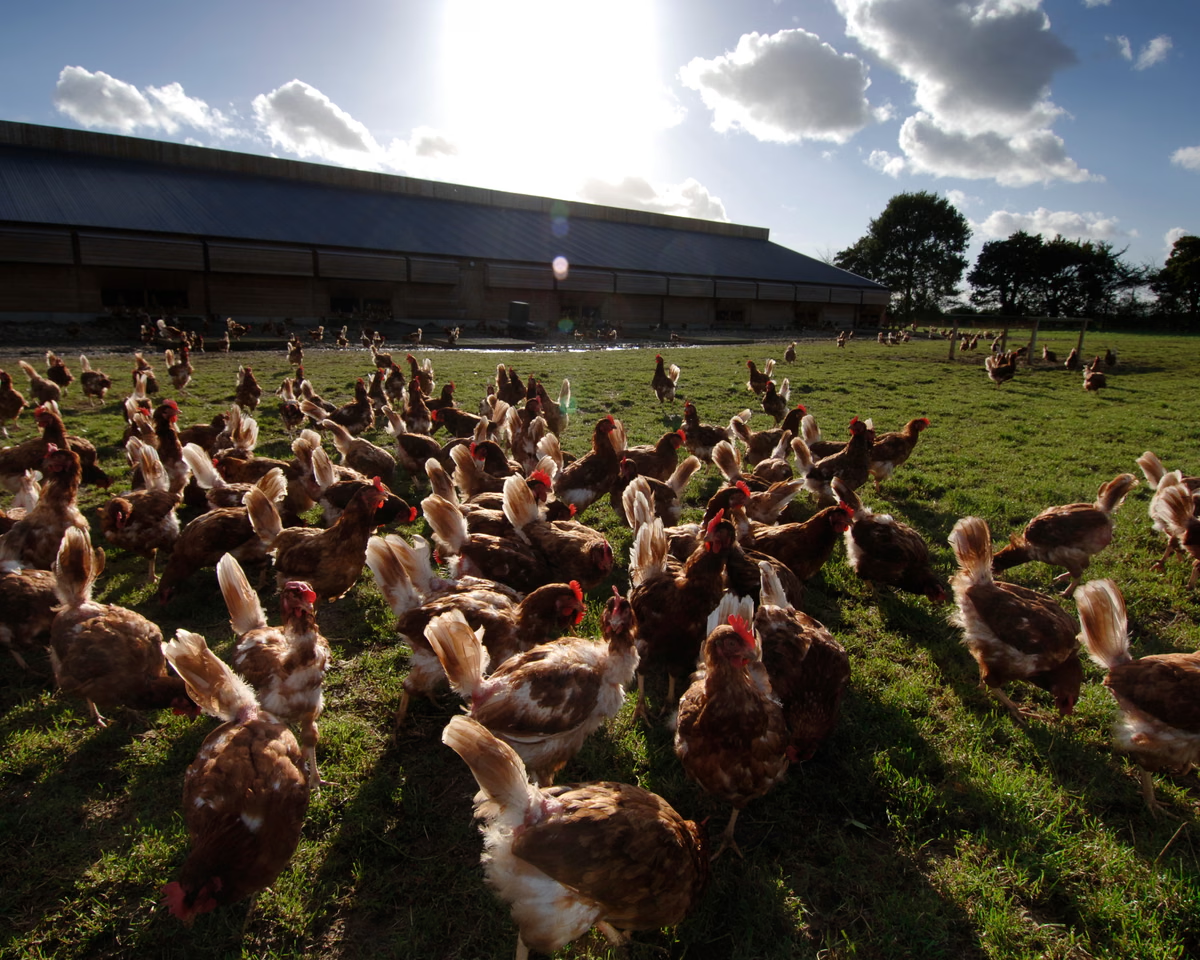
British food and drink exports to the European Union have dropped by more than a third since Brexit, according to new figures highlighting the severe strain on producers of eggs, poultry, and potatoes. An analysis conducted by the National Farmers’ Union (NFU) using HMRC data identifies a sharp decline in trade for the year ending in July, particularly when measured against 2019 benchmarks. Sugar exports have been hit hardest, falling by 70%, while full-year data from 2019 through 2025 shows a 74% collapse in exports of eggs and egg products. Horticultural exports fell more than 50%.
During the first seven months of the year, poultry exports fell by 53%. The downturn also severely affected eggs and egg products utilized in the confectionery and baking sectors, which saw a 65% drop. NFU president Tom Bradshaw emphasized that the EU remains the UK’s primary agri-food trading partner, accounting for 68% of such exports last year. Despite this importance, trade volumes have failed to recover from the disruptions following the 2020 trade and security agreement signed by Boris Johnson’s administration. After the UK’s formal exit earlier that year, boris Johnson’s government signed a deal on the UK’s future trading and security relationship with the EU in late 2020.
Exporters continue to face significant administrative hurdles, as the post-Brexit landscape requires complex customs paperwork and unique coding for every individual product variation. Products such as eggs require detailed health certification to prove they are disease-free, extending even to the materials used in their packaging. Beyond direct trade, the horticultural sector has suffered, with seed potato exports from Scotland—previously worth approximately £11m annually—largely banned due to a lack of equivalence agreements on standards. For example, every variation of an egg product, whether it is fresh, dried, steamed, shelled, or contains added water or sugar, this includes. Pre-Brexit, Scotland exported around 20,000 tonnes of seed potatoes, worth almost £11m, to Europe each year.
Political pressure is mounting to address these economic challenges, which economists estimate have cost the UK up to £240bn to date. Andy Burnham recently noted that strict trade barriers mean that entire shipments of fresh produce can be destroyed due to minor documentation errors or a single missing stamp. He indicated a desire to secure a positive outcome in upcoming UK-EU reset talks, aiming to remove the sanitary and phytosanitary (SPS) checks that have hampered fresh food exports. Andy Burnham is reconsidering Labour’s red lines on EU membership under pressure to repair the economic damage of Brexit.
The impact on high-value exports is substantial; Scottish salmon, the UK’s leading food export, is currently subject to a 100% document check rate, leading to an estimated £100m in lost trade. Furthermore, British meat products, Welsh shellfish, and Scottish seed potatoes face ongoing trade restrictions. A prospective deal to simplify SPS checks was largely drafted in May, with expectations for it to be implemented by next summer, though critical details remain pending.
To navigate these changes, the NFU is lobbying for transition arrangements to support crops grown using techniques or fungicides not currently authorized within the EU. This strategy would allow producers to leverage new export freedoms beginning next year. Bradshaw underscored that British farmers must retain access to essential precision breeding technologies and science-based plant protection products to maintain food resilience against extreme weather and pests.
The union continues to urge the government to ensure any upcoming agreements provide adequate transition periods to prevent further disruption to farming businesses. As the sector awaits a finalized agreement, the data remains clear: the post-Brexit trade environment has fundamentally altered the export capacity of British producers, with long-term consequences for the domestic agricultural economy. This is having a real impact on businesses and the agreement on the table could reverse some of that damage.”.