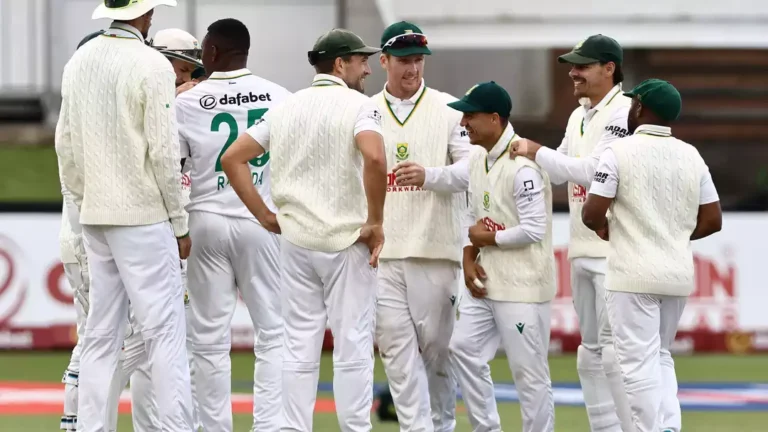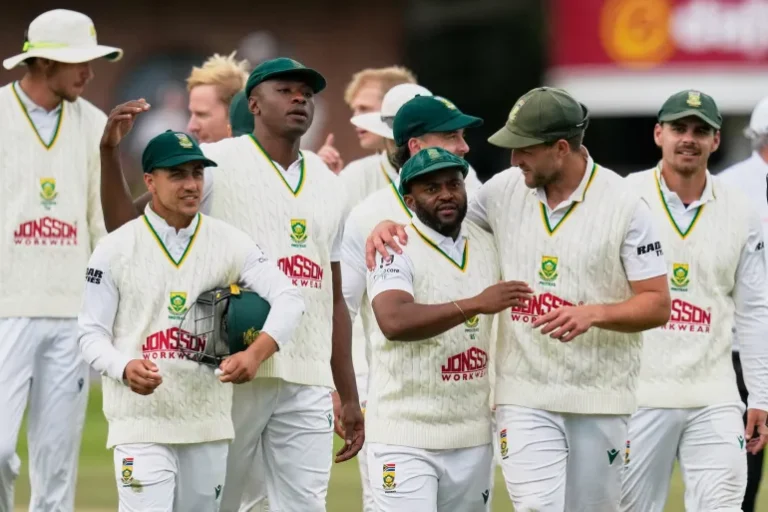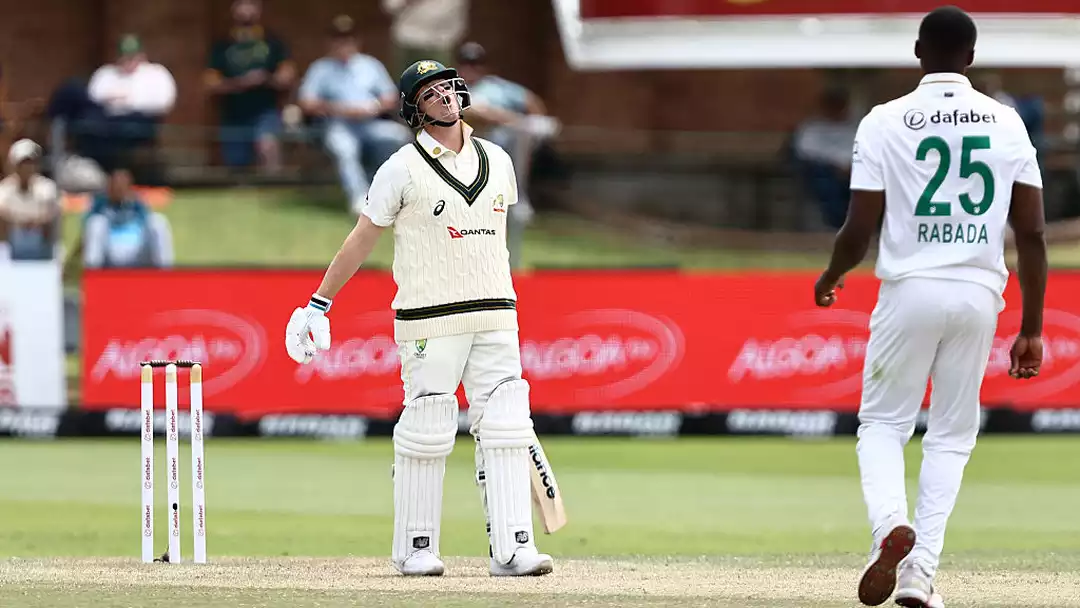
Steve Smith’s dismissal during the second Test at St George’s Park felt like the inevitable breaking point for an Australian batting order that has been teetering on the edge for some time. Despite achieving the personal milestone of 11,000 career Test runs during the match, Smith’s departure was widely viewed as a moment of inexplicable carelessness. Attempting to force a length delivery from Kagiso Rabada toward deep backward square leg, Smith only succeeded in skying a catch to a scrambling Matthew Breetzke, leaving spectators and teammates in disbelief. And we’re talking about a Test where he brought up his 11,000th run for good measure. It was an attempt to hoick a length delivery from Kagiso Rabada that pitched on around fifth stump before seaming away somewhere towards deep backward square leg. Tens of thousands of Australians looked on in utter disbelief at what the best batter in their team had just done, while Temba Bavuma held his breath and looked away because he couldn’t bear to see Breetzke’s effort. It brought to the fore the lengthy run of stops and starts that his career has endured since the heady days of his run as No 1 Test batter in the world, unfortunately for the long-term No 3. It didn’t help that their most important batter struggled for most part of it with a bothersome neck issue.
The timing of the wicket was critical, occurring just three overs after the introduction of the second new ball and less than eight overs after Travis Head had concluded his impressive century. With a session and a half remaining to salvage a draw, Smith’s decision to play such a low-percentage shot seemed disconnected from the match situation. It followed a similar error by Marnus Labuschagne on the previous evening, where he also fell after struggling to build on a score in the thirties, compounding the team’s woes during a difficult outing in Gqeberha. Travis Head’s brilliant century knock had ended less than 8 overs prior to Smith losing the plot. Either side of a hearty and wholesome partnership between Head and the forever-reliable Scott Boland.
This performance was arguably one of the worst collective batting efforts by an Australian side this century, yet for many observers, it came as little surprise. The first innings collapse to 99 all out served as a stark reckoning for a lineup that has long relied on individual brilliance or gritty rear-guard actions to mask systemic issues. The fourth morning presented a perfect storm, with a hostile South African pace attack featuring Kagiso Rabada and Marco Jansen exploiting a surface that, while not overly treacherous, offered enough assistance to a skilled bowling unit. Australia’s 99 all out in the first innings in Gqeberha was a day of reckoning for a batting line-up that had tiptoed around the precipice for far too long without being able to find a solid platform to jump onto. But it’s unlikely that he’s played one that felt so out of character. What transpired during the 42.3 overs on the fourth morning though had the makings of a perfect storm. And has so often relied on an individual piece of brilliance—Matt Renshaw’s heroics in Durban being the latest—or a bunch of scratchy rearguards to bail them out. But there was no shock, there was awe.
The pressure on Australia’s top order has been mounting, particularly regarding Marnus Labuschagne, whose recent form has reignited debates about his position. Critics have pointed to his persistent struggles to convert starts into centuries since mid-2023, coupled with frustration over the selectors’ perceived reluctance to address his inconsistencies. These technical and mental lapses were further highlighted by the dismissals of Beau Webster, who was cleaned up by an off-break from Simon Harmer, and Matt Renshaw, whose brief stay at the crease offered no stability. According to those asking for his head, in not taking a strong stance against his lack of Test centuries since the middle of 2023, along with the added frustration around the selectors’ stubbornness.
Adding to the chaos was the batting unit’s overall fragility under the weight of South Africa’s aggression. Nic Maddinson also failed to make a meaningful impact, struggling against the pace of Rabada. Smith, who had been managing a neck injury throughout the Test, eventually surrendered his wicket after a restless period that included a dropped chance by Ryan Rickelton and a change of bat. Ultimately, the confidence of the batting lineup appeared to have completely evaporated, confirming that the long-standing technical and psychological frailties of this team have finally caught up with them on the international stage. It didn’t make much sense in terms of its chances of success. Or even make them look better than they are.