Collins English Dictionary has officially designated “mogging” as its word of the year, marking a significant transition for a term that has seen its usage surge dramatically over the past twelve months. What was once confined to the insular world of the manosphere—an online community centered on hyper-masculine and frequently misogynistic content—has now firmly established itself in common, everyday language. Slang terms breaking out of the community that coins them isn’t unprecedented.
The dictionary defines the term as a playful way to describe the act of outperforming or outshining someone else. It has become a staple of online celebrity culture, with clear indications that the word is increasingly being adopted in broader social settings. Language consultant Tony Thorne of King’s College London notes that he recently encountered someone using the phrase “walk-mogged” to describe an experience where a pedestrian of similar age walked past them at a faster pace. According to it’s still got that element,”, Thorne.
The term’s origins are typically traced back to the 2010s on bodybuilding and incel message boards, where it was originally derived from the acronym AMOG, or “Alpha Male of the Group.” During that period, it served as a toxic descriptor for extreme competitiveness and a drive to dominate others. However, Thorne explains that a younger, broader audience eventually began to diffuse and repurpose the word, moving from its original aggressive connotations toward ironic and teasing usage.
The term gained significant traction through its association with the influencer known as Clavicular, who is recognized for “looksmaxxing” content.
The influencer, who recently entered a not-guilty plea to charges including rape, frequently posted videos of himself attempting to “mog” individuals in public.
The term reached a much wider audience after viral posts described the controversial streamer as being “brutally frame mogged” earlier this year.
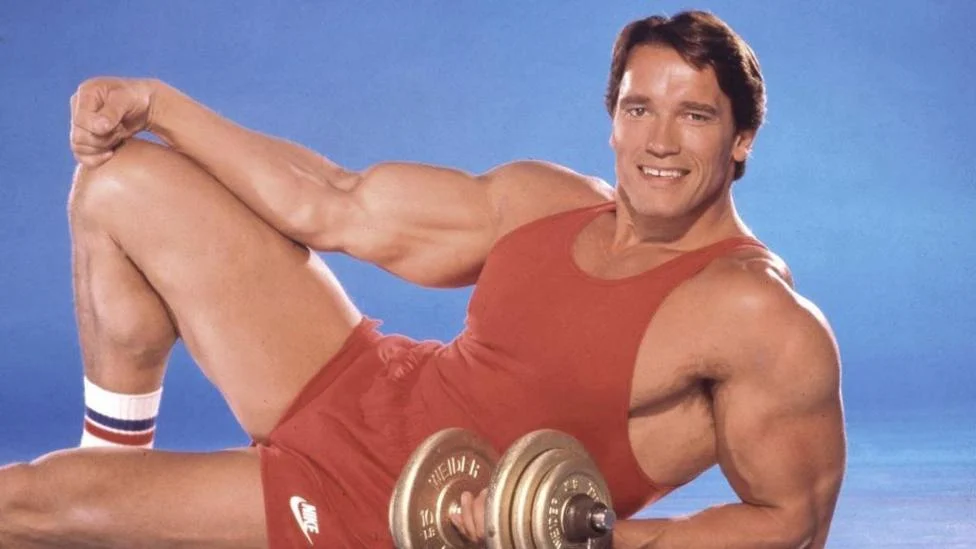
In a nod to the word’s roots, seven-time Mr. Olympia Arnold Schwarzenegger referenced the term ironically, posting footage of his younger bodybuilding self with a caption questioning the new “frame mogging” trend. People then started to use it ironically and teasingly.
Despite its origins, experts suggest the term has been largely detoxified in recent contexts. Thorne compares this evolution to the path of drag queen slang, noting that it has transformed into a form of silly, celebrity-focused banter. For many young people today, the word lacks any unhealthy connotation, instead functioning similarly to “slay”—a way of complimenting someone’s performance or appearance. But “mogging” may be a lot older than its recent surge might suggest. It’s becoming more like the drag queen slang that was also used until recently – ‘it was lit’, ‘she slays’, ‘he’s a king’, ‘she’s a queen’. He believes that the term has now “largely been detoxified” as it mostly “retains that tinge of mockery or irony”. Mogging can also take many forms and refer to someone excelling in any number of different ways.
Evidence of this mainstream shift can be seen in various high-profile instances. British Vogue described actor Hudson Williams as “mogging” at the 2026 Golden Globes, while Olympic figure skater Alysa Liu stated in an interview that her primary goal for a competition was to “mog.” The term also appears in lighthearted contexts, such as when online observers commented on Maya Jama “mogging” during an appearance on the show Celebrity Traitors, even while hanging from a helicopter. Reflecting this softer and more mainstream meaning, British Vogue captioned their photo of Heated Rivalry actor Hudson Williams arriving at the 2026 Golden Globes as him “mogging at the Golden Globes”.
Nevertheless, a competitive edge remains embedded in the word’s usage.
Fans often pit celebrities against one another, such as when online debates arose comparing 2026’s sexiest man alive, Noah Wyle, to the 2025 recipient, Jonathan Bailey. A similar situation occurred when fans of Zara Larsson and Tate McRae argued that Larsson had “mogged” McRae during a performance, a comparison Larsson subsequently pushed back against by expressing her respect for her fellow artist on the Call Her Daddy podcast. Cillian Murphy has also been a focal point of such comparisons, often being contrasted with his co-stars. Last year, fans of Zara Larsson and Tate McRae pitched the two singers against each other after the Swedish popstar opened for McRae on the North American leg of latter’s Miss Possessive tour. Beside Emily Blunt and Florence Pugh, cillian Murphy at the Oppenheimer UK premiere in 2023.
Looking ahead, Thorne anticipates that the term’s versatility will allow it to persist as a catch-all descriptor. “I think there are all sorts of opportunities—style-mogging, height-mogging, car-mogging,” he says. “You can apply it to almost anything now.”