
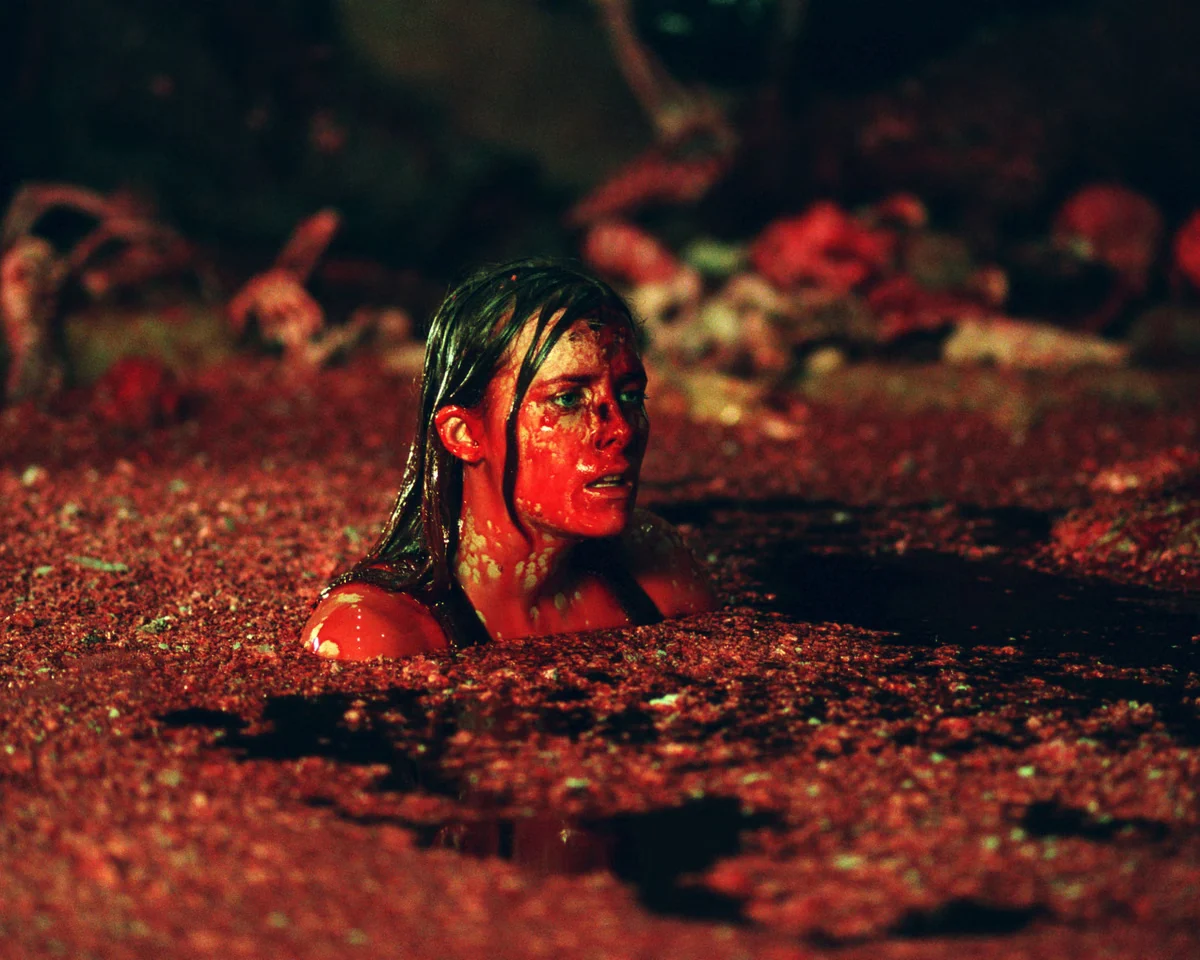
The genesis of the 2005 horror hitThe Descentbegan when director Neil Marshall pitched a project to Christian Colson at Celador Films. Following his work onDog SoldiersMarshall proposed a feature-length version of his own student film centered on zombies aboard an oil rig. When that proved too costly, he sought a more intimate, contained premise. A childhood school trip to a lead mine remained in his memory, specifically when the guide ordered the group to extinguish all lights, leaving them in an unfathomable, total darkness that served as the film’s primary inspiration.
To maintain realism, the production eschewed traditional lighting, ensuring the cave environment felt authentic to the caving experience. Each character’s light source was carefully integrated into the script, creating a logical scheme where Sarah was associated with fire and Juno with torchlight. The claustrophobic interiors were entirely artificial; the set was constructed by Simon Bowles, supplemented by matte paintings and miniature work by Leigh Took, while the waterfall effects utilized salt rather than water.
For the film’s antagonists, the ‘crawlers,’ Marshall sought a human yet uncanny aesthetic. Drawing visual inspiration from a hybrid of Nosferatu and Iggy Pop, he instructed the performers to mimic the erratic, spider-like movement of stopping perfectly still before surging into high-speed motion. Cast members were kept isolated from the creature designs to heighten the tension; performers were only introduced to the creatures during filming, which was executed chronologically to ensure genuine reactions.
The film’s lead actor noted that while early press focused on ‘girl power,’ the production’s true strength lay in the fierce, long-term support system formed by the cast. The six main actors have maintained their bond for approximately 21 years, citing the intense, shared experience of the filming process as the foundation for their enduring friendship. This emotional connection proved essential, particularly during physically demanding, violent sequences.
The production utilized clever practical effects for the film’s grislier moments, such as the scene involving a child crawler. The performer, then only 11 years old, was a professional, and the impact of the lead character crushing the creature’s head was simulated by stamping on a cauliflower. Similarly, the blood-soaked finale was filmed in an overflowing, shallow Jacuzzi, requiring a stunt performer to execute a jump that insurance policies prevented the main actors from attempting. The eye-gouging sequences were described as highly satisfying for the actors involved, who viewed the intensity of the combat as a testament to the characters’ survival instincts and the actors’ commitment to their roles. The report also notes that and I pitched them a project – actually a feature-length version of my student graduation film – about zombies on an oil rig, i was introduced to Christian Colson at Celador Films off the back of [2002 horror film] Dog Soldiers. The report also notes that so on the train back to Newcastle I was asking myself what would make a really scary horror film that could be contained and so made on a budget, they liked it but said it was too expensive. The report also notes that well … caves, i was thinking of things set in the dark and was like. The report also notes that there are no beautiful shafts of light making everything look pretty. The report also notes that so only when a character turns around and shines a light you finally see what’s in the shadows, it meant having huge portions of the screen in total darkness. The report also notes that but it did mean a lot of planning because each character had to have something they could light the scene with, even if it was just a box of matches, darkness was definitely my friend.








Comments