
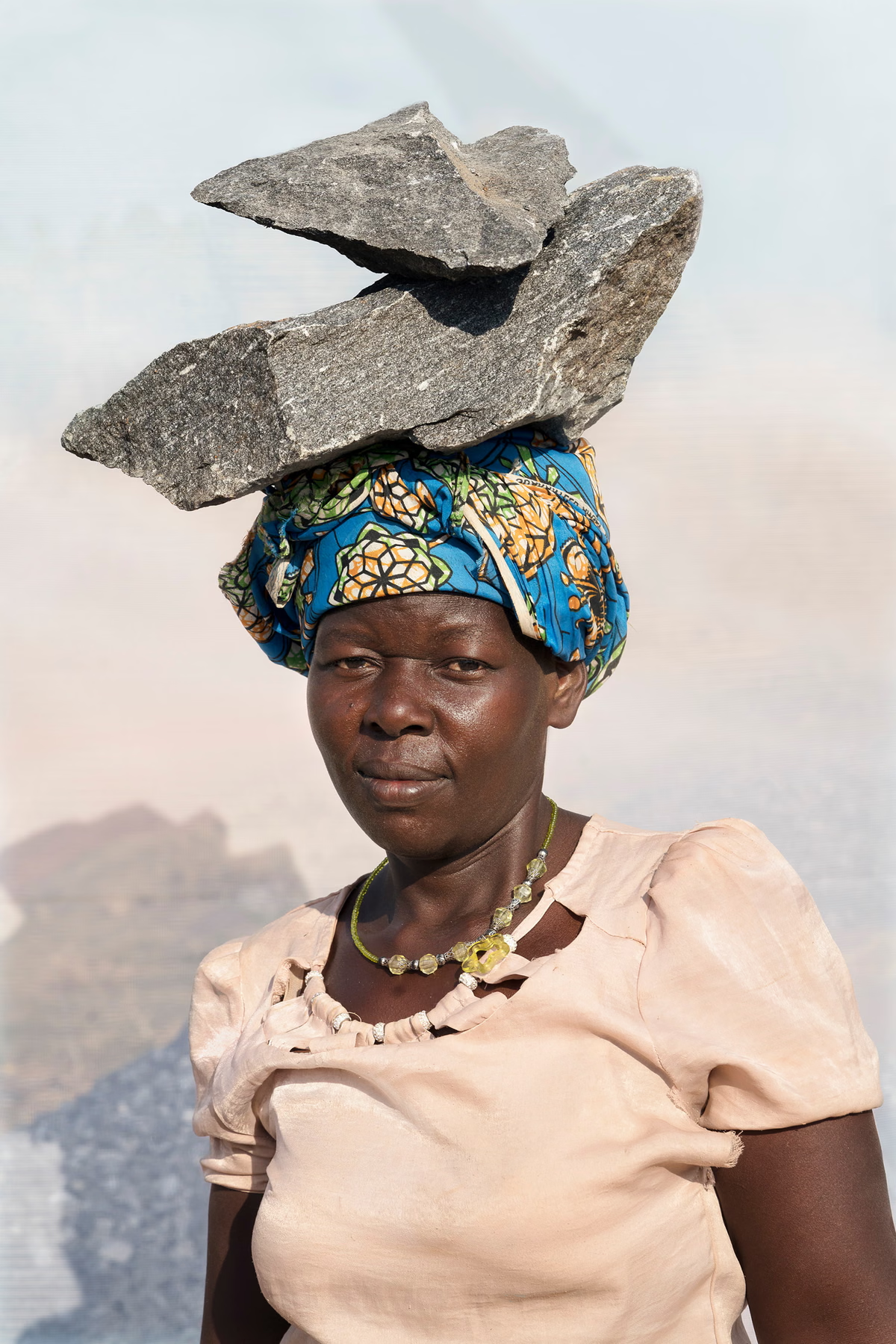
In 2017, photographer Dan Nelken traveled to Gulu, Uganda, while accompanying his wife, Adele Brown, who was volunteering at an NGO to teach critical thinking to blind high school students. Tasked with documenting the organization’s work, Nelken initially attempted to photograph local market vendors. Following advice from local teachers, he began offering a modest “model fee” after securing permission. However, he found the initial results disappointing, as the subjects appeared lost against the busy, distracting backgrounds of the market.
Returning to the region the following year, Nelken developed a new approach using mosquito netting as a backdrop. This technique allowed the women to stand out from their environment while providing a symbolic nod to malaria, a significant health challenge in the area. The project, titled HeadStrong, shifted its focus to the women who performed the majority of the labor in the community. One key location was a quarry about 10 miles outside of town, where women spent their days breaking rocks into gravel to be sold by the jerrycan.
Nelken collaborated with Ugandan author Beatrice Lamwaka to interview the participants, ensuring their personal stories were documented alongside their portraits. The narratives often touched upon the lingering trauma of the civil war in Northern Uganda. Among the 116 women photographed was Janet, who had worked in the quarry for a decade to support her eight children. Her husband, formerly a boda-boda taxi driver, had lost a leg in an accident, forcing her to become the primary breadwinner. “I am now the husband in this home,” she stated, explaining that she had to do whatever was necessary to keep the household standing.
The project captured a wide economic spectrum, from business owners to those struggling at the base of the economic ladder. Many women had followed their mothers into the quarry work as children. Among the younger subjects was 10-year-old Jovia, who worked weekends to fund her education with the goal of becoming a doctor. Nelken encouraged each woman to choose her own pose, aiming to capture their dignity and sense of self. The oldest participant was 74, and others bore physical marks of their labor, such as the loss of an eye.
Reflecting on the experience, Nelken, who was born in Tel Aviv in 1946, considers HeadStrong his most meaningful project. He was deeply moved by the enthusiasm of the women when he returned to provide them with physical prints, noting that many had been approached by photographers in the past who never returned. He remains grateful to the 116 women who trusted him with their stories. His advice for future projects is to remain open-minded, as the final results often deviate from initial concepts in ways that improve the work, even if the process takes longer than anticipated. The report also notes that who had been working there on weekends for four years to help pay her school fees – she wanted to become a doctor, my portraits also included one of 10-year-old Jovia. The report also notes that i was asked along to document the organisation’s activities. The report also notes that where vendors sold goods such as used clothes, fruit and firewood, i became fascinated by the town’s main market. The report also notes that as with other well-intentioned projects, I thought that was the end of it.





Comments