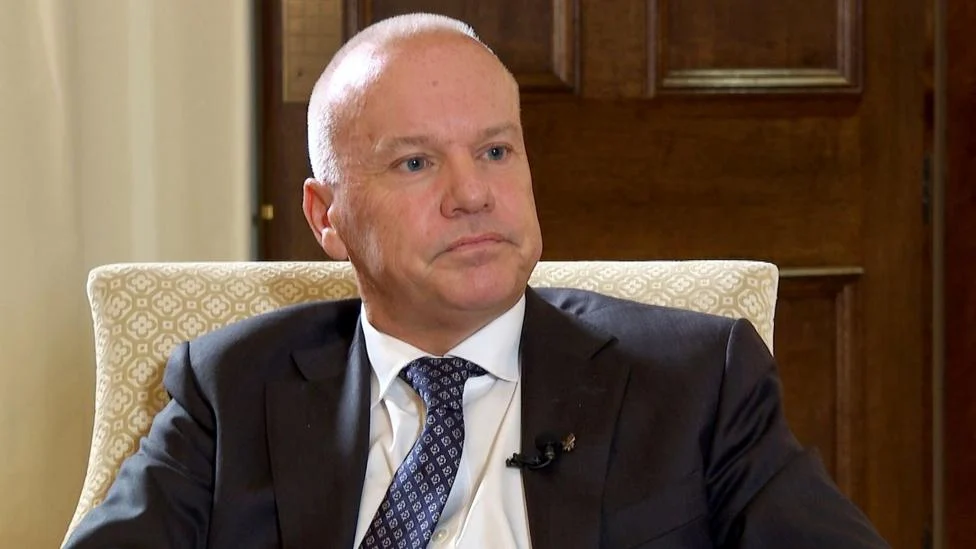
Anders Opedal, head of the Norwegian state energy firm Equinor, has signaled that the company may reconsider its future involvement in the United Kingdom if current North Sea drilling projects face rejection. Equinor, which maintains a significant stake in these sites, would be forced to take a hard view on future capital commitments if the UK government blocks the developments.
The energy giant is awaiting a final determination on the Rosebank and Jackdaw fields. Despite Prime Minister Andy Burnham’s stated commitment to a pragmatic approach regarding fossil fuels, Opedal described the ongoing period of uncertainty as an uncomfortable position. He expressed optimism that the projects would ultimately receive the green light, noting that the company remains invested in the region’s potential. Despite a ban pledged in Labour’s election manifesto, the warning comes as the UK government is set to decide whether or not to grant final approval to extract oil and gas at Rosebank and Jackdaw.
Both fields were previously approved by the Conservative government but encountered setbacks following a Scottish court ruling. Environmental groups successfully challenged the initial consent, arguing that the climate impacts had not been adequately considered. Public consultations on the sites concluded in August, leaving the final decision in the hands of Energy Secretary Miatta Fahnbulleh. We learned from the UK and it’s actually the same geology on both sides of the border – several fields actually cross it.
The projects involve complex ownership structures; Rosebank and Jackdaw are operated by Adura, a joint venture between Equinor and Shell, with the Aberdeen-based firm Ithaca holding a 20% interest in Rosebank. Adura officials have noted that construction on Jackdaw is 99% complete, and if authorization is granted promptly, the facility could provide gas to British homes as early as this winter.
Rosebank itself holds strategic importance as the largest undeveloped oil and gas field in the UK, located roughly 80 miles north-west of the Shetland Islands. Estimates suggest the site contains as much as 500 million barrels of oil and gas. Opedal highlighted that the exploration license for Rosebank dates back to 2001, with the discovery following in 2004 and a final investment decision formalized in 2023. According to opedal, The exploration licence for the site was originally granted 25 years ago. “The licence was awarded in 2001, the discovery was made in 2004 and the final investment decision in 2023,” he said.
Advocates for the energy transition remain critical of these developments. Tessa Khan, executive director of Uplift, described the push for new drilling as a poor deal for Britain, arguing that it fails to lower consumer energy bills. Khan further warned that pursuing these projects puts the government’s climate credibility at risk, stating that the extracted resources are destined primarily for export rather than domestic relief.
The debate occurs against a backdrop of rising energy prices and concerns over security of supply, with national production projected to drop by half by 2035. While the UK currently imports half its gas from Norway, Equinor continues to operate on the premise that the North Sea remains a viable asset. Opedal emphasized that the geological landscape is consistent across the border, noting that the UK industry served as the foundation for modern North Sea operations. Equinor has predicted production will remain at current levels until the middle of the next decade.
Government officials have reiterated that the North Sea remains a vital national asset. A spokesperson stated that oil and gas will continue to play an essential role in the national energy system for decades to come, even as the country transitions to cleaner power sources to protect jobs and address climate challenges. The government maintained that all final decisions will be evidence-based, incorporating environmental assessments and public input from the consultation process.