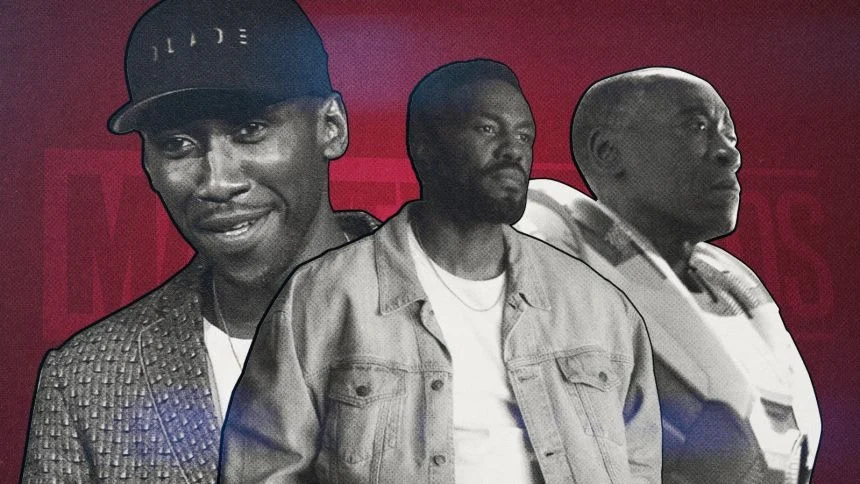
Mahershala Ali has officially moved on from the “Blade” reboot, signaling the likely end for the long-gestating project that was intended to bring the classic 1998 vampire-slayer story into the Marvel Cinematic Universe. While promoting his new film, “Your Mother Your Mother Your Mother,” Ali addressed the status of the project, even though he had previously relocated his family to Atlanta for filming and training so rigorous it resulted in a knee injury. Marvel Studios President Kevin Feige recently admitted he feels like a “gigantic loser and failure that we didn’t get off the ground with Mahershala,” a sentiment with which Ali said he agreed, noting, “He should feel that way.”
The abandonment of “Blade” follows a pattern of stalled or canceled titles that has left fans questioning Marvel’s recent strategic cutbacks. The list includes the Disney+ series “Wonder Man,” which was initially renewed but subsequently canceled despite earning an Emmy nomination for lead actor Yahya Abdul-Mateen II. For many, these shifts represent a departure from the period of excitement surrounding 2018’s “Black Panther,” which became a cultural milestone. Subsequent successes, such as the 2022 sequel “Black Panther: Wakanda Forever,” grossed over $859 million worldwide and secured the franchise’s first acting Oscar nomination for Angela Bassett. These latest decisions feel far removed from the era of exuberance surrounding 2018’s “Black Panther, for some fans. Especially those developed for streaming, have either been canceled or set aside after one season, but many of these projects.
Observers like Carl Waldron, who analyzes Black superheroes on his website, Super, argue that projects centered on Black protagonists face significant hurdles regarding production, marketing, and the overall level of investment compared to other properties. While Marvel Studios has previously touted a commitment to diverse storytelling—with Feige emphasizing as recently as last year that the studio aims to represent “the world outside your window”—fans see a discrepancy between those stated goals and the recent project cancellations. Marvel declined to provide an on-the-record comment regarding these concerns.
During a period of aggressive expansion, Marvel successfully launched “Shang-Chi and the Legend of the Ten Rings” in 2021 as its first Asian-led film, and “Eternals” that same year featured a multiethnic cast. The studio’s streaming offerings also expanded to include “Ms. Marvel,” featuring Kamala Khan; “Echo,” led by Native American superhero Maya Lopez; and “Ironheart,” which highlights the character Riri Williams. However, recent changes in the MCU slate have fueled uncertainty, particularly regarding the status of “Armor Wars,” a film previously envisioned as a series featuring Don Cheadle’s James “Rhodey” Rhodes, which remains missing from current plans. The film broke box office records, proving that a predominantly Black cast and superhero story could have mainstream success, while Chadwick Boseman’s Black Panther wasn’t the first Black superhero to make it to the big screen. War Machine), is nowhere to be seen. (“What’s ‘Armor Wars’. Cheadle quipped during a 2024 “Today” show appearance.
Kira Brown, founder of the platform Room Full of Blerds, suggests that studio leadership may be hesitant or ill-equipped to handle characters of color effectively. She cited instances where storylines felt forced, such as a scene in “The Falcon and the Winter Soldier” where Sam Wilson is denied a bank loan, arguing that the show lacked the courage to engage in a deeper, more meaningful conversation about the systemic issues at play. Conversely, she praised “Wonder Man” for a specific scene depicting a family cookout, which she felt captured a more authentic “Black experience” through nuanced cultural detail.
The current climate may be shaped by broader industry pressures, including financial concerns and a shifting political landscape. Jeffrey A. Brown, a professor at Bowling Green State University, noted that major studios must account for economic constraints and external political scrutiny. “They’re being told, ‘You change this, or we’re going to have the FCC take away your license,’” he observed, drawing parallels to broader government debates over how history and social issues are discussed in public institutions.
Ultimately, fans like Waldron feel the struggle to have these stories treated as viable in mainstream media remains ongoing. For critics, the issue is not just about the presence of diverse characters on screen, but the level of financial and creative investment the studio is willing to commit. As the studio pivots toward cost containment initiatives—a strategy confirmed by Disney leadership in 2023 to reduce output across Marvel and “Star Wars”—the question remains whether stories centered on Black experiences will continue to be a priority for the powerhouse franchise. As planned series and movies fall by the wayside, Black fans are asking whether the MCU is purposely neglecting and sidelining its Black characters.