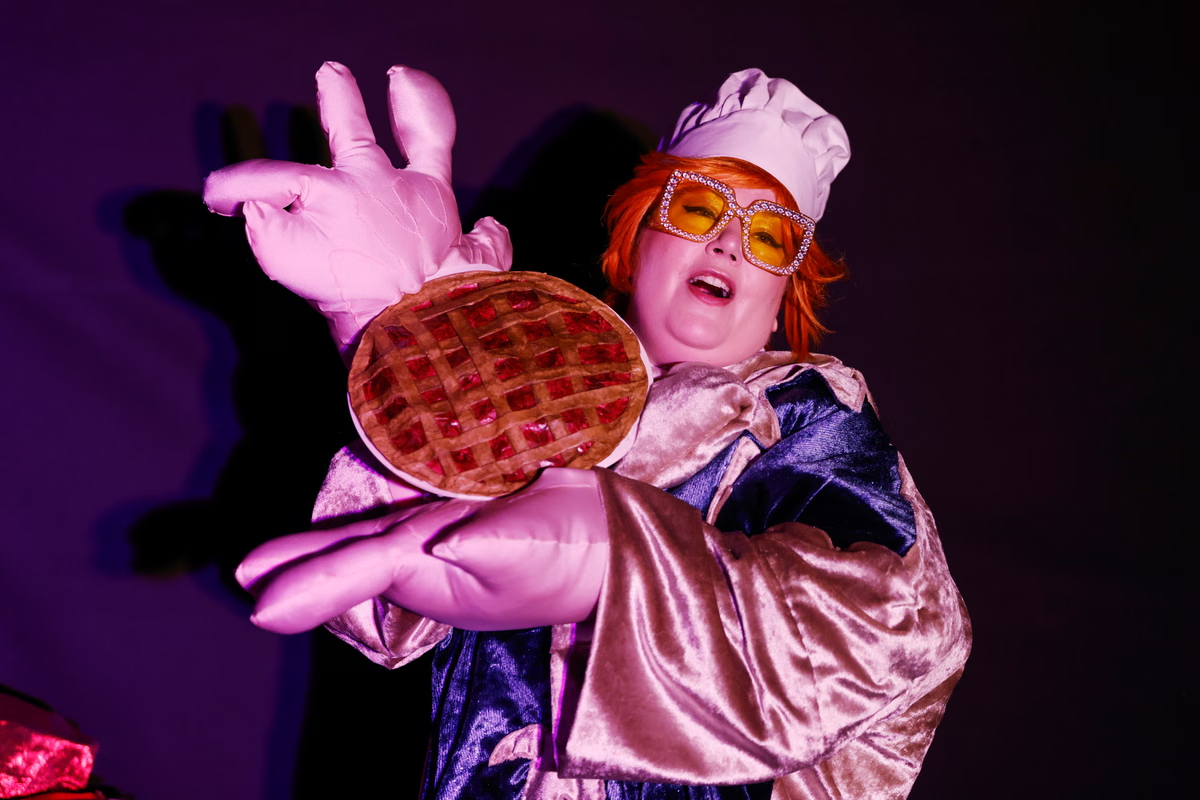
For many performers at the Edinburgh Fringe, the path to creating a memorable stage persona begins with a spark of absurdity. One such example is the character Sir Elton Scone, a baking-obsessed version of the iconic musician. The creator, who previously worked as a musician in a Soho bar playing Elton John’s back catalogue, first conceived the idea after drawing the singer as a scone during the Covid lockdowns. Encouraged by drag artist Michael Twaits to develop the concept, the performer leaned into the character’s evolution. While the persona remains rooted in the musician’s aesthetic, it incorporates exaggerated masculine traits like manspreading to contrast with the performer’s own 5ft stature, offering a sense of freedom that previous musical comedy experiments lacked.
Other performers find their footing in surrealism and anonymity. Basil Crumbwick, a character born from a Twitter account initially used for nonsensical free-writing, allows his creator to explore the perspective of an un-self-aware older British man. Standing 7ft tall while wearing a large papier-mache head, the performer notes that the anonymity provides a necessary barrier. Despite comparisons to Frank Sidebottom, the creator insists the character is distinct. The physical demands of the role—which involves wearing a hot, vision-obscuring headpiece—often lead to accidental falls and bumps, which the performer suggests only adds to the character’s inherent anger and confusion.
The show also serves as a vehicle for social commentary. While Basil Crumbwick frequently utters xenophobic, sexist, and homophobic remarks, the performer views the act as a satirical exploration of such mindsets. By presenting these views through an absurd lens, the audience is left to interpret the underlying message. The performer emphasizes that they are not interested in being themselves on stage, finding it far easier to channel thoughts through a character who can operate without the constraints of self-awareness.
Horror and media tropes provide the foundation for other acts, such as the character Derek, a vicar turned television celebrity. Inspired by the Soviet-era horror film Viy, the creator initially struggled to define the character until observing the mannerisms of TV presenters like Richard Madeley, Alan Titchmarsh, and Anton Du Beke. The resulting persona is a condescending figure who treats his audience like medieval country bumpkins. To heighten the horror elements, the performance features electronic props, including a remotely controlled animatronic coffin, drawing on the creator’s background in electrical engineering.
Sci-fi tropes also serve as a rich vein for parody. One performer developed a “sexy alien” character based on the concept of “Born Sexy Yesterday,” a term identified by writer Jonathan McIntosh. This trope describes powerful sci-fi entities deposited into the bodies of naive, attractive young models. The performer initially painted themselves blue to embody the alien, but abandoned the practice after suffering skin problems from the makeup. The show uses this character to critique the societal inequalities the performer experiences daily, noting that parodying these tropes is more effective than delivering direct rants.
Ultimately, these performances allow actors to transcend their usual casting limitations. For the performer behind the alien character, the stage provides a rare opportunity to play roles they are typically denied, including male characters or figures like Leonardo DiCaprio. By using parody to address tropes and inequalities, these comedians find that they can push their narratives much further, turning the stage into a space where they can explore complex, often uncomfortable, themes through the safety of a mask or a carefully constructed persona. The report also notes that when I was talking to my friend, the amazing drag artist Michael Twaits, and mentioned Sir Elton Scone, i didn’t think anything of it until last year. The report also notes that he was, like, “you need to develop that.” The character has evolved, but he’s still true to his roots in that it’s basically a bit like Elton John – but obviously for legal reasons, nothing like Elton John – and he just loves to bake. The report also notes that so it’s completely nonsensical, he’s hosting a TV baking gameshow that uses no ovens. The report also notes that so it’s a clear game for them to play, it’s become really fun because audiences understand how a TV studio audience reacts. The report also notes that what would I perceive to be very “masculine” traits to put into the character, i thought if I was coming at it as drag. The report also notes that for me, it was manspreading and making people move out the way for me. The report also notes that what comes with that is more confidence, so I made this giant character – giant hands, a big chef’s hat, the suit jacket twice the width of my shoulders, if I am taking up this much space.