
Hotel prices have surged across key European destinations as hundreds of thousands of tourists prepare to witness the first total solar eclipse visible from the continent this century. The influx of visitors has created significant demand for accommodation, leading to drastic price hikes in major hubs and smaller viewing locations alike.
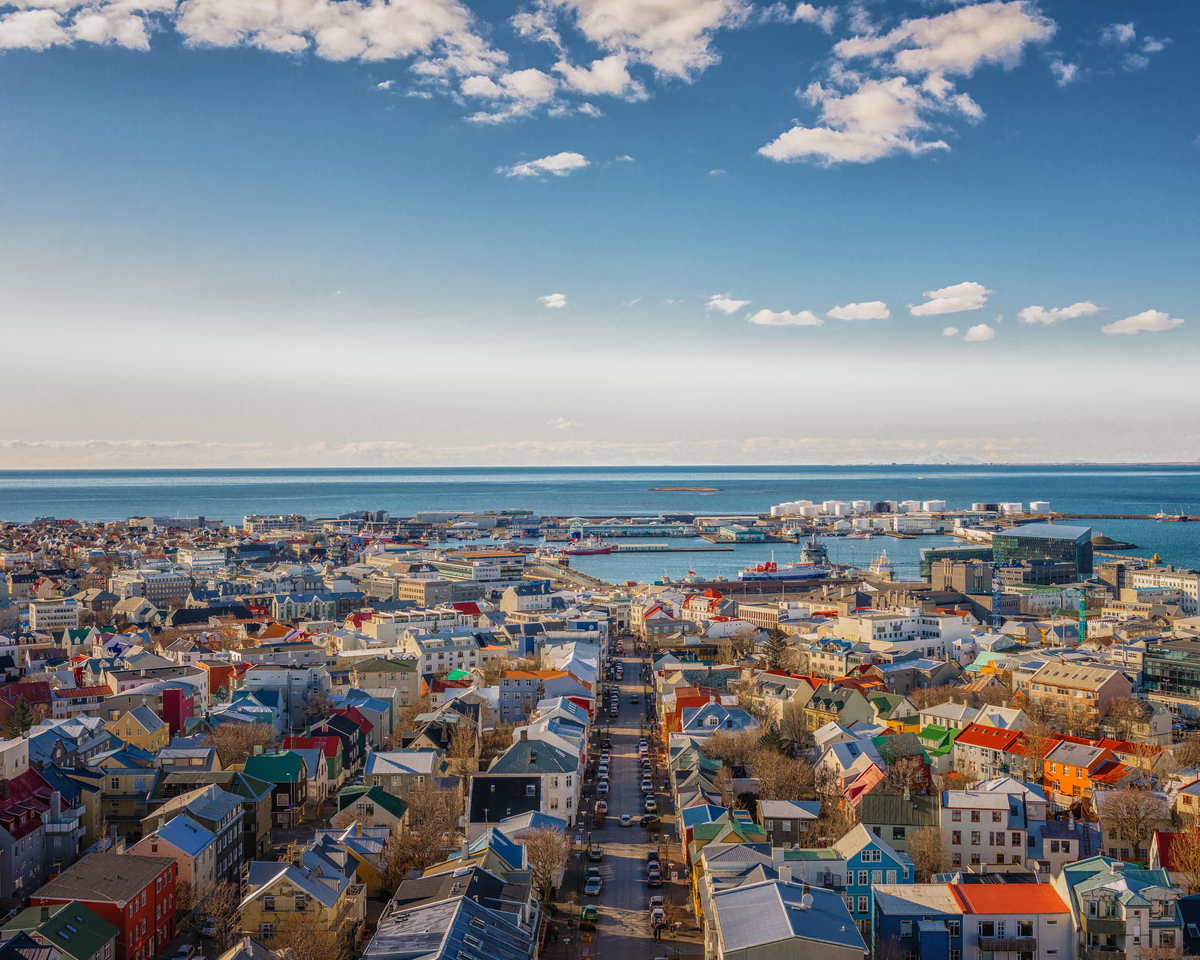
Reykjavík, Iceland, has experienced some of the most significant cost increases, serving as a primary base for those seeking an early view of the event. Data from the travel and hospitality group Lighthouse Intelligence indicates that tourists are paying an average of $793 (£587) for a room this Wednesday. This figure represents a 98% increase compared to the same period last year.
Spain is also bracing for a massive surge in tourism, with the finance ministry reporting expectations of 460,000 overseas visitors arriving specifically for the eclipse. Hotel rates reflect this demand: A Coruña has seen prices climb 135% to an average of $451, while Mallorca has experienced a 24% increase, with rooms averaging $448. Other cities, such as Santiago de Compostela and Bilbao, have recorded price jumps of 34% and 67% respectively.
Beyond major cities, accommodation in smaller villages along the eclipse path has been fully booked for months. Many travelers have turned to alternative arrangements, including house exchanges with residents in the Castilla y León region, which is considered one of the premier locations for viewing the phenomenon.
Spanish authorities have expressed significant concern regarding the heightened risk of wildfires, as officials anticipate 1.5 million more car journeys than usual on Wednesday. The combination of extreme heat, dry vegetation, and increased traffic poses a threat to emergency vehicle access in rural areas. To mitigate these dangers, the government has launched a massive safety operation involving the deployment of 35,000 police officers.
Virginia Barcones, secretary general for civil protection and emergencies at the interior ministry, emphasized the severity of the situation. “We’ve had an extremely tough summer in Spain, with yet another series of major forest fires,” she stated, noting that the government must restrict any activities capable of generating sparks. Consequently, authorities have banned parking on hard shoulders, prohibited barbecues and fireworks, and closed natural parks and rural footpaths in regions like València.
The environmental stakes are high, as the environment ministry reports that 200,000 hectares have already been scorched this year—six times the amount destroyed by the same date in 2025. As of Monday evening, large wildfires remained active in the provinces of Huelva, Segovia, and Huesca.
For those unable to travel, NASA has installed four high-powered telescopes in the village of Villalibado, north-west Spain, to livestream the event to an estimated 10 million viewers. Meanwhile, a partial solar eclipse will be visible across the UK, reaching maximum coverage in London at 7:12 pm on Wednesday. The report also notes that with plans to deploy 35,000 officers to help minimise risks, authorities will undertake out a massive police operation and safety campaign. The report also notes that as well as makeshift observatories set up by local enthusiasts, have been booked for months, accommodation in small towns and villages in the eclipse’s path. The report also notes that that’s why we must restrict any kind of activity that could generate a spark.”.









Comments