
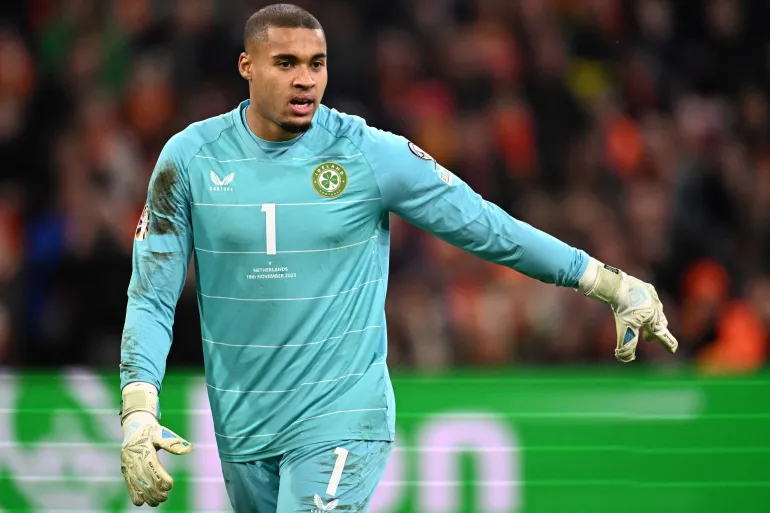
Gavin Bazunu, the Republic of Ireland’s first-choice goalkeeper, has withdrawn from the national squad ahead of the upcoming UEFA Nations League matches against Israel. The 24-year-old Dublin-born player, who has represented Ireland in 22 international fixtures since his senior debut in 2021, announced his decision on social media, stating that he felt it would be wrong to participate in the scheduled fixtures. He has represented Ireland in 22 international fixtures over the past five years and wears the goalkeeper’s preferred number one shirt for the country. Which is part of the Nations League competition held by European football’s governing body, UEFA, bazunu found himself at the centre of a row involving Ireland’s match against Israel. Saying Bazunu was “feeling quite low and shunned by some of the players and the FAI”, the 73-year-old revealed his communication with the goalkeeper. “It has been suggested to him that it would be better if he left the squad, which I think is disgraceful because there’s a game against Austria to be played, and why shouldn’t he be involved in that game?”.
The two-leg series was set to begin this Sunday in Debrecen, Hungary, with a second match following on October 4 in Backa Topola, Serbia. Following Bazunu’s statement, the Football Association of Ireland (FAI) confirmed that the goalkeeper would be replaced in the squad. Despite the FAI opting to move forward with the fixtures despite widespread calls for a boycott, Bazunu’s refusal to participate has drawn significant public attention and support. After the FAI confirmed that it would participate in the match despite months-long calls for a boycott due to Israel’s genocidal war on Gaza, Bazunu became the only player to publicly opt out of the fixture.
Reflecting on his withdrawal, Bazunu wrote: “Representing my country means everything to me. I have the utmost respect for every single one of my teammates, however, I have reached a decision that I have not taken lightly. I am a man of strong faith and try my best to do what is right. My decision is based purely upon my personal belief that the killing of innocent people is wrong.” He further clarified that his stance is directed at his personal principles rather than an opposition to the Israeli people or the Jewish community. The reaction to it, and the FAI’s decisions leading up to the match, breaks down the background to his withdrawal.
The reaction to Bazunu’s departure from the camp has been marked by strong public backing. Brian Kerr, former manager of the Irish national team, described the goalkeeper’s choice as a “heroic decision,” calling it a “very legitimate position for him to take.” Kerr also alleged that Bazunu faced cold treatment from within the FAI and certain players, noting that the goalkeeper was excluded from team meetings and voting processes, describing the situation as “disgraceful.”
Political figures and activists have also voiced support for the athlete. Jeremy Corbyn, former leader of the UK Labour Party, praised Bazunu for demonstrating “immense moral courage and integrity” by standing up against what he described as genocide. Similarly, British politician Sayeeda Warsi commended his “principled stand,” while actor and activist Liam Cunningham labeled him a hero for taking a stance when others in leadership positions appeared to pass the buck. And I strongly believe that this is one of them.”, there are few times in life when you get a chance to stand up for something bigger.
Gavin Bazunu’s journey to becoming Ireland’s top keeper began through the youth system, having played for age-group teams starting at the under-15 level. Of Irish and Nigerian descent, he chose to represent Ireland despite interest from Nigerian football officials. His career trajectory included a move to English Premier League side Manchester City, further cementing his status as a key member of the Irish senior squad. Who rose through the ranks of Ireland’s youth football system to become the country’s first-choice shot-stopper, the six-foot-two-inch (1.88m) goalkeeper is a Dublin-born footballer of Irish and Nigerian descent.
The controversy surrounding these specific matches exists against a wider backdrop of tensions. Earlier this year, Ireland barred Israeli government ministers Itamar Ben-Gvir and Bezalel Smotrich from entering the country, citing their policies toward Palestinians. Additionally, the broader debate on sports and international conflicts has seen groups like Irish Sport for Palestine demand a total boycott of the matches, arguing that participation serves to validate policies they strongly condemn.
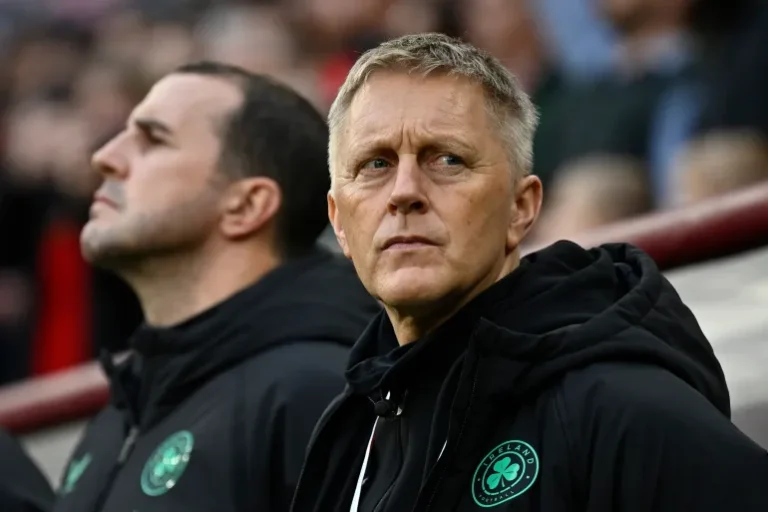
As the team prepares for its remaining fixtures, including a match against Austria this Thursday, head coach Heimir Hallgrimsson must rely on the remaining goalkeepers, Caoimhin Kelleher and Max O’Leary. Meanwhile, the incident has highlighted the personal costs of athlete activism, with supporters emphasizing the difficulty of maintaining a principled position within the high-pressure environment of international football.

Comments