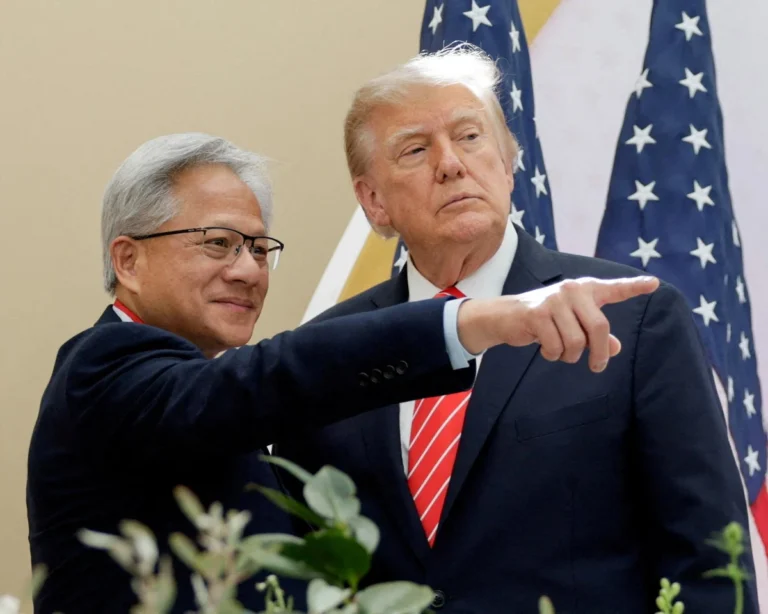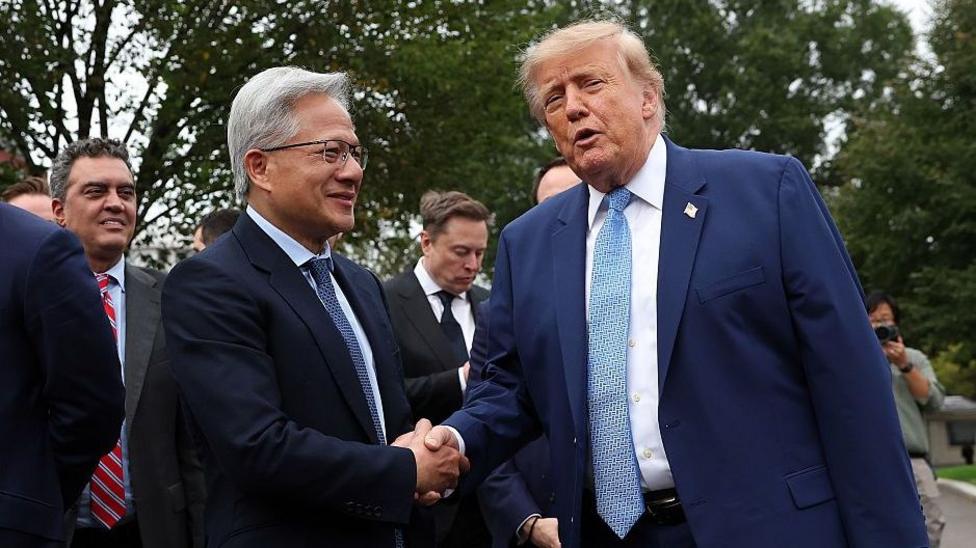
A scandal involving Nvidia CEO Jensen Huang has placed the White House under intense political pressure, raising concerns that a foreign intelligence operation may have compromised the highest levels of the U.S. government. As one of the few business leaders with direct access to President Donald Trump, Huang frequently traveled with him—including to Britain and on Air Force One during a May trip to China—and played a pivotal role in debates regarding the scope of U.S. technology exports. Jensen Huang wasn’t just another tech billionaire seeking the president’s ear.
Since 2022, Washington has restricted the export of advanced processors to China, citing risks to Beijing’s military and technological advancement. While Huang has long advocated for easing these limits, arguing they hinder market access and drive Chinese innovation, his influence reportedly shaped policy decisions. Trump had previously allowed Nvidia to resume some chip sales to China last year in exchange for revenue, though the most powerful Blackwell chips remain restricted. Nvidia makes the chips that power the AI revolution. Chips can be bought legally by customers in countries such as Singapore and Malaysia and then diverted to China. Chinese companies can also rent access to computing power through data centres outside the country. They shut Nvidia out of a huge market and encourage Chinese companies to develop their own alternatives.
Central to the current controversy are allegations of an affair between Jensen Huang and Alice Huang, a former executive at the Singapore-based firm Megaspeed. While the two are not related, U.S. intelligence officials reportedly suspect Alice Huang of maintaining ties to Chinese intelligence. Beijing has formally denied these allegations, and Nvidia’s board maintains that national security and company data have not been compromised.
The fallout from these reports has drawn focus to Commerce Secretary Howard Lutnick, whose department oversees sensitive technology export controls.
Lutnick faced significant internal pressure to blacklist Megaspeed, a company suspected of funneling advanced chips to China. Despite receiving a highly classified memo detailing risks regarding Alice Huang and Megaspeed, Lutnick reportedly resisted moving against the company, a decision that has become a point of contention within the administration. He had become an important voice in one of the biggest arguments inside the administration: how much of America’s most advanced technology should be allowed to reach China.
Treasury Secretary Scott Bessent has publicly questioned the lack of action against Megaspeed. On Friday, Bessent told CNBC that multiple government agencies had advocated for placing the company on the U.S. entity list for months. He suggested that because the Commerce Department holds primary authority over these designations, they alone are responsible for the internal processes that stalled the blacklisting.
Further complicating the matter, reports surfaced that the Commerce Department abruptly halted an investigation into suspected chip smuggling by Megaspeed after Nvidia’s general counsel allegedly intervened by invoking a senior Trump appointee. The department subsequently transferred the case to the Justice Department, raising questions about the degree to which administrative influence impacted the inquiry.
In response to the growing scrutiny, Megaspeed CEO Tan Yong Pong, also known as James Tan, stated on Thursday that his firm remains fully committed to compliance with U.S. export control laws. He emphasized that the company has worked transparently with the U.S. government and has cooperated with previous Commerce Department inspections.
The situation highlights a deepening divide within the Trump administration regarding the strategy toward China. While some officials prioritized protecting U.S. technological security, others, including the Nvidia leadership, sought to balance those interests against the demands of the Chinese market. As political pressure mounts, the administration faces growing scrutiny over the intersection of corporate access, private conduct, and national security. But enforcing those restrictions is difficult. But that relationship now looks rather more complicated.