
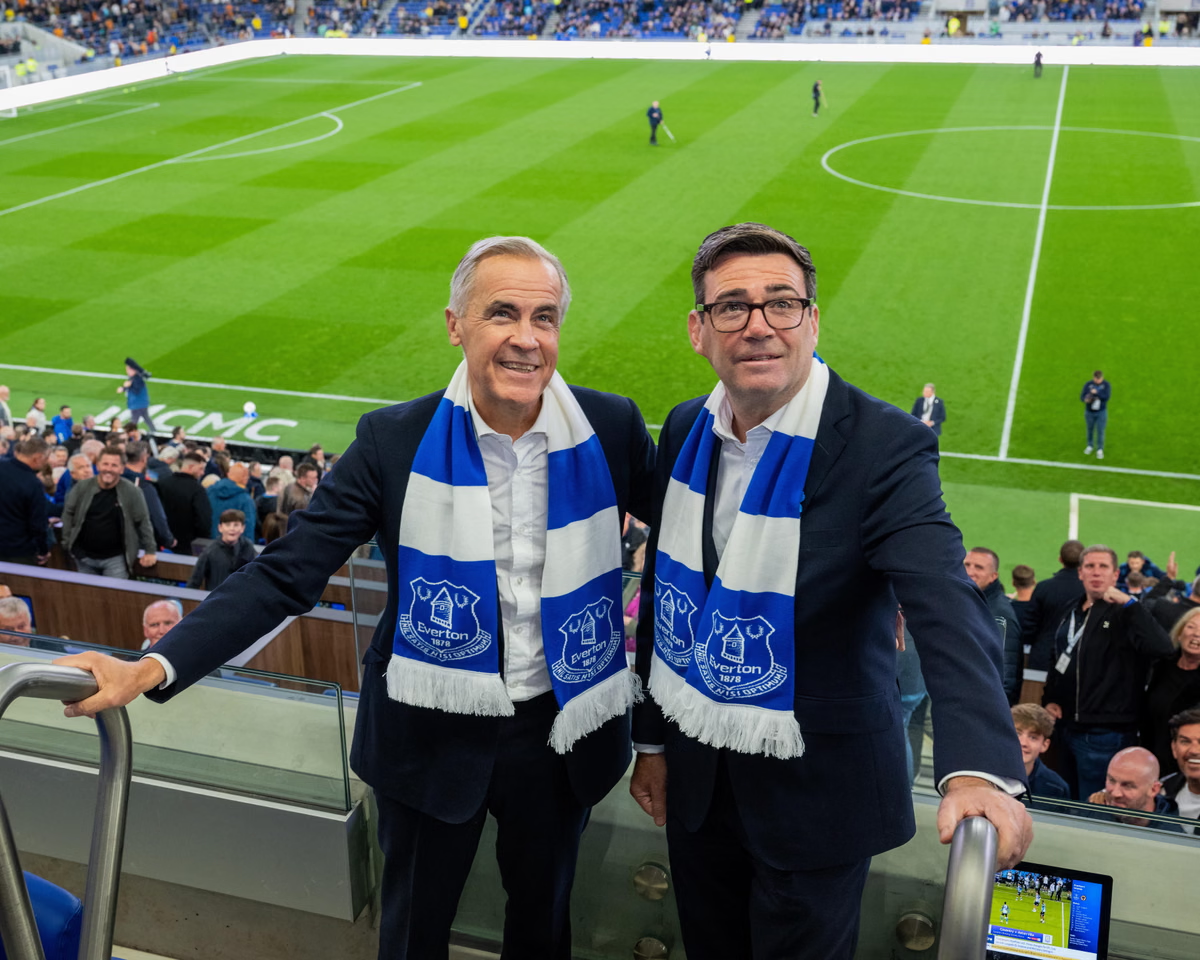
Prime Minister Andy Burnham has indicated he may move to scrap the long-standing prohibition on drinking alcohol within sight of the pitch at football matches. A devoted Everton supporter who remains a regular at games, Burnham contends that the current legislation unfairly singles out football fans, noting that supporters of other sports, such as rugby and cricket, are not subjected to the same restrictions.
The existing law, established under the Sporting Events (Control of Alcohol etc) Act 1985, prevents fans in England and Wales from consuming alcohol while they have a view of the playing area. Burnham, who has long criticized the measure as outdated and discriminatory, suggested during a flight to New York that the rules hark back to a different era of the sport. He argued that it is fundamentally unfair to treat football supporters differently than others and proposed that a potential removal of the ban could be explored, perhaps through a pilot program.
The proposal has received backing from key industry stakeholders. A representative for the English Football League described the organization as being receptive to a legislative review, noting that the 40-year-old rules have failed to adapt to modern improvements in stadium management, safety protocols, and stewarding. Similarly, Tom Greatrex, chair of the Football Supporters’ Association, welcomed the Prime Minister’s remarks. Greatrex highlighted the perceived double standard, questioning why fans are criminalized for having a drink at a match while being allowed to consume alcohol in the same seats during rugby games or concerts.
However, the prospect of lifting the ban faces significant opposition from law enforcement. A spokesperson for the UK Football Policing Unit, which oversees safety policy in England and Wales, cautioned that such a change would be incredibly rash without a comprehensive examination of potential consequences. The unit highlighted that football, unlike many other sports, still experiences significant incidents of violence and criminal behavior, with alcohol frequently cited as a contributing factor. The spokesperson emphasized that the regulations were originally implemented following the 1990 Taylor report on the Hillsborough disaster and stressed that any fundamental policy shift requires meaningful consultation with experts.
This debate arrives as the women’s game has already begun to move away from these restrictions. Since the start of the current season, supporters at Women’s Super League and WSL2 matches have been allowed to drink within sight of the pitch. This shift followed a successful 18-month trial, which resulted in new regulations this summer permitting clubs to offer this option to fans. Consequently, 25 of the 26 clubs across the two divisions have adopted the change for all home fixtures. The only exception is Brighton & Hove Albion during games at Crawley’s Broadfield Stadium, though the club permits such drinking at their home matches played at the Amex Stadium.
The call to modernize these rules is not new. A 2021 fan-led review into football governance explicitly recommended re-examining the legislation and suggested piloting alcohol sales within view of the pitch specifically for lower-tier clubs. As the government considers its next steps, officials will likely need to weigh the desire for a more relaxed matchday experience against the persistent concerns regarding public order and spectator safety raised by policing authorities. The report also notes that asked by reporters on the plane to New York about lifting a ban, Burnham said: “I don’t think it’s fair for football fans to be singled out in that way and I made that point. The report also notes that and I do believe there is a case to remove that discrimination. The report also notes that i don’t see how it can be fair that some supporters of one sport can be treated differently.”. The report also notes that it would be irresponsible to fuel this by allowing greater alcohol consumption during games. The report also notes that “Following a number of football-related tragedies, changes in legislation were implemented after the Taylor report [of 1990 into the causes of the 1989 Hillsborough disaster] for good reason and we are currently in the longest ever period without a significant football-related disaster. The report also notes that we welcome the prime minister’s comments and totally agree that the legislation is outdated and deserves to be reviewed.






Comments