
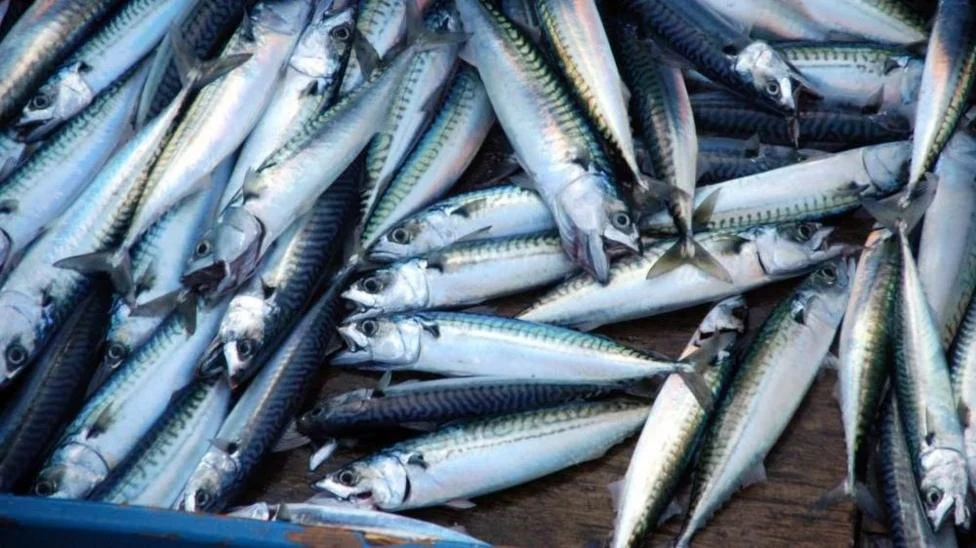
A growing trend of retailers replacing traditional mackerel with a cheaper, less nutritious alternative has sparked accusations of “skimpflation.” Consumer group Which? has flagged the move—where suppliers substitute Atlantic mackerel with jack mackerel—as a tactic that allows companies to maintain prices while quietly downgrading product quality. Despite the similar name, jack mackerel belongs to the Carangidae family, whereas traditional mackerel is part of the Scombridae family.
Princes, a major supplier to UK supermarkets, shifted its tinned product line to jack mackerel last October, citing its ability to meet Marine Stewardship Council (MSC) sustainability standards. Lidl GB is also offering the species under its own house brand. Both firms maintain that they are committed to responsible sourcing. Princes added that its decision followed extensive consumer testing, describing the product as having a “meatier texture” and a “milder flavour” that is clearly identified on packaging.
However, Sue Davies, head of food policy at Which?, expressed significant concern over the nutritional trade-off. She noted that jack mackerel contains roughly half the omega-3 content and only about a third of the vitamin B12 found in traditional mackerel. “It’s a real concern when manufacturers quietly downgrade everyday staples like these as shoppers can end up paying the same price for a product that delivers significantly less nutritional quality,” Davies said. She further urged manufacturers to be transparent about recipe changes, noting that such practices can feel particularly misleading to consumers.
The shift is largely driven by the collapse of North East Atlantic mackerel stocks, which have declined by approximately 75% over the last decade, according to the International Council for the Exploration of the Sea (Ices). The depletion has been exacerbated by a long-running dispute—often called the “mackerel war”—between the UK, Iceland, Greenland, Norway, the Faroe Islands, the EU, and Russia. These parties have struggled to agree on unified catch quotas, with the Marine Stewardship Council reporting that catches have exceeded scientific recommendations by an average of 39% over the past 15 years.
Due to these environmental pressures, the Atlantic population is considered to be at a “breaking point,” leading many retailers to move away from the species entirely. Waitrose announced in February that it would phase out tinned mackerel and suspend sales of fresh, chilled, and frozen options, a move praised by the Marine Conservation Society as “leading and decisive.” As Atlantic mackerel has lost its MSC certification due to overfishing, Chilean jack mackerel has become a popular, albeit less nutritious, alternative for retailers looking to maintain supply chains.
The move has caused friction regarding labeling and industry standards. Until December 2025, UK regulations strictly limited the marketing terms for Carangidae species to names like “jack,” “scad,” “trevally,” or “horse mackerel.” However, the Department for Environment, Food and Rural Affairs updated its rules shortly after Princes introduced its product to allow the new labeling. Critics argue this has led to confusion, with the Scottish Pelagic Fishermen’s Association emphasizing that “consumers should be able to clearly understand what they are buying.”
Hannah Fennell, CEO designate of the Scottish Pelagic Fishermen’s Association, warned that shifting away from North East Atlantic stocks could inadvertently penalize the domestic industry. She suggested that retailers are sourcing a less nutrient-dense species from the other side of the world, which carries a significantly higher carbon footprint than locally sourced alternatives. The Ices has now advised a 70% reduction in the total catch of North East Atlantic mackerel for 2026 to provide the stock a vital chance to recover.
The phenomenon is extending beyond the UK market, with retailers in the Netherlands having stopped selling Atlantic mackerel entirely and similar switches reported in Sweden. While industry data from the market intelligence platform Undercurrent suggests wholesale Chilean jack mackerel costs roughly one-third of the price of Atlantic mackerel, the debate over value, nutrition, and sustainability continues to intensify. The report also notes that as well as concerns about how clearly the replacement fish is being labelled, the shift has prompted complaints from some consumers over differences in taste and texture. The report also notes that the countries have repeatedly failed to agree a unified system for sharing stock and setting catch limits in line with scientific advice.









Comments