
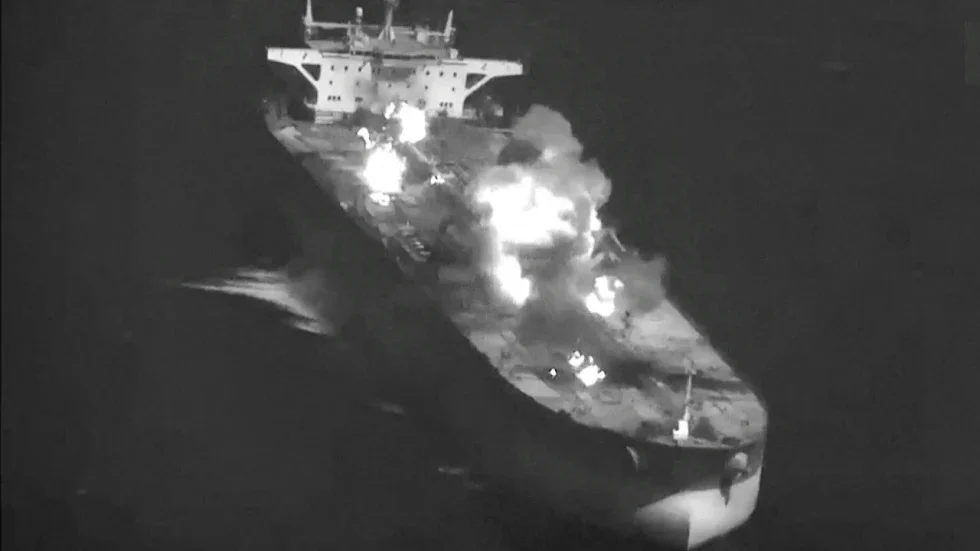
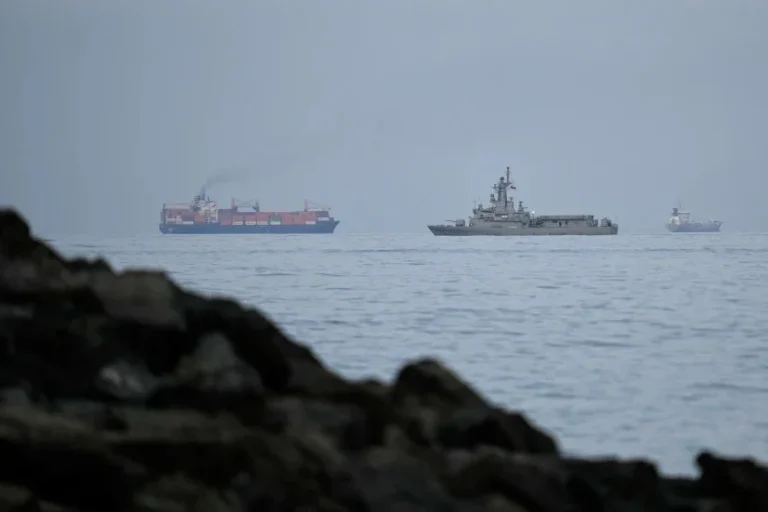
Iranian officials reported on Sunday that they successfully struck an unmanned U.S. vessel attempting to navigate into the Strait of Hormuz. This incident represents the latest development in a renewed cycle of military friction between Tehran and Washington, though the U.S. military has not yet provided confirmation of the attack.
The reported strike follows a day of heightened activity, during which the U.S. military stated it had targeted three Iranian oil tankers in retaliation for a missile assault on Navy warships. Hostilities between the two powers have been ongoing since February 28, when U.S. and Israeli forces launched initial strikes against Iran. Although a ceasefire was established in June, the agreement has since collapsed, leading to sporadic fighting as both sides attempt to exert military and economic pressure.
Conflict intensified again last week after a brief period of relative calm, with the Strait of Hormuz and nearby Iranian communities becoming primary targets. A U.S. bombardment of southern Iran earlier in the week resulted in at least five fatalities. The Trump administration appears to be employing a two-pronged strategy, combining military responses to threats in the strait with efforts to target foreign financial institutions that facilitate Iranian transactions.
Despite decades of sanctions, Tehran’s new hard-line leadership has shown a willingness to sustain the conflict. Iran has increasingly relied on a shadow fleet to transport oil and circumvent the U.S. blockade, providing a vital source of revenue to mitigate economic strain. Meanwhile, the status of Iran’s nuclear program remains a central point of contention.
Negotiations regarding nuclear activity stalled shortly after both nations signed a memorandum of understanding in mid-June. Diplomats from the U.S., Britain, France, and Germany are now pushing to refer Iran to the U.N. Security Council, citing the country’s failure to meet its nonproliferation obligations. For Tehran, the Strait of Hormuz—a critical artery for global energy shipments—has become a primary instrument of leverage as the broader war continues to disrupt the region. The report also notes that responding militarily to attacks on the strait while going after foreign financial institutions that handle Iran’s money, the Trump administration appears to have adopted a dual-prong approach to the conflict.





Comments