
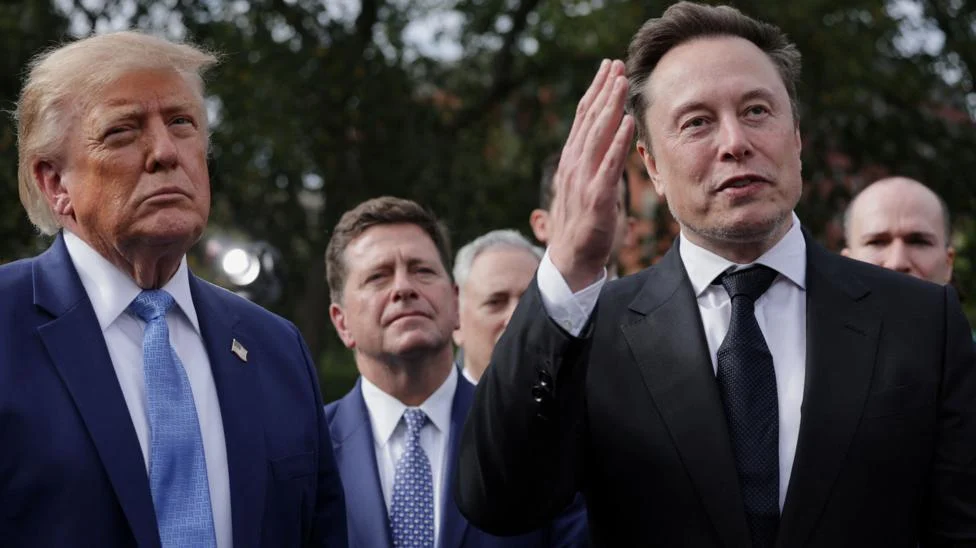
US President Donald Trump held a summit at the White House on Tuesday with prominent technology executives to discuss the rapid development of artificial intelligence. Describing the meeting as “an extraordinary gathering” of the minds focused on “building America’s Golden Age,” the president met with leadership from companies including OpenAI, Anthropic, Nvidia, SpaceX, Meta, and Google.
Following the closed-door session, Trump and the attendees fielded media questions for approximately 30 minutes. The primary development from the meeting was the signing of a “morally binding” document intended to mitigate potential risks associated with AI. According to the president, this agreement functions similarly to a constitution and represents a form of protection for the public. Citing concerns about the potential risks it poses to humanity, the meeting came as some tech executives and experts have called for tighter oversight of AI. Trump took questions from the media for around 30 minutes alongside top tech leaders after the closed-door meeting. In a way,” Trump said, referring to the agreement. “And the biggest people in the world signed that, and I signed it as president, it’s almost like a constitution.
The signatories included Elon Musk of SpaceX, Mark Zuckerberg of Meta, Sundar Pichai of Google, Dario Amodei of Anthropic, Greg Brockman of OpenAI, and Jensen Huang of Nvidia. Under the terms of the accord, these companies commit to self-regulation, ensuring that their technologies remain secure, operate as intended, and are protected from unintended hacking or unauthorized system access.
To verify these commitments, the firms agreed to work with independent auditors to assess their systems. Furthermore, President Trump announced plans to establish a specialized board to oversee AI safety, although he did not name the individuals who will serve on the panel. The firms also agreed to implement safeguards to keep models operating as intended and quickly detect and fix any issues.
Industry figures expressed optimism regarding the collaboration. Zuckerberg characterized the session as a “historic conversation” that provides customers with confidence in technological functionality, while Amodei described the agreement as a path “to win safely,” referencing the president’s previous assertion that achieving AI superiority is a national priority.
Despite the executive support, the agreement has faced criticism from academic observers. Jose Miguelito Enriquez, an AI governance researcher at Nanyang Technological University, noted that while the pact represents an emerging consensus, it fails to establish a framework for holding developers accountable for specific incidents.
Law professor Kimberlee Weatherall of the University of Sydney went further, labeling the document “deeply unimpressive.” She argued that the agreement allows corporations to unilaterally define safety standards without establishing clear consequences for breaches. Weatherall suggested that the accord serves as a distraction from more substantial regulatory needs, asserting that it should be disregarded.




Comments