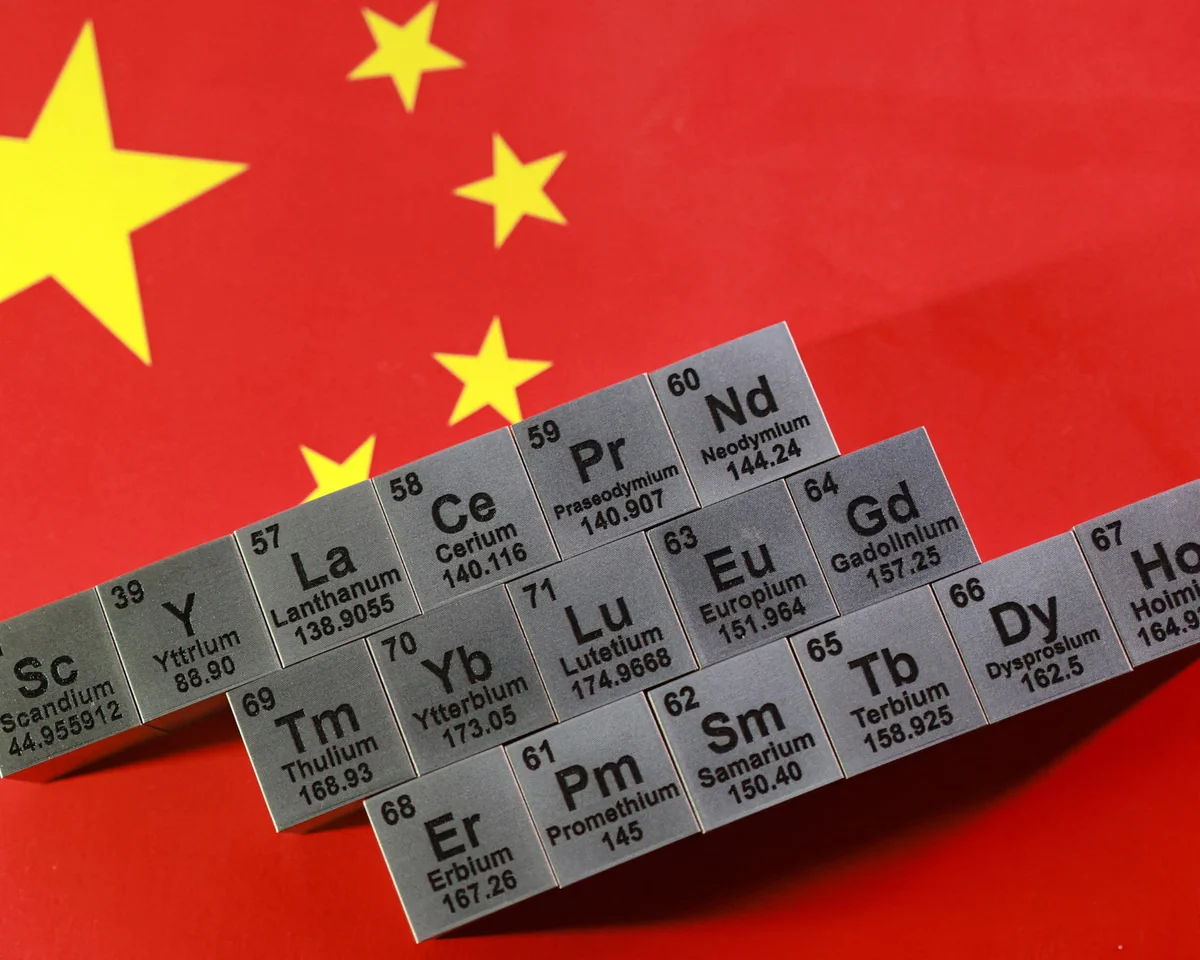
A recent parliamentary investigation has determined that the United Kingdom is in a position of “dangerous” dependency on China for essential raw materials. These critical minerals are fundamental to the nation’s military capabilities, the development of artificial intelligence, and the successful transition to renewable energy infrastructure. This was extended to January 2027 after the Chinese president’s recent visit to Washington.
MPs serving on the business select committee are now demanding the implementation of a centralized policy, alongside the establishment of a “critical minerals finance facility.” This proposed institution would aim to provide essential debt, equity, and grants to secure rare earth supplies and facilitate a broader diversification of procurement sources.
Liam Byrne, the committee’s chair, characterized critical minerals as the foundation of the modern economy. He warned that Britain cannot achieve its net-zero goals, build its AI sector, or rearm itself without securing a stable supply of these resources. Byrne noted that 16 years after China first utilized its dominance over rare earth markets as leverage, the UK remains alarmingly exposed to supply chain risks. Separate restrictions on legacy chips after a row over a Dutch intervention in the China-owned Nexperia left the European car industry “days away” from stoppages last October.
The committee’s findings highlight that bottlenecks are most severe during the processing phase. China currently controls the refining for seven key categories of minerals, including refined lithium necessary for electric vehicle production and specialized rare earths used in the fuselage and wings of military aircraft to survive temperature extremes.
Projections indicate that the demand for lithium alone will increase 45-fold by 2030, while the requirement for rare earths used in military magnets is expected to rise 16-fold. Analysts warn that China’s ability to abruptly halt exports, as occurred in 2025, presents a persistent threat to UK national security and industrial stability. The demand for rare earths needed for permanent magnets used in military jets and other applications would rise 16-fold in the same period as Britain was seeking to rebuild its military capabilities. As it did in 2025, a dependency on Beijing was a strategic vulnerability for the UK economy and national security, the committee found, but with China capable of suddenly turning off rare earth supplies. The rest of Europe and Indo-Pacific countries, to “aggregate demand” and bring in new suppliers, the most “realistic” solution was for the UK to work closely with G7 partners.
The committee expressed significant frustration regarding a perceived lack of government transparency. MPs stated that Parliament possesses no clear visibility into which specific capabilities the government is prioritizing, what vulnerabilities have been identified, or which projects are currently being funded to mitigate these risks.
To address these systemic issues, the committee proposed a 10-point action plan. This roadmap includes identifying domestic opportunities for mining and recycling, developing a strategy to reduce business reliance on Chinese imports, and removing regulatory barriers in planning and permitting processes. As it stands, the committee concluded it lacks confidence that the government can meet these necessary benchmarks, noting that the country requires stronger institutional and financial muscle.
In response, a government spokesperson disputed claims that a coherent strategy is lacking. They highlighted an existing £400 million investment aimed at boosting domestic production and recycling capabilities. The government also noted that its 2035 strategy sets a goal of meeting 10% of demand through domestic extraction and 20% through recycling, with a target that no more than 60% of any specific critical mineral originates from a single country. According to as it stood, the committee, It could not be confident the government could satisfy any of its 10 tests.
The report also cautions that the UK’s current safety net is precarious, relying on short-term reprieves between the United States and China. While recent diplomatic efforts, such as the one-year export relief secured by Donald Trump, have provided temporary stability, the committee argues that the UK remains excessively vulnerable to the shifting dynamics of global superpower relations. However, the reprieve means the UK is at the mercy of US-China relations, the report suggests.