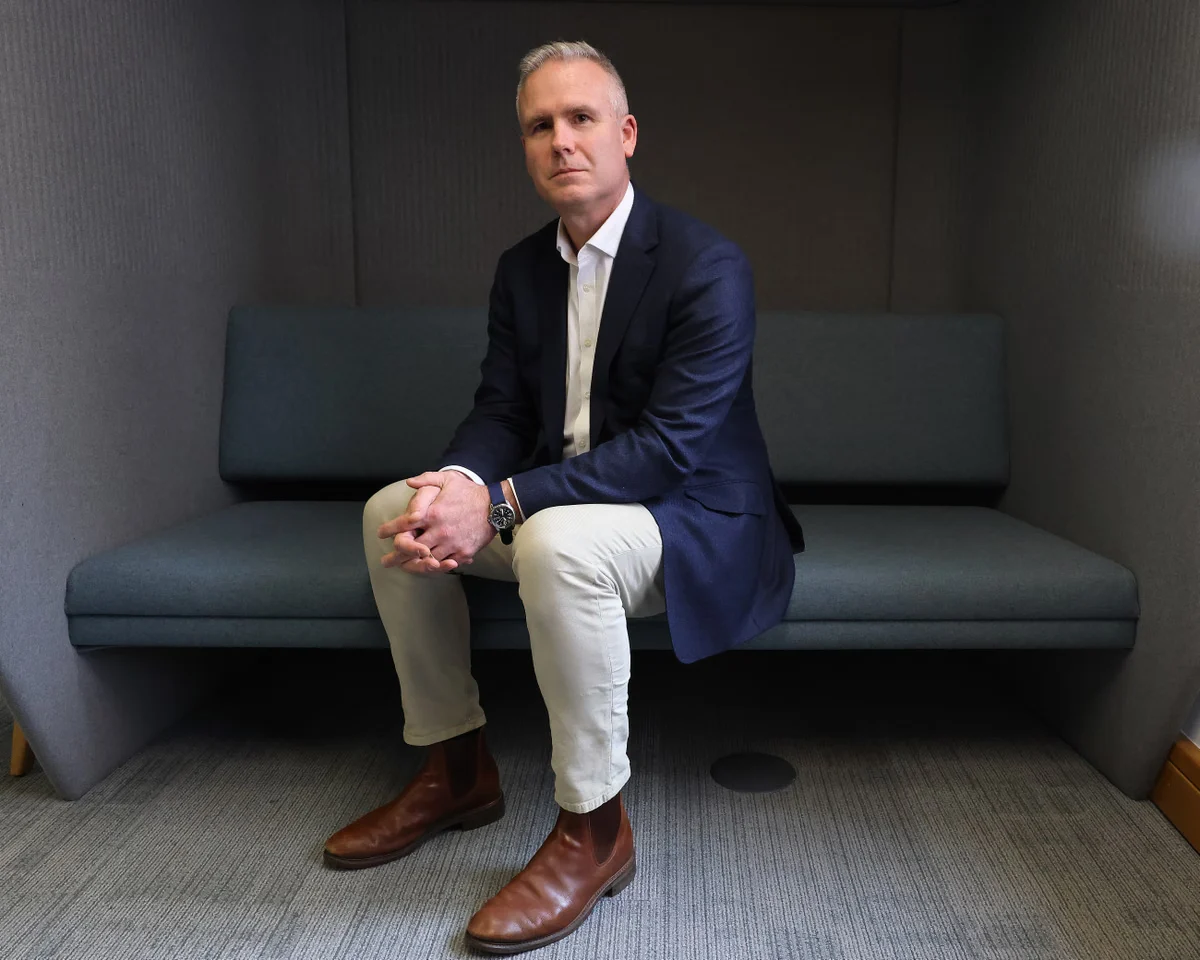
The United Kingdom must prioritize domestic development of artificial intelligence to avoid reliance on foreign systems that could be restricted or disabled without warning, according to George Williamson, the head of the Alan Turing Institute. As AI becomes deeply embedded in essential sectors—including defense, national security, healthcare, and critical infrastructure—Williamson argues that the nation cannot afford to depend on platforms that it can neither fully inspect nor govern.
Addressing the growing dominance of US and Chinese AI labs, Williamson emphasized that “national resilience” has become a central mission for the institute. He noted that recent geopolitical and commercial pressures, such as Washington’s decision in June to restrict the export of Anthropic’s advanced models, demonstrate that the UK cannot always assume open access to international technology. “There’s a set of circumstances where it would be a good idea for us to have something that we don’t have to ask other people’s permission to use,” Williamson said. And has reportedly asked leading AI labs to withhold their models from being tested by the UK’s AI Security Institute until they have been examined by AISI’s US counterpart, in June Washington temporarily blocked the release outside the US of Anthropic’s latest models. According to williamson, It had become clear in recent months that the UK needed “more agency on access to technology” and a stronger sovereign position in AI. “It feels pretty uncomfortable if you don’t have some control or ability to use technologies when you want them, and also harder to imagine how you build an economy on the top of stuff that can disappear,” he said. He said: “Try asking some of these models about some events in the recent past in China and you’re not going to get an answer that’s particularly helpful if you’re doing GCSE history.”.
The institute, which serves as the UK’s premier AI research body, is undergoing a strategic shift following government mandates to focus more heavily on defense and security. Under its new leadership, the organization aims to bolster the country’s sovereign position by focusing on securing critical systems against disruptions and countering AI-amplified threats, such as state-backed disinformation campaigns. This pivot arrives alongside heightened public and political concern, marked by Prime Minister Andy Burnham’s recent launch of a national center to combat misinformation and warnings from industry figures regarding potential existential risks. Those concerns were highlighted last month by the UK prime minister, Andy Burnham, announcing a new national centre to tackle state-backed disinformation, and Anthropic predicting the technology had a greater than 10% chance of wiping out humanity by 2030. “We are facing a more adversarial world, more frequent shocks to our critical infrastructure and now powerful AI amplifying these threats. He said: “It’s very dangerous for the state of democracy and it’s an area that we can monitor.”, referring to state-led disinformation campaigns.
Williamson, a former head of His Majesty’s Government Communications Centre, suggested that the institute could foster resilience by producing “nationally owned IP” and smaller, specialized AI models tailored for the public good. He argues that the UK does not need to replicate the massive scale of global frontier labs to be impactful. By focusing on areas such as weather forecasting, agricultural optimization, and defensive security, the institute can provide actionable intelligence and tools that align with British values.
The push for self-sufficiency extends beyond the UK, with European leaders like Christine Lagarde and Ursula von der Leyen also advocating for greater technological autonomy to prevent being cut off from major international systems. Williamson pointed out that current foreign models may not reflect British perspectives, noting that prompts regarding specific historical events involving China often yield responses that are not useful for domestic educational needs. “This is the defining technology of our time. We want to be able to shape that technology in a way that accords with who we are and our values,” he stated.
Regarding the widespread debate over AI-driven existential threats, Williamson expressed skepticism about the reliance on statistical predictions without clear methodology. He noted that much of the discourse regarding a potential 10% or greater risk of extinction by 2030 lacks a solid foundation in scientific evidence. He maintains that the institute should serve as an objective partner to the government, helping to navigate technical realities rather than fueling speculative alarmism.
While the government previously directed the institute to de-prioritize some environmental research in favor of security mandates, Williamson believes the two goals are inherently linked. “For me, climate is as much a national security issue as defense. It is a frame that enables us to cover the range of threats and opportunities to the UK,” he said. By maintaining this broad focus, the institute intends to leverage its expertise to help the government navigate the complex landscape of 21st-century technological risk.